How to Use AI in Recruitment: 10 Applications for Hiring Teams
.jpg)
How to Use AI in Recruitment: 10 Applications for Hiring Teams
Finding the right talent has become increasingly challenging as hiring teams face mounting pressure to sift through hundreds of resumes, schedule countless interviews, and eliminate bias while moving quickly to secure top candidates. This environment often burns out even experienced recruiters who struggle to balance speed with quality. Recruitment automation tools powered by AI offer practical solutions for screening candidates, automating repetitive tasks, and making smarter hiring decisions without sacrificing the human element.
Modern AI-driven platforms handle the tedious aspects of candidate sourcing, interview scheduling, and initial assessments, freeing teams to focus on building meaningful connections with potential hires. These systems help organizations screen candidates faster, reduce time-to-hire, and improve the overall quality of the talent pool. Companies seeking to transform their hiring process can benefit from implementing a comprehensive global HR system that combines intelligent automation with human-centered recruitment practices.
Summary
- AI reduces time-to-hire by up to 75%, primarily by accelerating initial screening stages where recruiters would otherwise manually review hundreds of applications. This efficiency only creates value when redirected toward activities that improve hiring outcomes: deeper candidate conversations, better stakeholder alignment, and more consistent evaluation methods. Organizations already using AI at scale report saving approximately one full working day per week, equivalent to 20% of recruiter time.
- Poor screening criteria produce poor results faster when automated. More than 6,000 screening sessions analyzed by Harvard Business Review revealed patterns where automation reinforced existing biases rather than eliminating them. When screening criteria prioritize credentials over capabilities or keywords over context, AI optimizes for those proxies, whether or not they correlate with job performance. 42% of recruiters admit they don't fully understand how their AI tools make decisions, creating a gap between recommendation and accountability.
- Recruitment analytics emerged as the top priority for 54% of talent acquisition teams in 2025, reflecting a shift from tracking activity to using data for better hiring decisions. AI surfaces insights that manual review misses: bottlenecks in specific hiring stages, sourcing channels that consistently produce qualified candidates, and interview processes that correlate with successful hires. This visibility transforms recruitment from intuition-based to evidence-based when paired with structured workflows.
- Organizations have incurred $365,000 in EEOC fines for AI-driven hiring decisions that violated employment regulations. Compliance requirements become particularly complex for businesses hiring across multiple countries where employment laws vary by jurisdiction. AI performs best when operating within clearly defined hiring processes that include consistent evaluation criteria, interview frameworks, and decision-making standards that maintain fairness and legal alignment.
- Recruitment bottlenecks often exist outside the screening phase entirely, occurring during handoffs between disconnected systems where candidate information gets manually re-entered into onboarding platforms, payroll tools, and compliance systems. Each handoff introduces delays and potential errors, eliminating the time savings AI creates during screening. 52% of companies report AI has improved their time-to-hire, but that improvement depends on having structured workflows that connect recruitment directly to what happens after the offer.
- Cercli's global HR system addresses this by connecting AI-powered recruitment directly to onboarding, payroll, and compliance operations, so candidate progression flows through a single platform rather than requiring manual handoffs between tools.
Why AI Alone Does Not Fix Recruitment Problems
AI makes what already exists stronger. If your hiring process is well-organized, your criteria are clear, and your team knows what good looks like, AI will help you move faster. If those elements are missing, AI will scale confusion.
🎯 Key Point: AI amplifies your existing processes—both the good and the bad. Without solid foundations, you're just automating dysfunction.
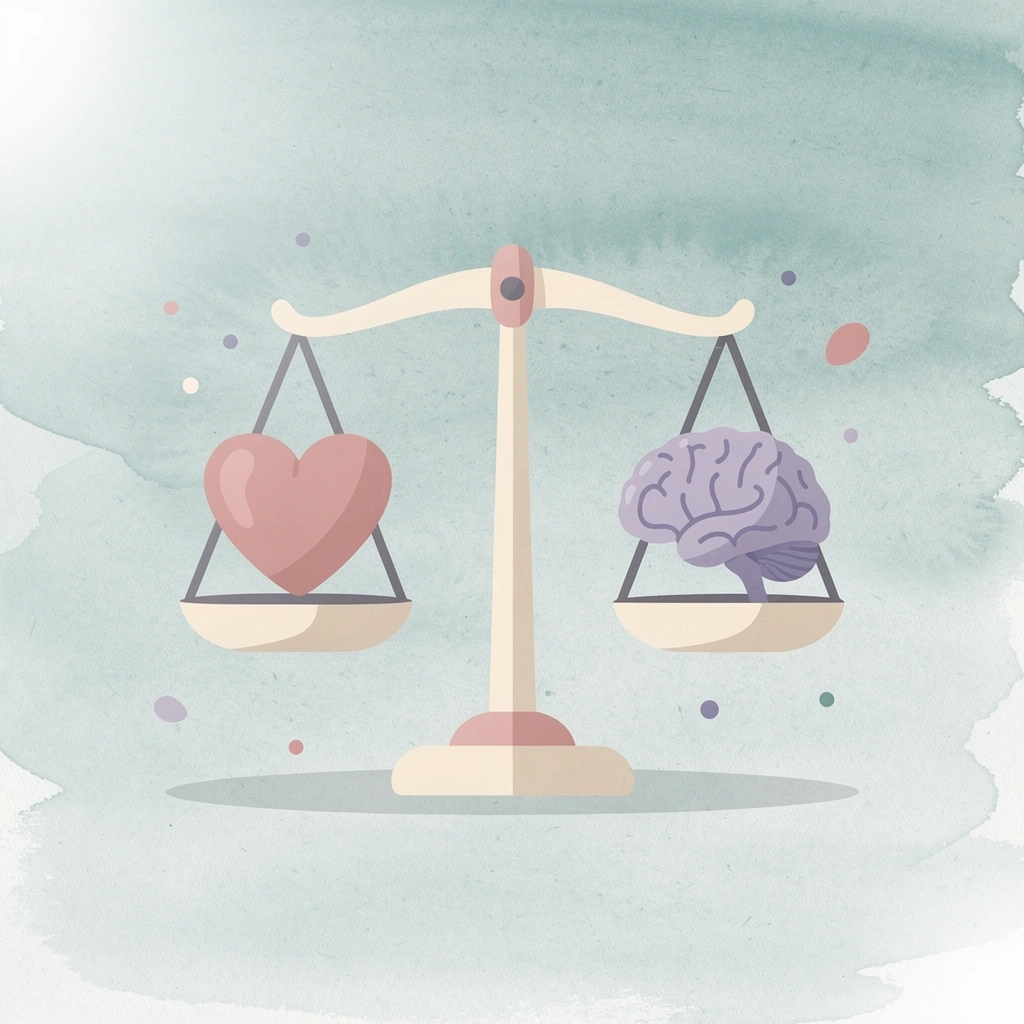
Automation cannot fix broken processes. When job descriptions are unclear, screening criteria shift between hiring managers, or interview feedback lacks consistency, AI cannot compensate. It will process applications faster and rank candidates more efficiently, but flawed inputs produce flawed outputs at higher speed.
"AI will process applications faster and rank candidates more efficiently, but using flawed inputs produces flawed outputs—just delivered at higher speed."
⚠️ Warning: Implementing AI tools without fixing your underlying recruitment processes will only help you make bad hiring decisions more quickly and at greater scale.
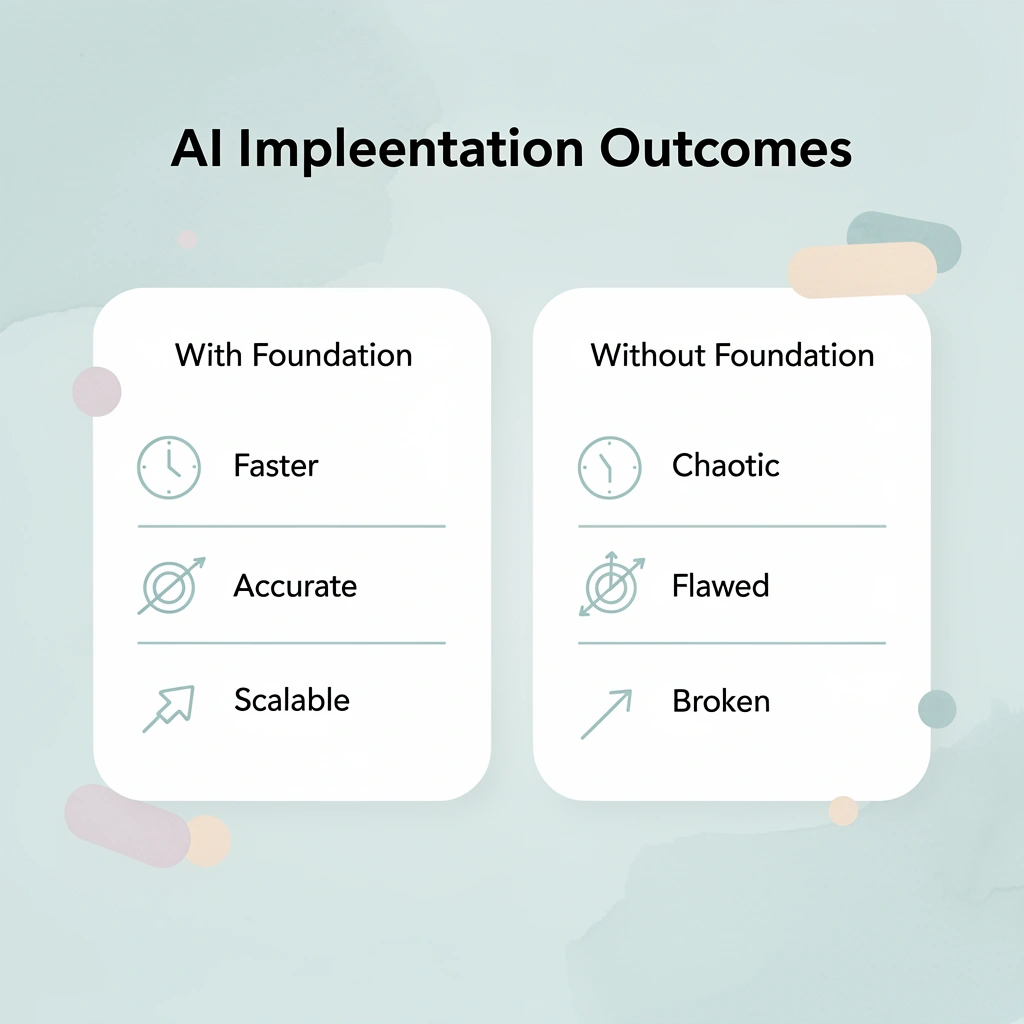
Poor criteria produce poor results faster
AI-powered screening tools match candidates against defined requirements, so the quality of the requirements determines the results. Unrealistic criteria (ten years of experience with a three-year-old technology) filter candidates accordingly. When stakeholders define "strong communication skills" differently, the AI applies whichever definition was programmed, regardless of whether it reflects actual job needs.
According to Harvard Business Review, analysis of 6,000+ screening sessions showed that automation reinforced existing biases rather than eliminating them. Consistency applied to flawed logic produces consistent mistakes: when criteria prioritize credentials over capability or keywords over context, AI optimizes for those proxies regardless of their connection to job performance.
Why can't AI replace human decision-making in recruitment?
Recruitment requires evaluating factors that resist simple categorization. You are assessing whether someone can solve unfamiliar problems, collaborate with new people, and adapt to unknown circumstances. AI can surface patterns in past behavior, flag relevant experience, and organize information efficiently. It cannot predict how someone will respond to ambiguity, whether they will challenge assumptions constructively, or how they will grow beyond their current capabilities.
Where do recruitment bottlenecks actually occur?
Bottlenecks often occur outside the screening phase. Interview scheduling breaks down when stakeholders cannot align calendars. Approvals stall when decision-makers disagree on priorities. Onboarding slows when systems lack integration. AI can automate reminders and coordinate availability, but it cannot resolve conflicting stakeholder opinions or integrate disconnected platforms without structured processes supporting those integrations.
Efficiency without effectiveness is a waste
According to LinkedIn's Future of Recruiting 2025 report, 37% of organizations are actively using or testing generative AI in hiring, up from 27% the previous year. Recruiters using these tools report saving about 20% of their work week, roughly one full working day.
That time savings matters only if used for activities that improve hiring: deeper conversations with candidates, better agreement between team members, clearer role definitions, and more consistent evaluation methods.
What happens when hiring processes remain fragmented?
When hiring processes stay split across spreadsheets, email threads, and disconnected tools, AI cannot fix those problems alone. The candidate experience suffers from inconsistent communication. Quality declines when evaluation standards vary between interviews.
Getting the right answer matters more than speed because hiring the wrong person can cost months of lost productivity and damage team morale. Platforms like Cercli's global HR system solve this by connecting recruitment directly to HR and payroll operations, so AI-assisted screening flows into organized onboarding without manual handoffs or duplicate data entry.
How do successful organizations use AI in recruitment?
The organizations seeing the strongest results treat AI as an improvement to disciplined hiring practices, not a replacement for them. They define clear role requirements before screening begins, establish consistent evaluation frameworks before interviews start, and align stakeholders on priorities before approvals are needed. AI then accelerates the execution of those well-designed processes.
But if AI is not the complete answer, what is it doing in recruitment, and how does it work when applied correctly?
Related Reading
- Candidate Screening Questions
- Candidate Screening Process
- Automated Candidate Screening
- Steps in the Recruitment Process
- End to End Recruitment Process
- Recruiting Funnel Metrics
- AI in Recruitment Examples
- Recruitment Lifecycle
- Best Recruitment Strategies
What Is AI in Recruitment?
AI in recruitment uses machine learning algorithms and automation tools to handle repetitive hiring tasks, analyze candidate data, and support decision-making. Rather than replacing human judgment, AI processes information faster than recruiters can manually, surfaces patterns in candidate pools, and removes administrative friction from the hiring process.
According to SHRM, 88% of organizations globally use AI in some form for HR and recruitment. The technology has become standard practice because recruitment teams receive more applications than they can review, and administrative tasks consume time that would otherwise be spent evaluating talent and engaging candidates.
🎯 Key Point: AI doesn't replace recruiters—it amplifies their ability to focus on high-value activities like candidate engagement and strategic hiring decisions.
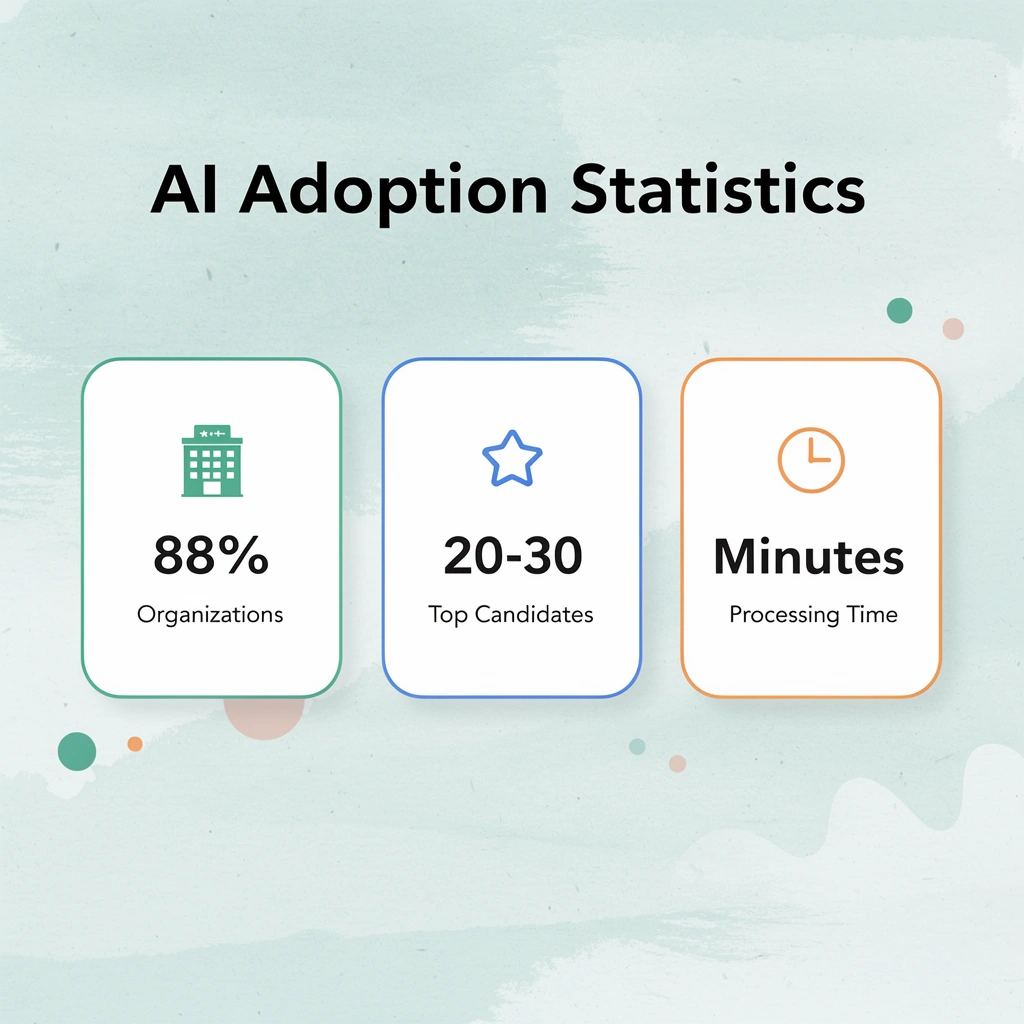
"88% of organizations globally use AI in some form for HR and recruitment." — SHRM, 2024
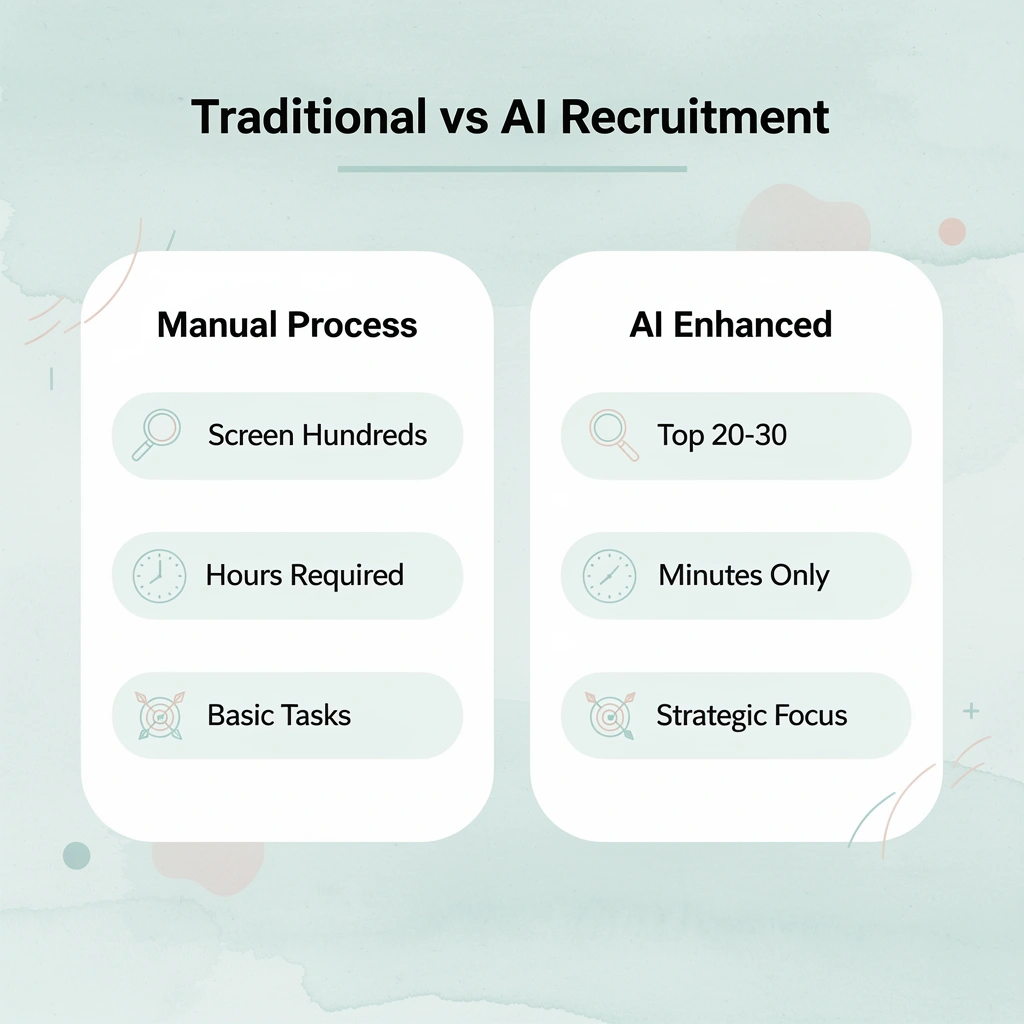
💡 Example: Instead of manually screening hundreds of resumes, AI can identify the top 20-30 candidates who match specific criteria in minutes, allowing recruiters to spend their time on meaningful conversations and cultural fit assessments.
How does AI help with candidate sourcing?
Candidate sourcing represents one of the most common applications of AI. It searches job boards, social networks, and internal databases to identify people who match specific criteria, surfacing candidates who might not have applied directly but possess relevant skills or experience.
What makes CV screening more efficient with AI?
CV screening comes next. AI extracts information from resumes, categorizes experience, identifies keywords, and compares candidates to job requirements. Research shows AI can cut time-to-hire by up to 75%, primarily by accelerating the initial screening phase where recruiters would otherwise manually review hundreds of applications.
How does interview scheduling automation work?
Interview scheduling automation removes the back-and-forth needed to coordinate availability across candidates, hiring managers, and interview panels. AI handles invitations, manages calendar conflicts, sends reminders, and processes rescheduling requests: the difference between scheduling an interview in three days versus three weeks.
How does AI improve communication with candidates?
AI-powered tools send application confirmations, status updates, and responses to common questions, keeping candidates engaged while recruiters focus on priority tasks. This accelerates response times without requiring recruiters to write individual messages.
What insights do analytics provide for recruitment?
Analytics tracks conversion rates at each hiring stage, identifies where candidates drop off, measures time spent in each phase, and flags bottlenecks. Recruitment teams see which job postings attract quality applicants, which interview stages cause delays, and where processes need adjustment, transforming recruitment from intuition-based to evidence-based.
How do integrated platforms streamline the hiring process?
Most teams manage hiring across spreadsheets, email threads, and disconnected tools where context gets lost and approvals stall. Platforms like global HR system integrate AI-powered screening with HR workflows and payroll, enabling candidate progression, compliance checks, and onboarding in one system rather than requiring manual handoffs between tools.
What are the limitations of AI in recruitment?
AI can process information, but hiring requires judgment that transcends data. Determining whether a candidate will thrive in a specific team environment, assessing cultural fit, or recognizing potential beyond a resume demands human understanding. AI can identify candidates who meet technical criteria, but it cannot assess nuance, read between the lines, or make contextual trade-offs.
How should organizations balance AI and human recruiters?
The most effective organizations use AI to handle volume and repetition, preserving recruiter time for empathy, negotiation, and strategic thinking. AI gets candidates in front of recruiters faster, while recruiters retain final hiring decisions.
Understanding what AI can do matters only if you know how to apply it without creating new problems.
How to Use AI in Recruitment: 10 Practical Applications
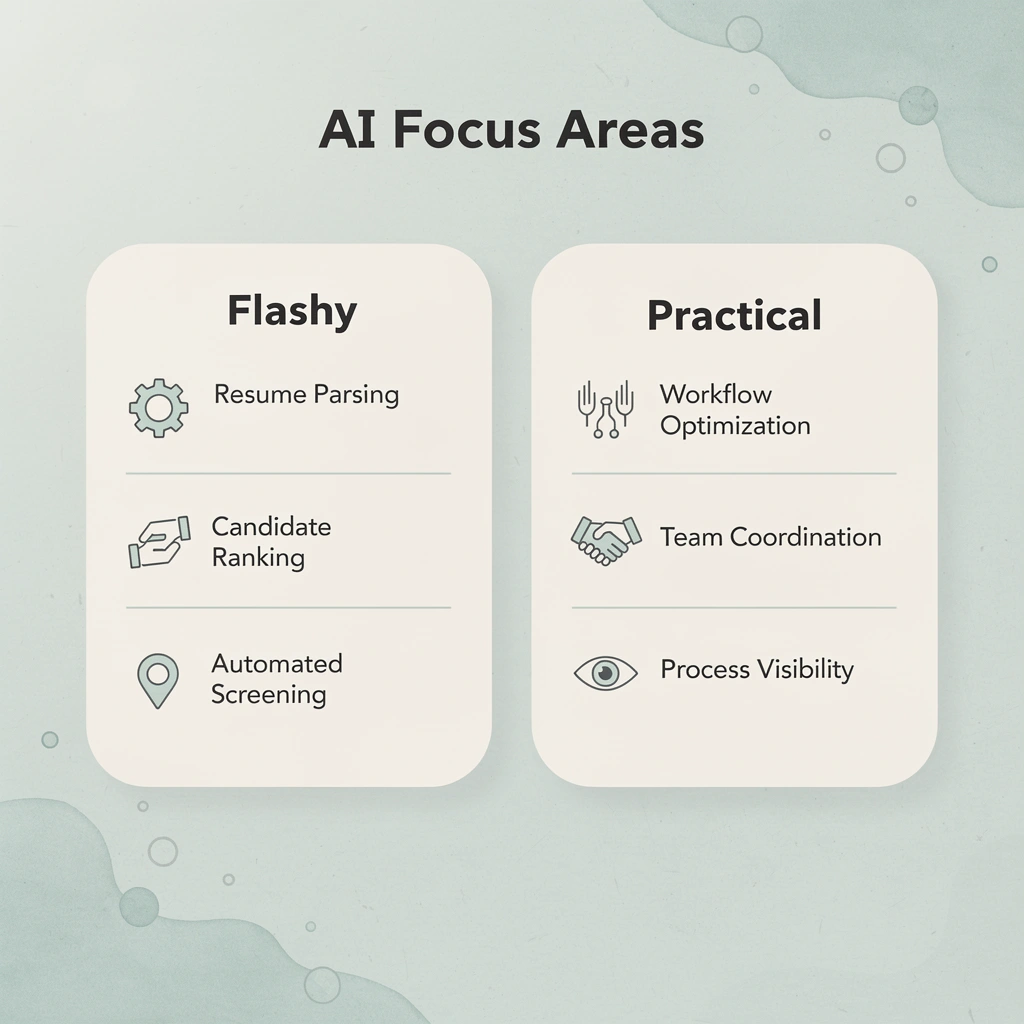
AI's best recruitment applications reduce coordination friction, improve process visibility, and create consistency—not just in candidate screening. The applications that deliver real value are rarely the ones most often discussed.
🎯 Key Point: The most impactful AI recruitment tools focus on workflow optimization rather than just resume parsing or candidate matching.
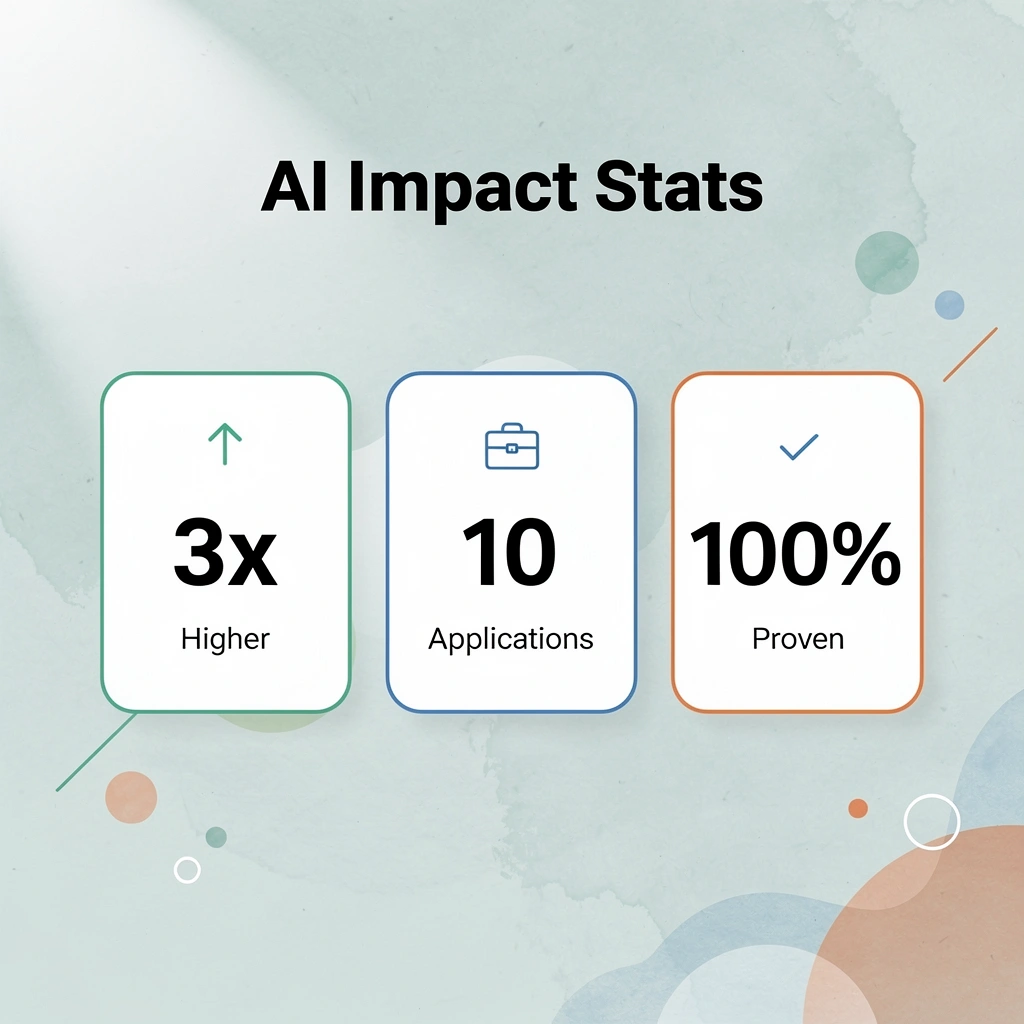
"AI recruitment tools that focus on process improvement rather than just screening deliver 3x higher adoption rates among hiring teams." — HR Technology Research, 2024
What follows are ten practical applications where AI supports recruitment workflows today. These applications represent proven use cases that improve hiring efficiency and team coordination.
⚠️ Warning: Many organizations focus on flashy AI features like automated candidate ranking while ignoring the coordination bottlenecks that actually slow down their hiring process.
1. Generate and Improve Job Descriptions
AI creates first drafts of job descriptions based on role requirements, suggests important skills, and improves readability. This overcomes the blank-page problem, allowing teams to focus on refining tone, clarifying expectations, and ensuring descriptions align with business needs.
The outcome is quicker turnaround time and better consistency across job descriptions, which proves especially helpful when hiring for similar positions across multiple locations or departments.
2. Source Candidates More Efficiently
Finding qualified candidates remains one of the hardest parts of recruitment, particularly for specialized roles or competitive markets.
AI analyzes job requirements and searches across platforms to identify candidates who match the desired skills and experience. It surfaces passive candidates, discovers talent pools outside traditional networks, and identifies individuals who might not appear through manual searches. This shifts recruiters' time from repetitive searching to relationship-building.
3. Screen Applications at Scale
When companies hire multiple people at once, it slows the screening process.
AI reviews applications by extracting resume information, grouping candidates, matching skills to job requirements, and ranking applicants for recruiter review. According to Oleeo Blog, AI can reduce hiring time by up to 40%. This allows recruiters to focus on evaluating qualified candidates rather than manually sorting through hundreds of applications.
4. Automate Candidate Communications
AI handles application confirmations, status updates, responses to common questions, and interview logistics, keeping candidates informed without requiring recruiters to manually send individual messages at every stage and ensuring consistent communication during high-volume hiring periods.
5. Streamline Interview Scheduling
Interview coordination consumes significant time: matching availability, sending confirmations, handling reschedules, and coordinating logistics all slow down the hiring process.
AI automates availability matching, calendar coordination, reminders, and rescheduling workflows, compressing scheduling from days to hours and eliminating back-and-forth friction between candidates and hiring teams.
Faster scheduling accelerates candidate progression, which is critical when competing for talent in tight markets.
6. Support Structured Candidate Evaluation
AI organizes interview and assessment information by generating summaries, consolidating feedback from multiple interviewers, evaluating candidates against defined criteria, and enabling comparison. These capabilities help hiring teams review information efficiently and maintain consistency across evaluations.
Final hiring decisions still require human judgment. AI creates the structure that makes those decisions more informed and less influenced by recency bias or incomplete information.
7. Improve Recruitment Analytics
Recruitment teams generate substantial hiring data but lack the ability to identify meaningful patterns.
AI analyzes recruitment funnel performance, conversion rates, candidate progression, time-to-fill trends, and hiring bottlenecks, revealing where processes break down and where improvements yield the greatest impact.
Oleeo Blog reports that 67% of hiring professionals say AI has improved the quality of hires. Better data enables better decisions when teams can access and understand it.
8. Support Workforce Planning
Recruitment connects directly to broader workforce planning activities. AI helps by analyzing hiring patterns, forecasting talent demand based on business growth, identifying workforce trends, and supporting headcount planning. This shifts recruitment from purely reactive to partially predictive, which is critical when lead times for specialized roles extend across months.
9. Automate Onboarding Workflows
Recruitment doesn't end when candidates accept offers. Onboarding creates administrative tasks that impede productivity.
AI supports document collection, employee setup, new hire communications, and administrative workflows, reducing manual work and helping new employees become operational faster.
Most teams manage onboarding through fragmented systems, in which hiring, HR setup, and payroll require separate coordination. Platforms like global HR systems connect recruitment directly to onboarding and payroll, particularly for teams hiring across multiple countries where entity setup, contract generation, and compliance requirements vary by location. This eliminates handoff friction and shortens onboarding timelines.
10. Improve Recruitment Reporting
Recruitment leaders need visibility into hiring performance across teams, departments, and locations.
AI creates recruitment dashboards, hiring performance reports, pipeline monitoring, and workforce insights by eliminating manual data compilation, enabling data-driven decisions on resource allocation and performance gaps.
Easy-to-use reporting removes the administrative barrier that prevents teams from using the data they collect.
AI Delivers the Greatest Value Across the Entire Recruitment Lifecycle
Most organizations adopt AI for sourcing or screening, but the highest-impact use cases span the entire recruitment lifecycle: job description creation, candidate communications, analytics, workforce planning, onboarding, and reporting. The most successful organizations apply AI across multiple stages rather than in isolation.
How does AI create a more connected hiring experience?
This creates a more efficient and connected hiring experience. AI handles volume and repetition, freeing recruiters to focus on judgment, relationship-building, and decision-making that require human context.
What's the real challenge with implementing AI in recruitment?
The challenge isn't whether to use AI—it's knowing where to apply it without creating new problems and avoiding the mistakes that turn useful tools into expensive distractions.
Common Mistakes When Using AI in Recruitment
What happens when you automate broken processes?
AI can improve efficiency and reduce administrative work, but it does not automatically lead to better hiring outcomes. Many organizations struggle to realize their full value because they focus on the technology itself rather than the recruitment processes around it. AI can amplify existing problems if used without clear objectives, structured workflows, or appropriate oversight.
Why does automating poor hiring processes backfire?
One of the most common mistakes is automating poor hiring processes. AI can speed up repetitive tasks, but it cannot fix unclear job requirements, inconsistent hiring criteria, poor interview processes, or ineffective recruitment workflows. If an organization's hiring process already produces weak outcomes, automation may simply scale those inefficiencies. For example, AI can quickly screen thousands of applications, but if the screening criteria are poorly defined, the technology may prioritize the wrong candidates at scale.
Treating AI as the final decision-maker
Another common mistake is over-relying on AI recommendations. AI can identify patterns, organize information, and suggest candidate matches, but it should not be treated as the final decision-maker. Recruitment requires evaluating context, communication abilities, team dynamics, and business needs: factors that demand human judgment. According to Juicebox AI Blog, 42% of recruiters admit they don't fully understand how their AI tools make decisions, creating a dangerous gap between recommendation and accountability.
Ignoring transparency and compliance requirements
Organizations frequently underestimate transparency and compliance requirements, particularly in regulated industries where employment decisions face legal scrutiny. Employers must understand how AI-generated recommendations are used and ensure hiring decisions remain fair, consistent, and aligned with local regulations. For organizations hiring across multiple countries, including the UAE, Saudi Arabia, and the wider MENA region, clear recruitment processes and documentation remain essential, regardless of the level of automation. Pin Blog reports that organizations have incurred $365K in EEOC fines for AI-driven hiring decisions that violated employment regulations.
Using AI without structured evaluation frameworks
AI works best when hiring processes are clear and well-organized. Without consistent scorecards, evaluation criteria, interview frameworks, and decision-making standards, AI-generated insights become difficult to understand and apply consistently. Strong recruitment processes give AI the structure needed to support better decisions. When teams work across multiple locations or countries, this structure becomes critical. Global HR systems like Cercli connect recruitment directly to HR and payroll workflows, ensuring AI-generated candidate data flows into onboarding, compliance checks, and multi-country employment setup without manual handoffs or fragmented tools.
What happens when you try to replace recruiters with AI?
Perhaps the biggest mistake is treating AI as a replacement for recruiters.
Recruitment is fundamentally a people-driven process. While AI can automate administrative work and help recruiters process information more efficiently, it cannot replace relationship-building, stakeholder management, interviewing, negotiation, or hiring judgment.
How should organizations combine AI with human recruiters?
The most successful organizations use AI to improve recruiter abilities rather than replace human involvement. Those combining AI with clear hiring criteria, structured evaluation methods, compliance awareness, and experienced recruiters are better positioned to improve efficiency while maintaining hiring quality and consistency.
But knowing which mistakes to avoid matters only if you understand how AI fits into the broader recruitment system.
How AI and Recruitment Technology Work Together
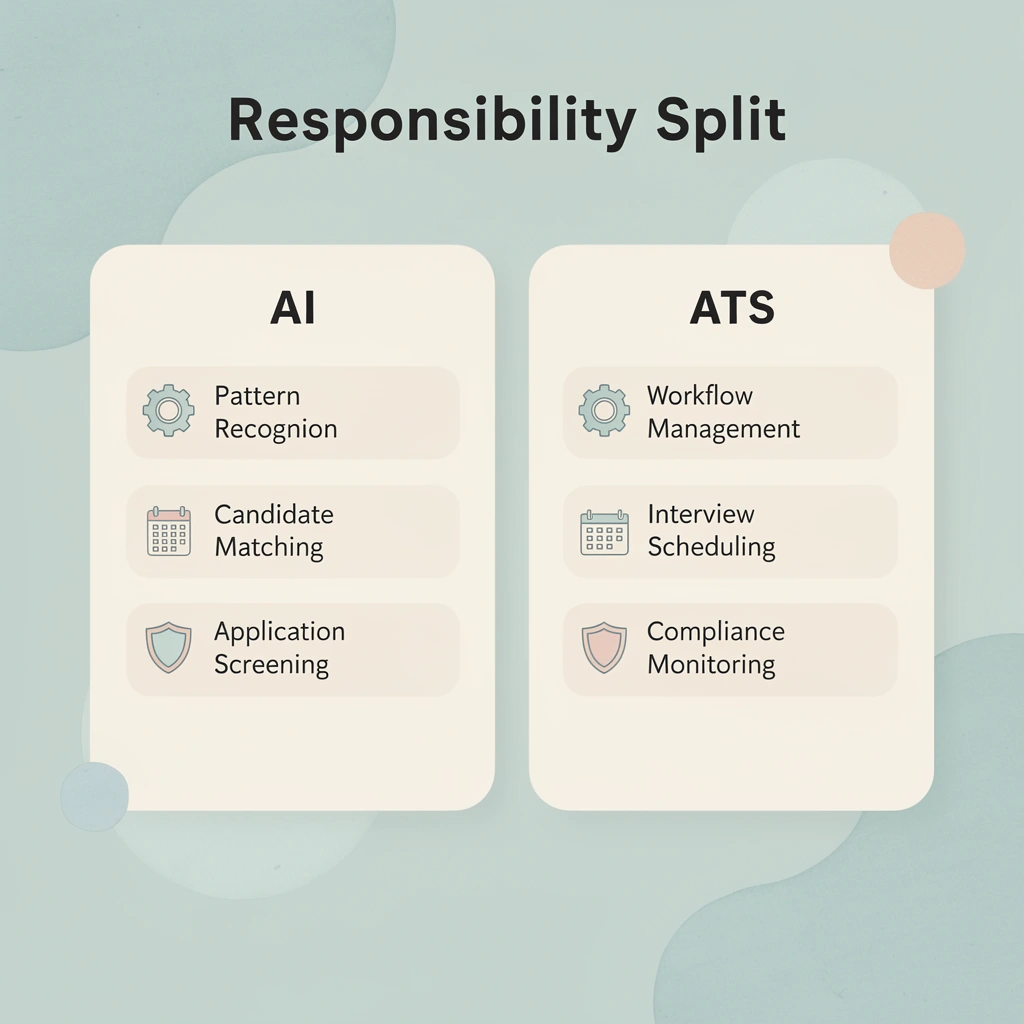
AI handles pattern recognition and task automation. Recruitment technology provides the structure, workflows, and infrastructure that turn those capabilities into consistent hiring outcomes. Together, they enable organizations to manage candidate progression, automate routine communications, and analyze recruitment performance.

🎯 Key Point: The most effective recruitment systems combine AI's analytical power with robust ATS infrastructure to create seamless hiring workflows.
"Organizations using integrated AI-recruitment technology platforms see 40% faster time-to-hire and 25% better candidate quality scores compared to standalone solutions." — HR Technology Research, 2024
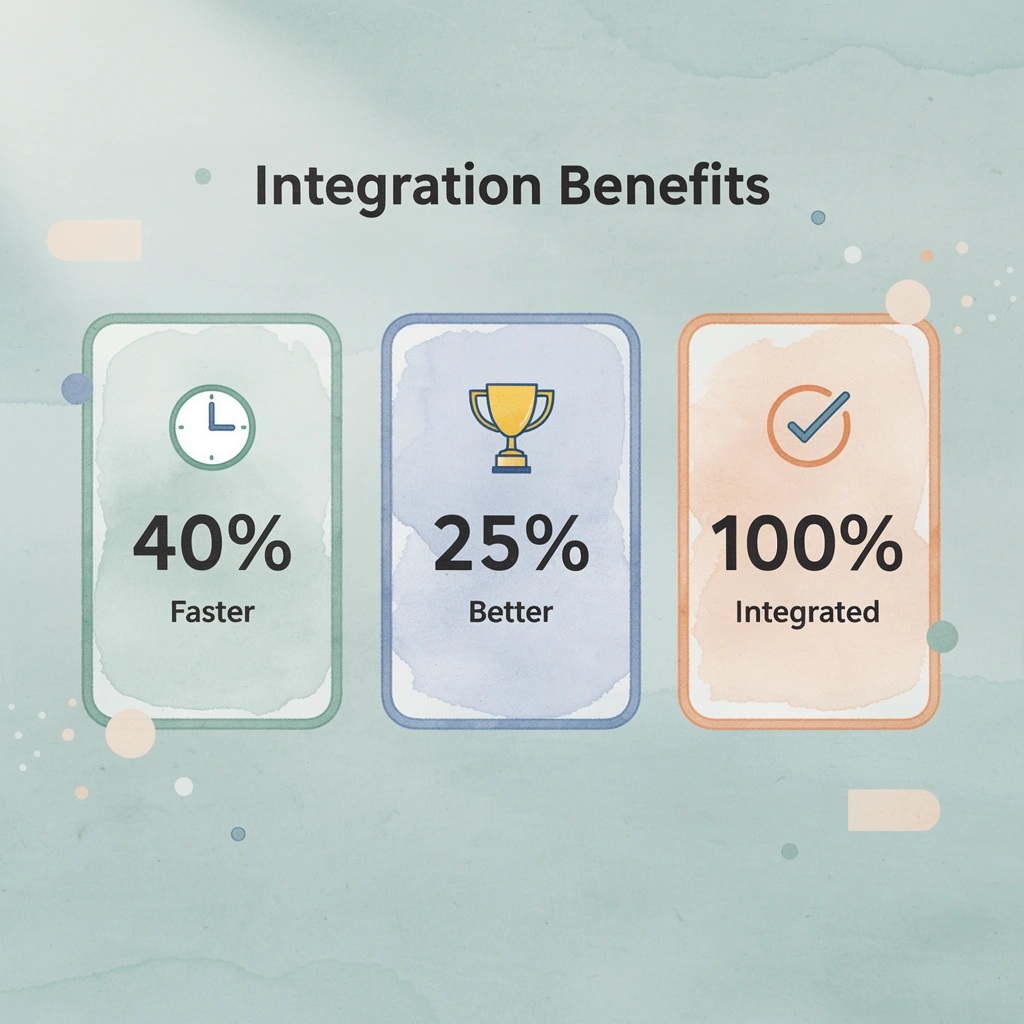
Successful implementations pair AI with platforms that manage candidate routing, interview scheduling, approvals, and hiring workflows. AI identifies candidates matching role requirements and flags applications meeting specific criteria. The ATS manages progression through each hiring stage, tracks candidate status, and prevents gaps in the process. This division of labor shifts recruiter time from administrative tasks toward evaluation and stakeholder engagement.
💡 Best Practice: Use AI for candidate screening and matching while relying on your ATS to handle workflow management and compliance tracking.
AI Responsibilities
- Pattern recognition
- Candidate matching
- Application screening
- Skills assessment
ATS Responsibilities
- Workflow management
- Interview scheduling
- Status tracking
- Compliance monitoring
Recruitment visibility and performance analysis
Recruitment systems collect extensive data on candidate movement through the hiring process, sourcing channels, interview activity, and hiring results. AI identifies patterns that manual review might miss: bottlenecks at specific stages, sourcing channels that consistently yield qualified candidates, and interview processes correlated with successful hires.
According to the 2025 Employ Recruiter Nation Report, 54% of talent acquisition teams identified recruiting analytics and reporting as a top priority for improving recruitment performance. AI enables this by surfacing insights that would otherwise require hours of manual analysis across separate spreadsheets and systems.
Candidate communications and workflow automation
Recruitment platforms automate candidate communications: application confirmations, interview reminders, scheduling updates, and responses to common questions. This creates a more responsive candidate experience while reducing administrative workload.
When AI handles routine interactions, recruiters can focus on relationship-building with high-priority candidates and on strategic conversations with hiring managers about role requirements and team fit.
What happens after recruitment ends?
Recruitment doesn't end when someone accepts a job offer. Organizations must handle onboarding, employee records, payroll setup, compliance, and workforce administration. Connected recruitment technology eliminates manual handoffs between systems, providing visibility from candidate to employee.
How do integrated platforms streamline workforce operations?
Platforms like Cercli's global HR system bring together recruitment, HR management, and payroll operations for workers across multiple countries. The system analyzes recruitment, onboarding, and workforce management data to uncover insights beyond hiring. This eliminates fragmented workflows where hiring, employee records, and payroll operate in separate systems.
Why do connected operations deliver greater recruitment value?
The biggest recruitment gains happen when AI supports connected operations rather than isolated tasks. Organizations achieve greater value when recruitment, onboarding, workforce management, payroll, and compliance operate as a unified process, with AI reducing friction at each transition point.
Related Reading
- Recruitment Analytics Software
- How Can I Use Ai To Improve My Job Descriptions
- Hr Automation Tools
- Best Job Descriptions
- How To Write A Job Description
- Automate Interview Scheduling
- Candidate Screening Tools
- Best Tools For Remote Recruitment
- Companies Using Ai For Recruitment
- Best Recruitment Crm
How Cercli Helps Companies Use AI Within a Connected Recruitment Process
Cercli creates the operational structure for AI to work within a complete recruitment process rather than as an isolated screening tool. By connecting recruitment with onboarding, payroll, compliance, and workforce management, AI-driven efficiencies extend beyond the hiring decision. Recruitment bottlenecks occur during handoffs between systems, not within individual tasks.

🎯 Key Point: The real power of AI in recruitment isn't just faster screening—it's creating seamless workflows that eliminate the traditional system handoffs where candidates and data get lost.
"Most recruitment bottlenecks happen during handoffs between systems, not within individual tasks." — Modern HR Operations Analysis
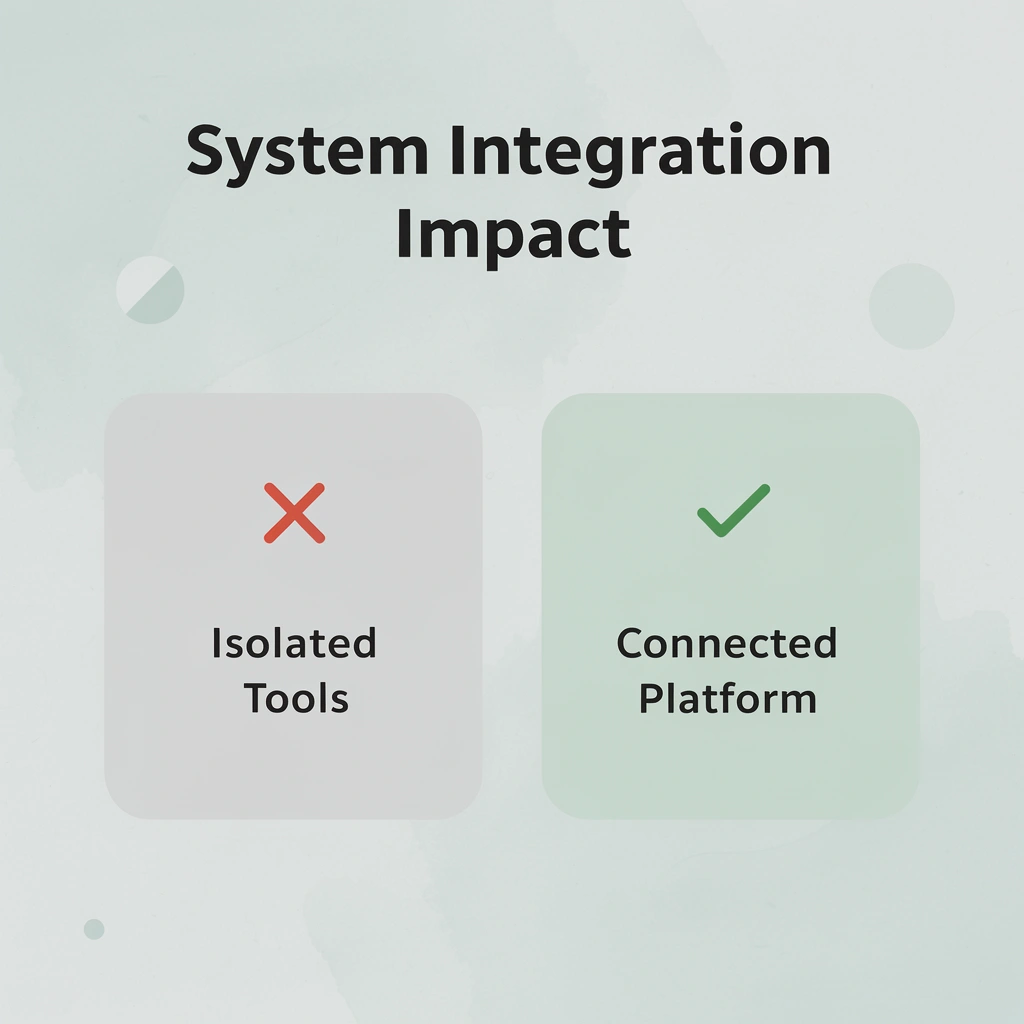
💡 Best Practice: Instead of implementing AI tools in isolation, focus on integrated platforms like Cercli that connect your entire talent lifecycle from first contact to workforce management.
How does a centralized ATS improve AI-driven recruitment workflows?
The platform provides an applicant tracking system that brings candidate data, hiring pipelines, and recruitment activity together in one place. When Insight Global's 2025 AI in Hiring Report shows that 52% of companies report AI has improved their time-to-hire, that improvement depends on organized workflows to support it.
AI can flag qualified candidates faster, but if recruiters must manually move information between tools or chase hiring managers across email threads, the time savings disappear.
How does workflow standardization reduce communication gaps?
Cercli standardizes recruitment workflows, so candidates move through consistent stages across teams. Recruiters and hiring managers work from shared pipelines where they can view interview status, feedback, and hiring decisions, reducing communication gaps that emerge as companies grow.
How does connecting recruitment to post-offer processes reduce operational friction?
Most organizations treat recruitment as a process that ends when someone accepts an offer. Candidate information then gets manually re-entered into onboarding systems, payroll platforms, and compliance tools, introducing delays and errors at each handoff.
Cercli connects recruitment directly to onboarding workflows, ensuring information moves seamlessly once a hiring decision is made. Our platform integrates payroll and compliance operations, which is particularly valuable for organizations operating across the UAE, Saudi Arabia, and the wider MENA region, where employment requirements vary by jurisdiction.
What advantages does unified workforce management provide for different employment types?
For businesses managing employees, contractors, and international hires, Cercli supports different workforce models through a single platform. The platform uses AI to accelerate candidate screening while maintaining operational consistency across employment types and locations, reducing hiring timelines and administrative overhead.
How does eliminating tool friction translate AI capabilities into business outcomes?
AI works best when it removes barriers between disconnected tools. Platforms like Cercli provide the operational framework that turns AI capabilities into measurable outcomes: reduced time-to-hire, fewer manual handoffs, and stronger alignment between recruitment and workforce planning.
According to Insight Global's research, 43% of recruiters say AI helps identify better-quality candidates, but that quality only translates into business value when the hiring process removes obstacles between identification and employment.
Understanding how the technology works matters only if you know whether it fits your actual hiring context.
Book a Demo to Speak with Our Team about Our Global HR System
If your organization is struggling with hiring bottlenecks, fragmented candidate data, or limited visibility across teams, book a Cercli demo. The first session identifies where AI and automation can have the greatest impact in your actual workflow.

🎯 Key Point: A Cercli demo reveals exactly where AI integration can eliminate your biggest hiring pain points and streamline your recruitment process.
"Connected recruitment infrastructure transforms what's possible when hiring flows directly into onboarding, payroll, and compliance without manual handoffs."
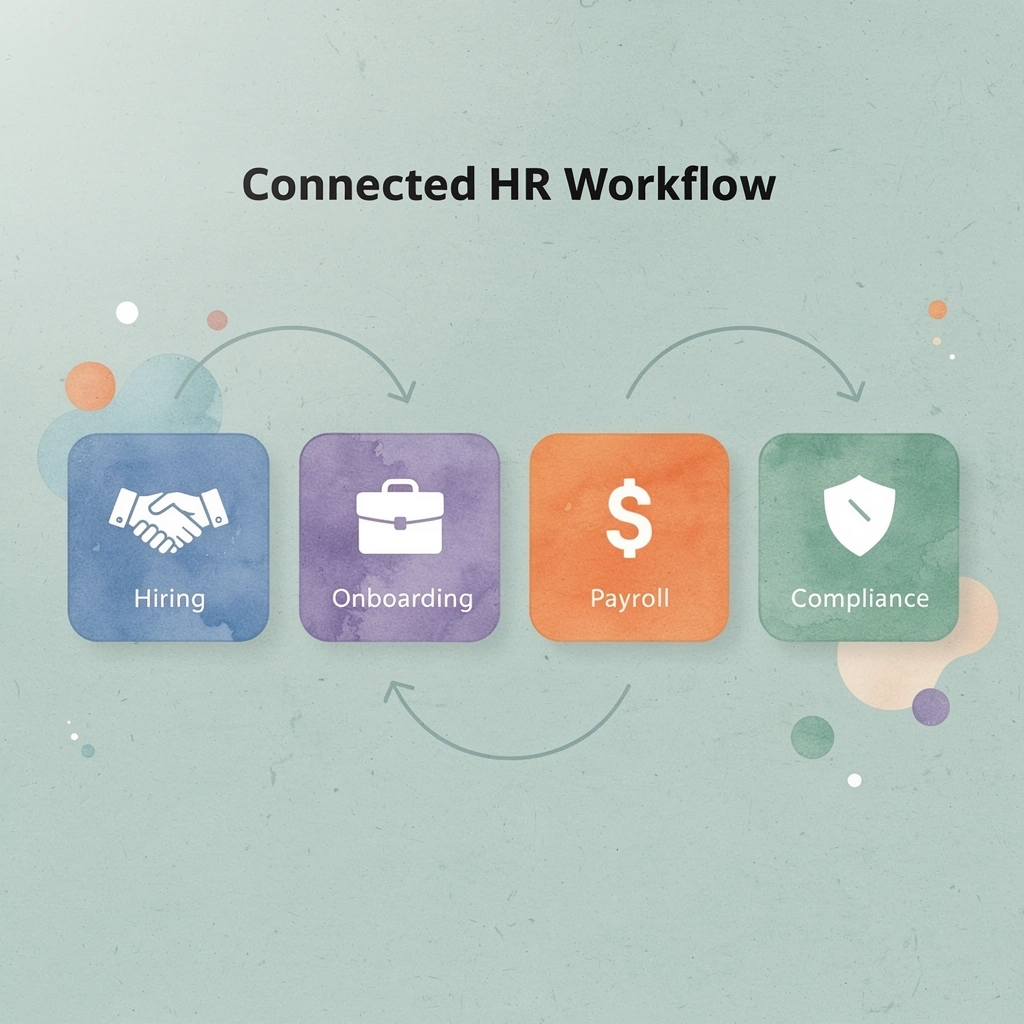
You'll see how connected recruitment infrastructure changes what's possible after someone says yes. When hiring flows directly into onboarding, payroll, and compliance without manual handoffs or data re-entry, AI helps you get candidates working sooner—the outcome that matters.
💡 Tip: Seamless integration between recruitment and HR systems eliminates the time gaps that typically delay new hire productivity and create administrative bottlenecks.
Related Reading
- Social Media Recruitment Strategies
- Corporate Recruitment Strategies
- Recruitment Process Outsourcing
- Top Recruitment Process Outsourcing Companies
- How To Improve The Recruitment Process
- Workable Alternatives
- Manatal Alternatives
- Braintrust Alternatives
- Workable Vs Greenhouse


