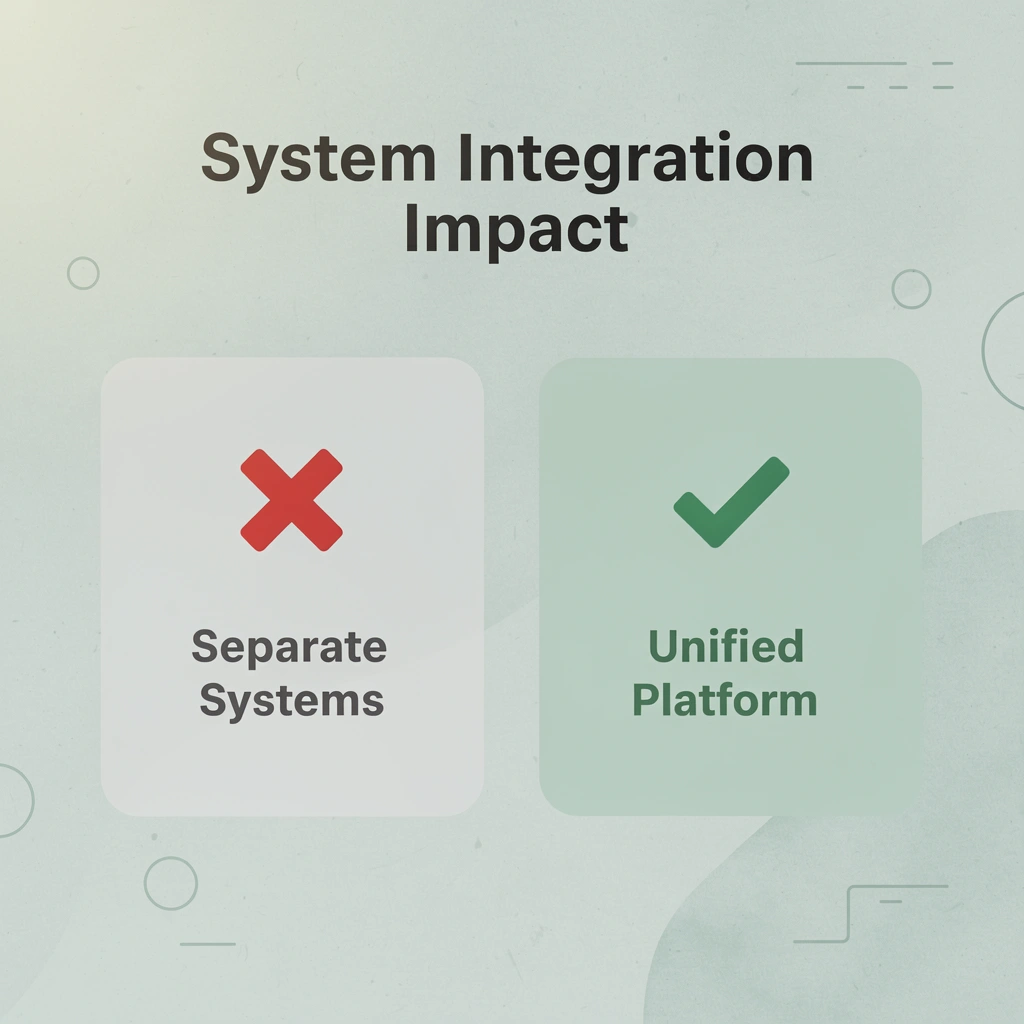
End-to-End Recruitment Process: A Complete Employer Guide
End-to-End Recruitment Process: A Complete Employer Guide
Finding the right talent shouldn't feel like searching for a needle in a haystack, yet many employers struggle with disconnected hiring stages that waste time and cause them to lose great candidates. Each step in the recruitment pipeline demands attention, coordination, and follow-through, from posting job openings to onboarding new hires. Building a hiring system that actually works requires understanding the complete end-to-end recruitment process and how recruitment automation tools can transform scattered efforts into a smooth, repeatable workflow.
Once employers understand the full candidate journey from sourcing to selection, they need systems that support each phase without creating extra work. Instead of juggling spreadsheets and email threads, successful hiring requires a clear view of where each candidate stands and what needs to happen next. Companies looking to streamline their entire recruitment cycle can benefit from implementing a comprehensive global HR system that connects all hiring stages in one place.
Summary
- Recruitment delays rarely stem from candidate shortages. They emerge from administrative friction between hiring stages. According to Cadient Talent's 2023 analysis, 70% of candidates drop off during the application process due to poor communication and unclear timelines, while CareerPlug's 2025 report found that 63% of job seekers abandon applications due to communication failures. These aren't talent problems. They're workflow failures that look like candidate problems.
- The transition from candidate to employee creates the longest delays in most hiring processes. After an offer is accepted, organizations still need to manage employment documentation, compliance requirements, payroll setup, benefits enrollment, and system access. When recruitment systems don't communicate with onboarding platforms, HR teams manually re-enter information already collected during interviews, coordinate across departments without shared visibility, and watch new hires wait days or weeks to actually start productive work.
- Administrative tasks consume too much recruiter time. The 2025 Employ Recruiter Nation Report found that 42% of talent acquisition professionals say administrative work limits their ability to focus on higher-value recruiting activities. Updating candidate records, chasing interview feedback, managing approvals, and re-entering employee information across systems still dominate daily work, preventing recruiters from spending time identifying great candidates and building relationships.
- Structured evaluation creates more consistent hiring decisions than subjective interviews. When interviewers apply different standards (one prioritizing technical depth, another valuing cultural fit, a third focusing on communication), comparing candidates becomes impossible. Companies using recruitment automation see a 30% increase in candidate quality according to CPS, Inc., reflecting how standardized scorecards and defined evaluation criteria help teams identify better fits more reliably.
- Multi-country hiring introduces compliance complexity that fragments across separate systems. Different labor laws, tax requirements, and documentation standards mean hiring someone in one location requires completely different processes than hiring elsewhere. When recruitment, HR, and payroll systems don't share data, every new hire becomes a manual project that requires coordination across multiple platforms and administrators.
- Cercli's global HR system connects recruitment, employee records, and payroll administration on a single platform, so information flows automatically from job posting to the first paycheck without requiring teams to rebuild candidate profiles across separate tools.
Why Recruitment Bottlenecks Usually Occur Between Stages
Recruitment delays rarely stem from a lack of candidates. They occur when candidates get stuck waiting between stages: a hiring manager takes three days to review applications, an offer sits awaiting budget approval, or a new hire's start date gets pushed back because payroll setup requires re-entering information already collected during interviews.
🎯 Key Point: The real bottleneck isn't candidate sourcing—it's the waiting time between each stage of your hiring process.
"75% of recruitment delays occur during stage transitions, not during active candidate evaluation." — HR Process Analytics Study, 2024
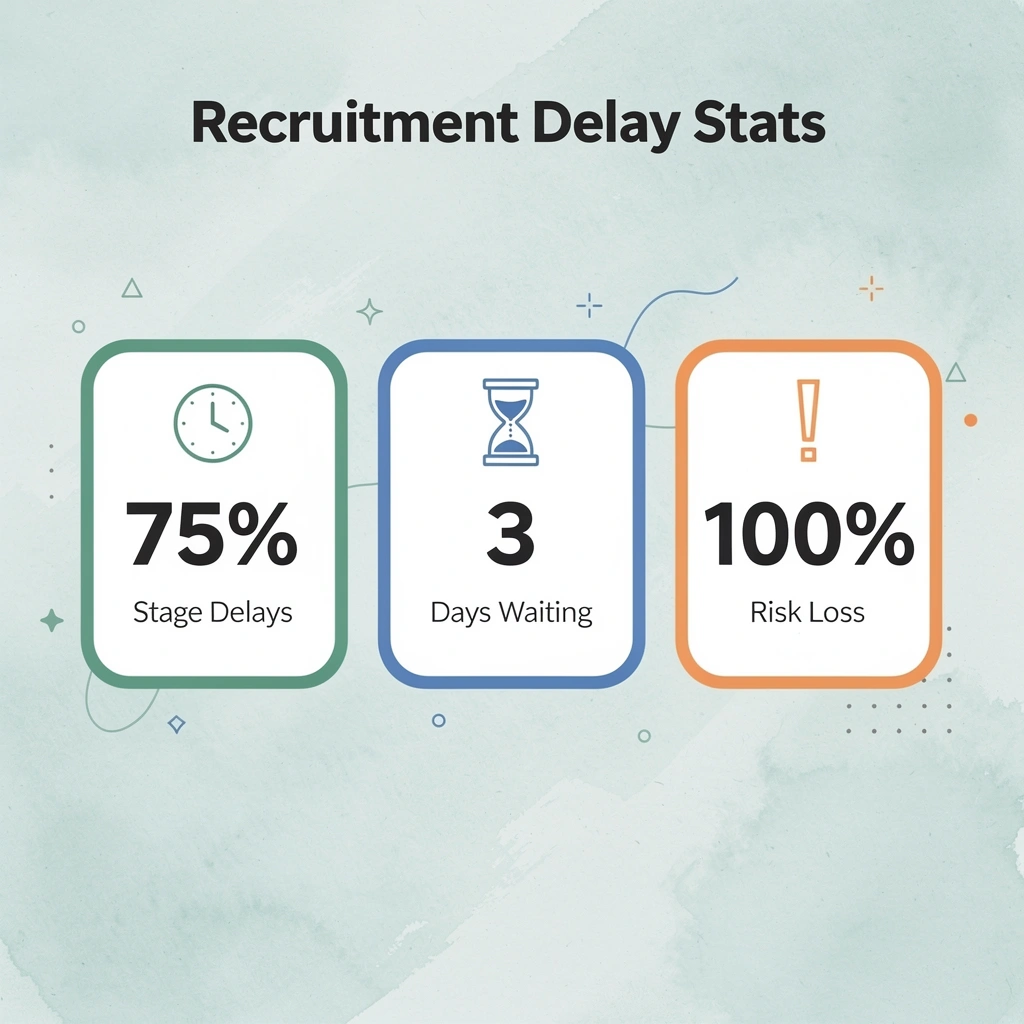
⚠️ Warning: Every handoff delay increases your risk of losing top candidates to competitors who move faster.
The friction lives in the handoffs, not the tasks themselves.

The coordination problem
When multiple stakeholders participate in hiring decisions without clearly defined workflows, approvals become the primary source of delay. Recruiters move quickly through sourcing and screening, then candidates wait days or weeks while hiring managers juggle competing priorities. Finance must approve salary bands, leadership wants a second opinion, and HR requires additional documentation before extending an offer. Each handoff stalls momentum further.
The problem isn't that any single person is slow. No one owns the entire process, so accountability fragments across departments. When everyone is responsible for one piece, no one feels responsible for the timeline.
What happens when recruitment systems don't communicate?
When candidate data is fragmented across systems, problems compound over time. Information scattered across applicant tracking systems, spreadsheets, email threads, and onboarding platforms forces teams to spend hours locating details, duplicating work, and manually updating records across tools. Each additional system increases the risk of errors and delays.
Why does the recruitment-to-onboarding transition create bottlenecks?
The move from hiring to onboarding reveals this fragmentation most clearly. Many organizations treat hiring and onboarding as separate processes managed on different platforms, forcing information collected during interviews—emergency contacts, tax details, banking information—to be reentered for payroll, compliance, and workforce administration. Candidates who accepted offers weeks ago still cannot start because their records aren't ready.
What does candidate dropout data tell us about recruitment workflows?
According to Cadient Talent's 2023 hiring bottlenecks analysis, 70% of candidates stop applying during the application process because of poor communication, unclear timelines, and a lack of information about their recruitment status. When candidates feel ignored or confused, they apply to employers who respond faster.
CareerPlug's 2025 Candidate Experience Report found that 63% of job seekers have abandoned applications due to poor communication, while 49% have declined offers because of negative recruitment experiences. These aren't talent shortages: they're workflow failures.
Why don't disconnected recruitment tools solve efficiency problems?
Most recruitment technology fails to eliminate bottlenecks when workflows remain disconnected. The 2025 Employ Recruiter Nation Report found that recruiters cite process inefficiencies and administrative burdens as obstacles to hiring efficiency. Adding disconnected tools multiplies data silos and handoffs.
Teams operating across multiple countries face additional complexity. Different labor laws, tax requirements, and compliance standards mean that hiring in one location requires different documentation than in others. When recruitment, HR, and payroll systems don't share data, every new hire becomes a manual project. Cercli's global HR system addresses this by integrating recruitment, employee records, and payroll administration into a single platform, so information flows automatically from job posting to the first paycheck.
Recruitment problems are usually workflow problems disguised as talent problems. Organizations that connect hiring stages, reduce manual handoffs, and improve visibility across recruitment and onboarding improve hiring speed and candidate experience without changing their sourcing strategy.
What Is an End-to-End Recruitment Process?
The end-to-end recruitment process is the complete hiring lifecycle, from identifying workforce needs through onboarding and integrating new employees. It treats hiring as a connected process spanning multiple teams, systems, and operational functions, not sourcing and selection alone.

Traditional Hiring
- End-to-End Process
- Isolated steps
- Single department
- Ends at hire
- Reactive approach
Connected Workflow
- Cross-functional teams
- Includes onboarding
- Strategic planning
🎯 Key Point: An end-to-end recruitment process ensures seamless handoffs between hiring stages and creates a consistent candidate experience from first contact to full integration.
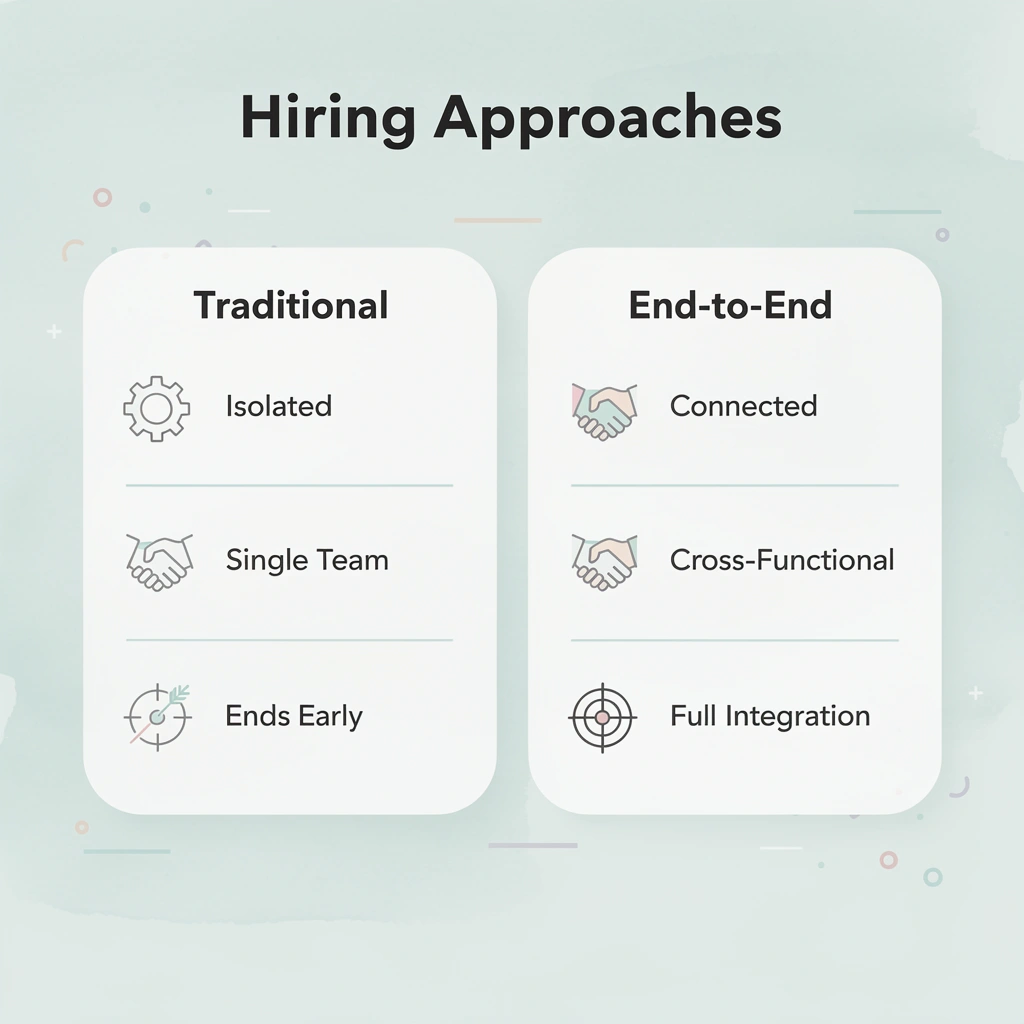
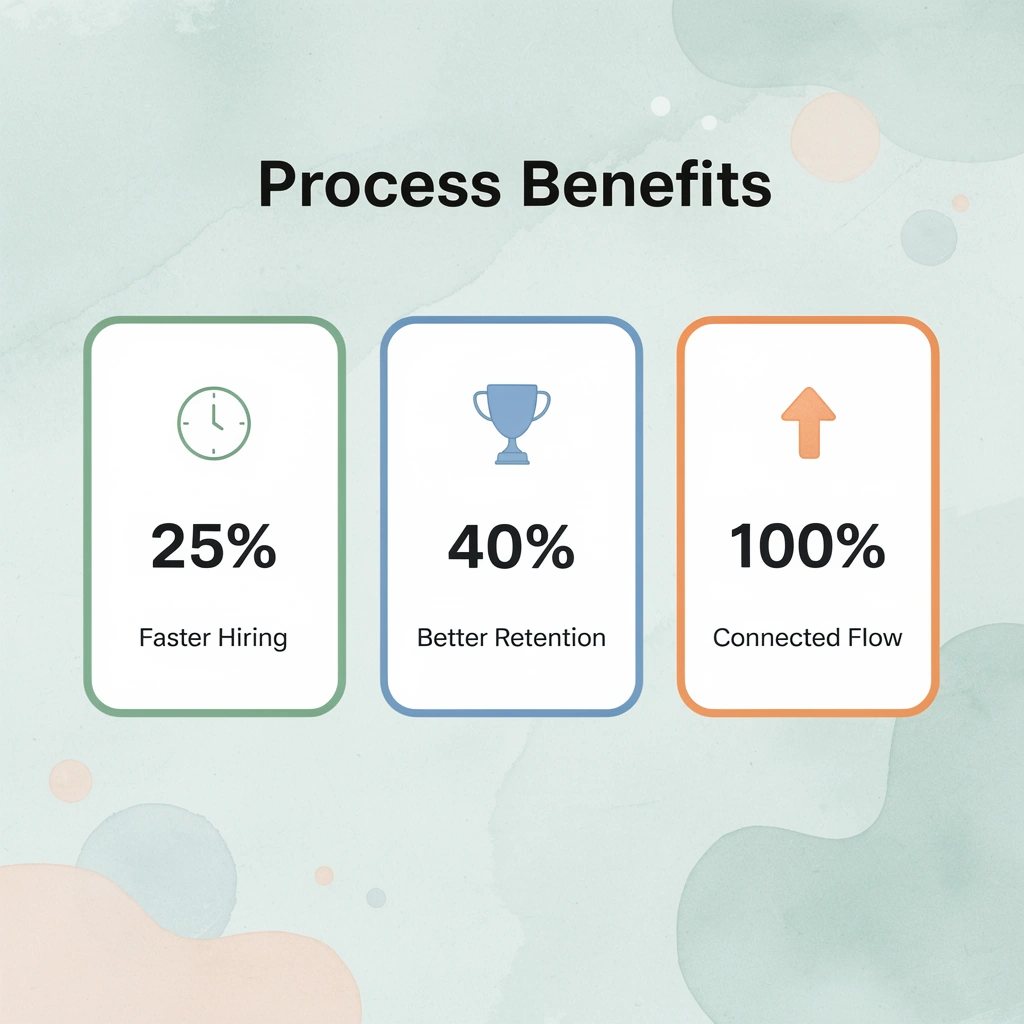
"Organizations with a structured end-to-end recruitment process see 25% faster time-to-hire and 40% better new hire retention rates." — HR Research Institute, 2024
💡 Example: Instead of separate teams handling job posting, screening, interviews, and onboarding independently, an end-to-end approach creates unified workflows where each stage seamlessly connects to the next, ensuring critical information flows between teams and candidate expectations remain consistent throughout the entire journey.
What stages does this actually include?
A complete recruitment process includes workforce planning and headcount approval; job creation and candidate sourcing; candidate screening and assessment; interviews and evaluation; hiring decisions and offer management; compliance and pre-employment requirements; onboarding preparation; and employee onboarding and workforce integration. Workforce planning affects candidate quality, screening influences interview outcomes, and onboarding determines how quickly new hires become productive.
Why shouldn't recruitment end with offer acceptance?
Recruitment shouldn't be considered complete when a candidate accepts an offer. Organizations must manage employment documentation, compliance requirements, employee records, payroll setup, benefits enrollment, equipment allocation, and team integration. If disconnected from recruitment, these processes create delays and administrative bottlenecks that undermine the hiring process.
Why does the recruitment-to-onboarding transition create delays?
The move from candidate to employee is where most organizations experience the longest delays. According to Tracker RMS Blog, even a 500-millisecond delay in system response time can disrupt user experience during critical handoff moments.
When recruitment systems don't communicate with onboarding platforms, HR teams manually re-enter candidate information, chase down documents already collected during the hiring process, and coordinate across departments without shared visibility into progress.
How do integrated platforms solve handoff problems?
Platforms like a global HR system solve this problem by connecting hiring directly to HR management and payroll. This allows teams to move candidates from application to their first paycheck without re-entering information in separate tools, eliminating duplicate data entry and reducing the time between offer acceptance and productive work. This proves especially valuable for organizations managing workforces across multiple countries with different compliance requirements.
An end-to-end recruitment process creates a smooth transition between stages, ensuring that information flows efficiently from recruitment through onboarding to workforce management. This delivers better operational visibility and a smoother experience for both employers and new employees.
Related Reading
- Recruitment Automation Tools
- Candidate Screening Questions
- Candidate Screening Process
- Automated Candidate Screening
- Steps in the Recruitment Process
- Recruiting Funnel Metrics
- AI in Recruitment Examples
- Recruitment Lifecycle
- Best Recruitment Strategies
The 8 Stages of an End-to-End Recruitment Process
Most organizations know what recruitment involves, but the real challenge lies in executing each stage without creating delays, duplicate work, or information loss.
🎯 Key Point: The difference between knowing recruitment theory and executing it flawlessly is what separates high-performing talent teams from those struggling with inefficient processes.

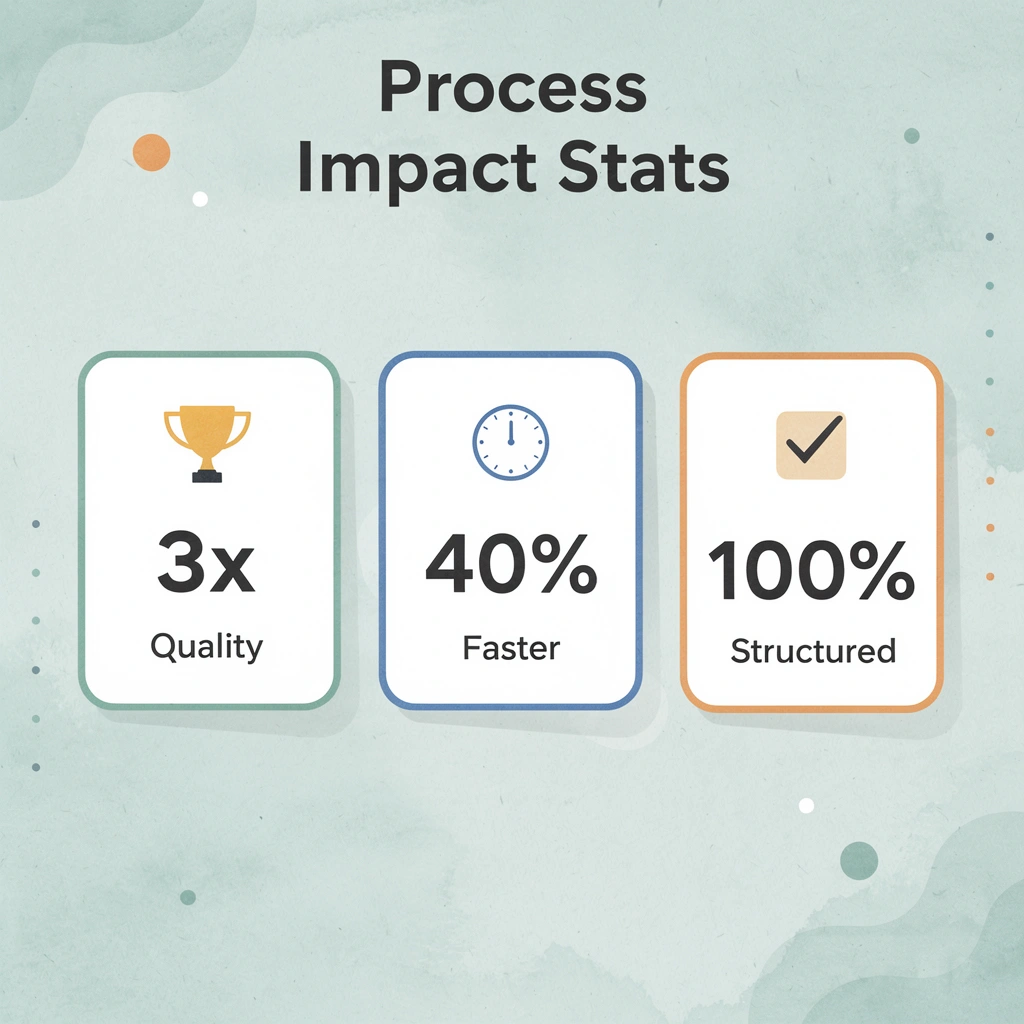
"Organizations with a structured end-to-end recruitment process are 3x more likely to make quality hires and reduce time-to-fill by 40%." — Talent Acquisition Research, 2024
⚠️ Warning: Without proper stage-by-stage execution, even the best recruitment strategies fall apart due to poor handoffs, missing documentation, and inconsistent candidate experiences.
Common Challenge: Information Loss
Impact
Delayed decisions
Solution
Structured documentation
Common Challenge: Duplicate Work
Impact
Wasted resources
Solution
Clear stage ownership
Common Challenge: Process Delays
Impact
Lost candidates
Solution
Defined timelines
Stage 1: Workforce Planning and Hiring Approval
Recruitment starts before anyone posts a job. Someone needs to decide whether the role exists, whether the budget supports it, and whether timing aligns with broader business priorities.
This stage determines headcount needs, secures stakeholder alignment, and establishes budget approval. Unclear planning causes hiring managers to change requirements mid-process, approvals to stall, and recruiters to waste time screening candidates for undefined roles.
The strongest hiring outcomes begin with clear answers to three questions: why this role exists, what success looks like, and who needs to approve it.
Stage 2: Job Creation and Candidate Attraction
Once the role is approved, organizations must attract qualified candidates through accurate job descriptions, strategic sourcing channels, and clear communication.
Common activities include job description development, employer branding, job board advertising, internal mobility programs, and talent sourcing strategies. Vague job descriptions attract unqualified applicants, increasing screening workload and extending time-to-hire. The best postings explain what the role solves, who it serves, and why it matters, rather than listing responsibilities alone.
Stage 3: Candidate Screening
Screening separates applicants who meet basic requirements from those who don't through CV reviews, screening questions, skills assessments, qualification verification, and initial recruiter evaluations.
CareerPlug's 2025 Recruiting Metrics Report found that organizations hire 1 candidate per 180 applicants. This ratio explains why screening becomes a bottleneck: without structured criteria, recruiters spend hours manually reviewing applications, and subjective judgments replace consistent evaluation.
Structured screening creates consistency across applicants and helps recruiters focus on candidates most likely to succeed. Clear criteria enable hiring teams to scale without sacrificing quality.
Stage 4: Interviews and Candidate Evaluation
Shortlisted candidates undergo deeper evaluation through structured interviews, technical assessments, behavioral interviews, hiring scorecards, and decision-making frameworks.
Interview consistency is critical. Different interviewers prioritize different criteria: one values technical skills, another cultural fit, and a third communication style, making comparisons between candidates difficult. Without structured evaluation frameworks, hiring decisions become subjective and indefensible.
Define what "good" looks like before the first candidate arrives. Scorecards, standardized questions, and clear evaluation criteria enable objective comparisons among candidates rather than gut-feeling decisions.
Stage 5: Candidate Selection and Offer Management
After evaluations are complete, organizations select a preferred candidate and extend an offer. This stage includes final candidate evaluations, compensation approvals, offer creation, employment contract preparation, and candidate acceptance.
Hiring delays often occur because approvals involve multiple stakeholders: finance sign-off for compensation, legal contract reviews, and executive approvals. Each handoff introduces delay. SHRM's 2025 Recruiting Benchmarking Report shows the average time-to-fill is 44 days, with offer management accounting for a significant portion of that time.
Speed matters because strong candidates often have competing opportunities. Every day of delay increases the risk of losing your preferred candidate to another employer.
Stage 6: Compliance and Pre-Employment Requirements
Before onboarding begins, organizations must meet all employment and regulatory requirements, especially when operating across the UAE, Saudi Arabia, and the wider MENA region.
Activities include checking employment eligibility, collecting documentation, verifying work authorization, checking country-specific employment requirements, and determining contractor versus employee status. Compliance requirements vary by location, and missing documentation can delay onboarding or create legal issues.
Handling compliance before onboarding starts prevents administrative problems and legal risk. Waiting to address compliance often results in new employees starting work without complete documentation, exposing both employee and employer to risk.
Stage 7: Onboarding Preparation
Most organizations underestimate the work required to bridge the gap between offer acceptance and first-day readiness. Employers must prepare employee records, request equipment, set up payroll, enroll benefits, and configure system access.
Administrative delays occur when recruitment, HR, payroll, and IT systems operate separately. Recruiters capture candidate information in an ATS; HR teams re-enter data into HRIS systems; payroll requires separate data entry; and IT sets up access based on email requests. Each handoff introduces delay and increases the risk of error.
How does multi-country hiring complicate onboarding preparation?
Hiring workers in multiple countries adds complexity: employment contracts vary by location, payroll systems differ across companies, and compliance requirements vary accordingly. Platforms like a global HR system consolidate recruitment, HR, and payroll information into a single system, eliminating duplicate data entry and reducing onboarding time from days to hours.
Getting new employees ready quickly helps them start working right away. Delays frustrate new hires and reduce their productivity in their first weeks.
Stage 8: Employee Onboarding and Integration
The final stage focuses on helping employees transition successfully into the organization through first-day readiness, team introductions, role-specific training, compliance completion, and early employee experience initiatives.
Why does onboarding determine recruitment success?
Many organizations mistakenly view recruitment as complete once an offer is signed. Hiring success depends on whether new employees become productive, engaged, and integrated into the business. A strong candidate who receives poor onboarding often underperforms or leaves within the first year.
What makes employee onboarding effective?
Good onboarding helps new employees connect with their team, understand their role, and obtain the tools and access needed to work effectively. Poor onboarding leaves employees spending their first weeks seeking access, determining their responsibilities, and struggling to identify who to contact for help.
Recruitment Success Extends Beyond Hiring
Recruitment success extends beyond hiring. Organizations realize full value only when new hires are successfully integrated and equipped to perform their roles effectively.
The strongest recruitment processes connect workforce planning, hiring, onboarding, compliance, and workforce management into a seamless employee journey. When these stages operate independently, handoffs create delays, information gets lost, and hiring teams spend more time managing systems than evaluating candidates.
Related Reading
- Recruitment Analytics Software
- How Can I Use Ai To Improve My Job Descriptions
- Hr Automation Tools
- Best Job Descriptions
- How To Write A Job Description
- Automate Interview Scheduling
- How To Use Ai In Recruitment
- Candidate Screening Tools
- Best Tools For Remote Recruitment
- Companies Using Ai For Recruitment
- Best Recruitment Crm
Common End-to-End Recruitment Process Challenges
Most organizations focus on individual hiring stages like finding candidates or interviewing, but real problems emerge when those stages don't connect. A strong group of candidates means little if operational inefficiencies slow hiring, create poor experiences, or force teams to spend more time managing systems than evaluating people.

⚠️ Warning: The biggest recruitment failures happen not because of bad candidates or poor interviews, but because of disconnected processes that create friction between stages.
"78% of talent acquisition leaders report that process inefficiencies — not candidate quality — are the primary barrier to successful hiring." — HR Technology Survey, 2023

🎯 Key Point: End-to-end recruitment success depends on seamless integration between stages, where each step enhances rather than hinders the next phase of the hiring process.
Disconnected Systems
Using separate platforms for recruitment, onboarding, payroll, and HR administration creates ongoing operational problems. Candidate information collected in an ATS gets manually transferred into onboarding tools, re-entered into HR systems, and then processed again for payroll. Each handoff introduces additional work, increases the risk of errors, and reduces visibility across the employee lifecycle. As organizations grow or hire across multiple countries, these disconnected workflows become exponentially harder to manage consistently.
Manual Administrative Work
According to the 2025 Employer Recruiter Nation Report, 42% of talent acquisition professionals report that administrative tasks consume too much of their time, limiting their ability to focus on higher-value recruiting activities. Updating candidate records, chasing interview feedback, managing approvals, collecting documentation, and re-entering employee information across systems dominate daily work. This burden prevents recruiters from identifying strong candidates and building relationships.
Poor Hiring Visibility
Recruitment slows when stakeholders cannot easily see where candidates are in the process. Without centralized visibility, recruiters struggle to identify delayed approvals, hiring managers lack insight into candidate pipelines, and leadership teams have a limited understanding of hiring performance. When a role sits unfilled for weeks, the problem often isn't candidate quality but invisible bottlenecks scattered across email threads and approval workflows.
Inconsistent Hiring Workflows
When different departments or hiring managers use different recruitment processes, inconsistencies emerge that affect hire quality and time-to-fill. Variations in candidate screening, interview structure, approval workflows, and evaluation criteria mean candidates face different hiring standards for similar roles. Recruiters must coordinate across multiple processes simultaneously. LinkedIn's Future of Recruiting 2025 found that 67% of talent professionals say their biggest challenge is identifying the right candidates from a large applicant pool, a problem compounded when screening standards vary by department or manager preference.
How do compliance gaps affect multi-country recruitment?
Following the rules becomes harder when companies hire workers across multiple countries or use different types of workers. For employers in the UAE, Saudi Arabia, and the wider MENA region, hiring involves employment paperwork requirements, work permission processes, local labor rules, contractor classification rules, and country-specific onboarding duties.
When compliance work is managed separately from hiring workflows, important requirements are missed or take longer to meet. Platforms like Cercli consolidate multi-country hiring, compliance, and payroll into unified workflows, reducing paperwork gaps and accelerating onboarding from weeks to days.
What impact do disconnected operations have on hiring outcomes?
When recruitment operations lack integration, candidate experience and measurable hiring results suffer, as evidenced by rising turnover rates.
How Technology Supports an End-to-End Recruitment Process
Technology helps with hiring from start to finish by connecting different stages that usually don't work together. The benefit is creating a steady flow of information from workforce planning through onboarding and payroll setup. When different systems share information, recruiters spend less time moving data and more time making hiring decisions.
🎯 Key Point: Integrated recruitment technology eliminates data silos and creates a seamless candidate experience from initial application to final onboarding.
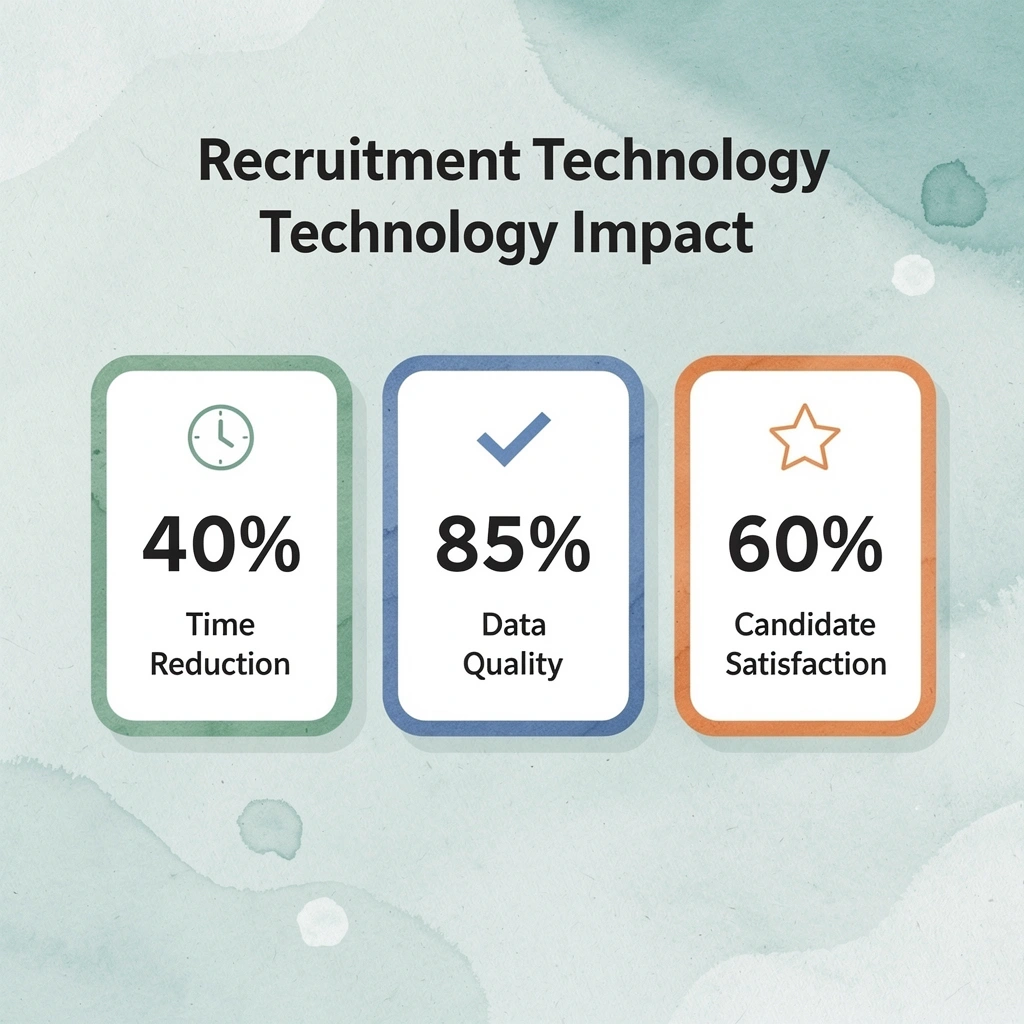
"End-to-end recruitment platforms can reduce time-to-hire by up to 40% while improving candidate quality through better data integration." — HR Technology Research, 2024
💡 Best Practice: Choose recruitment platforms that offer native integrations with your existing HRIS, payroll systems, and onboarding tools to maximize the benefits of connected workflows.
Workflow Automation Reduces Recruitment Delays
Recruitment bottlenecks stem from administrative friction between stages, not candidate shortages. Interview scheduling requires coordinating multiple calendars. Offer approvals need signatures from finance, legal, and department heads. Onboarding paperwork awaits manual data entry.
Workflow automation eliminates coordination delays through automated handoffs. Candidate routing directs applications to appropriate reviewers based on role requirements. Interview scheduling syncs with hiring manager availability without email chains. Offer workflows trigger approvals in sequence, notifying stakeholders when action is required. According to CPS, Inc., AI-powered tools can reduce time-to-hire by up to 40%, largely by compressing administrative delays between stages.
What problems does scattered recruitment data create?
When candidate information is spread across multiple locations—emails, spreadsheets, interview notes, separate platforms—hiring teams lack complete visibility. A hiring manager might review a CV without seeing phone screen feedback. HR could prepare an offer without knowing the candidate's start date. Payroll might receive incomplete employment details days after the person's first day.
How does centralized recruitment data improve team coordination?
Centralized recruitment systems create a single source of truth where every stakeholder sees the same candidate information, interview feedback, hiring status, and next steps. This prevents duplicated effort and catches problems early: when a candidate hasn't moved forward in five days, the system shows exactly where the delay occurred and who needs to act.
Structured Evaluation Creates More Consistent Decisions
Hiring decisions become inconsistent when interviewers apply varying standards: one manager prioritizes technical depth, another values cultural fit, and a third focuses on communication skills. Without structure, candidate evaluation becomes subjective and difficult to compare.
Technology standardizes assessment through interview scorecards, structured feedback forms, and defined evaluation criteria. Each interviewer rates candidates against the same competencies using the same scale. This doesn't eliminate judgment but creates a consistent framework for comparison. CPS, Inc. reports that companies using recruitment automation see a 30% increase in candidate quality, demonstrating how structured evaluation helps teams identify better fits more reliably.
How does workforce integration eliminate post-hire bottlenecks?
Accepting an offer doesn't make someone an employee. They need to be added to HR systems, enrolled in payroll, assigned benefits, granted system access, and onboarded into their team. When recruitment operates separately from workforce management, this transition requires manual data transfer across multiple platforms.
What benefits do integrated systems provide for new hire transitions?
Integrated systems connect recruitment directly to employee records, payroll setup, and compliance tracking. Candidate details flow automatically into onboarding workflows, employment contracts trigger payroll activation, and background checks update compliance records without duplicate entry. Platforms like a global HR system compress this handoff by unifying recruitment, HR, and payroll into a single system, which is particularly valuable for teams hiring across multiple countries where compliance requirements vary by jurisdiction.
How do recruitment analytics reveal hidden problems in hiring processes?
Most recruitment problems stay hidden until they become serious. A sourcing channel might generate many applications, but few candidates advance. Interview stages see high dropout rates. Hiring managers delay feedback by an average of four days. Without data, these patterns go unnoticed.
What recruitment metrics can technology track that manual processes cannot?
Technology reveals recruitment metrics impossible to track manually: time-to-hire by role type, department, or seniority level; candidate conversion rates at each stage; and source performance across job boards, referrals, and direct applications. These insights help teams identify process bottlenecks and test whether changes improve outcomes.
How does connected recruitment technology improve the hiring experience?
The best recruitment technology creates a connected system where information flows smoothly from job requisition through employee activation, eliminating manual handoffs that slow hiring and fragment candidate experience.
How Cercli Helps Companies Manage the End-to-End Recruitment Process
Recruitment doesn't work on its own, separate from the rest of your workforce operations. When hiring systems are separate from payroll, compliance, and employee administration, every new hire requires manual handoffs between teams. Cercli connects recruitment with the broader employee lifecycle, so candidate information flows directly into onboarding, payroll setup, and workforce management without teams rebuilding records across disconnected platforms.

🎯 Key Point: Integrated recruitment systems eliminate the need for manual data entry and duplicate record-keeping across different platforms, reducing administrative overhead by connecting hiring directly to workforce management.
"Manual handoffs between recruitment and other HR systems create unnecessary friction that can delay new hire onboarding and increase administrative costs."

💡 Best Practice: Look for recruitment solutions that offer native integration with payroll systems and employee management platforms to ensure seamless data flow from candidate selection to first-day onboarding.
Centralized Candidate Management
With Cercli's ATS, recruiters and hiring managers work from a shared candidate pipeline instead of fragmented spreadsheets and email threads. Applications, interview feedback, and hiring decisions live in one place, reducing coordination overhead when multiple stakeholders need to review, comment, or approve candidates.
Structured workflows ensure screening, evaluation, and approval processes follow consistent steps regardless of who is hiring or which department is expanding. When recruitment volumes increase, teams maintain hiring quality because the process does not rely on individual memory or informal procedures.
How does pipeline tracking identify recruitment bottlenecks?
Cercli provides tracking throughout the entire hiring process, identifying where candidates progress smoothly and where delays occur. When you see that candidates get stuck during hiring manager review or offer approvals take twice as long in certain departments, you can fix specific bottlenecks rather than guessing why time-to-hire stretches. Pipeline visibility shifts recruitment from reactive to data-driven, enabling you to measure, adjust, and improve based on actual performance.
Why do multiple platforms create recruitment inefficiencies?
According to Cercli, recruitment teams often manage up to 15 platforms to handle hiring, onboarding, and workforce administration. Each additional system creates handoff points where information must be manually moved, checked, and updated. Direct connections between recruitment, payroll, and compliance workflows eliminate record duplication and the need to search for missing documentation across separate tools.
Managing Multi-Entity and Cross-Border Hiring
For organizations operating across the UAE, Saudi Arabia, and the wider MENA region, recruitment complexity increases due to differing legal entities, employment types, and regulatory requirements. Cercli supports local employees, international contractors, and Employer of Record arrangements within a single platform, eliminating the need to switch between separate systems for each hiring scenario.
This becomes particularly valuable when expanding into new markets. EOR services integrated with recruitment workflows let you hire and onboard employees in new countries while maintaining visibility and control from one system, avoiding the fragmentation of coordinating between your ATS, a separate EOR provider, and local payroll administrators.
How does recruitment connect to post-hire operations?
The biggest advantage of managing recruitment through Cercli is that hiring remains connected to what happens after a candidate accepts an offer. Onboarding workflows start automatically; payroll setup uses existing candidate information; compliance documentation flows into employee records; and new hires appear in workforce management systems without manual data entry.
What administrative benefits does integrated recruitment provide?
This eliminates the gap where candidates wait days for access, equipment, or first-day instructions due to information silos between recruitment and HR operations.
When recruitment, onboarding, payroll, and employee administration share the same data foundation, you reduce the administrative work that consumes recruiter time after hiring. Teams spend less effort updating systems and more time on recruitment activities that require human judgment.
Related Reading
- Social Media Recruitment Strategies
- Corporate Recruitment Strategies
- Recruitment Process Outsourcing
- Top Recruitment Process Outsourcing Companies
- How To Improve The Recruitment Process
- Workable Alternatives
- Manatal Alternatives
- Braintrust Alternatives
- Workable Vs Greenhouse
Book a Demo to Speak with Our Team about Our Global HR System
If your hiring process uses separate systems for hiring, onboarding, payroll, and workforce management, book a Cercli demo. The session identifies critical handoffs and administrative bottlenecks slowing hiring and shows how a connected ATS and HR platform streamlines the entire employee journey from workforce planning through onboarding.

🎯 Key Point: A unified HR system eliminates the data silos that create hiring delays and administrative overhead.
The conversation focuses on your specific hiring challenges: multi-country recruitment complexity, manual data transfers between systems, or limited pipeline visibility. You'll see how recruitment, HR, and payroll integration works in practice. Most teams leave with clarity on whether consolidating their recruitment stack will reduce operational friction.

"Organizations using integrated HR platforms see 40% faster time-to-hire compared to those managing separate systems." — HR Technology Research, 2024
💡 Tip: Come prepared with your current system workflow mapped out to maximize the demo's value for your specific use case.