How Can I Use AI to Improve My Job Descriptions?
How Can I Use AI to Improve My Job Descriptions?
Job descriptions that attract the wrong candidates waste time and resources. Many hiring managers struggle with vague postings that fail to clearly communicate role expectations, resulting in mismatched applications and prolonged hiring cycles. Recruitment automation tools powered by AI can transform generic job postings into targeted invitations that draw qualified talent while filtering out unsuitable candidates.
AI-enhanced writing assistance helps refine language for better candidate matching and reduces time spent rewriting ineffective descriptions. These tools analyze successful hiring patterns, automatically incorporate inclusive language, and align content with current talent acquisition best practices. Organizations can streamline this process further by implementing a comprehensive global HR system that integrates AI capabilities directly into existing hiring workflows.
Summary
- Job postings with clear, concise descriptions receive 30% more applications according to Insight Global's 2025 research. The difference isn't just volume; it's quality. Vague language about "dynamic team players" or "self-starters" doesn't help candidates understand what success looks like in the role. Harvard Business School research found that when job requirements were vague, only 6% of qualified women applied for an advanced role compared to 22% of qualified men. However, when employers provided clearer guidance on qualifications, application rates among qualified women increased substantially. This highlights that unclear requirements don't simply create confusion; they actively reduce the number of qualified candidates entering the recruitment funnel.
- AI-powered sourcing reduced time-to-hire by 40% in 2025, according to HeroHunt.ai, largely by improving the accuracy of initial candidate matching. This reduction happens because candidates who understand the role apply with more realistic expectations, reducing mismatched applications and speeding up screening. Fuse Workforce research shows that AI can reduce time-to-hire by up to 40% when job descriptions are optimized for clarity and candidate matching. The technology handles structural, language clarity, and completeness checks, while recruiters provide judgment on what actually matters for the role and the organization.
- Most recruitment bottlenecks occur during initial screening, when recruiters spend hours reviewing applications that don't meet basic requirements. AI can eliminate that work, but only when job requirements are clearly defined upfront. A well-structured job description becomes the filter that determines which candidates surface first. Organizations using structured screening systems achieve a 50% improvement in candidate quality, according to research on automated candidate screening. That improvement comes from visibility into where candidates are in the pipeline and which stages take too long.
- Treating AI-generated content as final without validation creates job descriptions that look polished but fail to attract the right candidates. According to research from the Juicebox AI Blog, 52% of recruiters admit they don't fully understand how their AI tools make decisions. That lack of transparency makes human review even more critical, because recruiters need to validate that AI-generated content reflects actual hiring needs rather than algorithmic assumptions. The goal is to use AI to handle structure and language clarity, then add the judgment that only humans close to the work can provide.
- The highest-performing recruitment teams use AI not just for automation but for pattern recognition across the hiring lifecycle. HeroHunt.ai found that 85% of talent acquisition teams integrated AI into their recruitment workflow in 2025. The real shift happens when recruitment data connects to workforce outcomes such as performance, retention rates, and skills gaps. When systems talk to each other, AI can surface connections between job-posting language and candidate quality, or between sourcing channels and first-year performance, thereby changing how teams write descriptions and make hiring decisions.
- Cercli's global HR system addresses recruitment fragmentation by consolidating job description creation, applicant tracking, and workforce analytics into a single platform, enabling teams to see how job-posting language affects candidate quality and how hiring decisions impact long-term retention across the UAE, Saudi Arabia, and the wider MENA region.
Why Better Job Descriptions Matter More Than Most Employers Realize
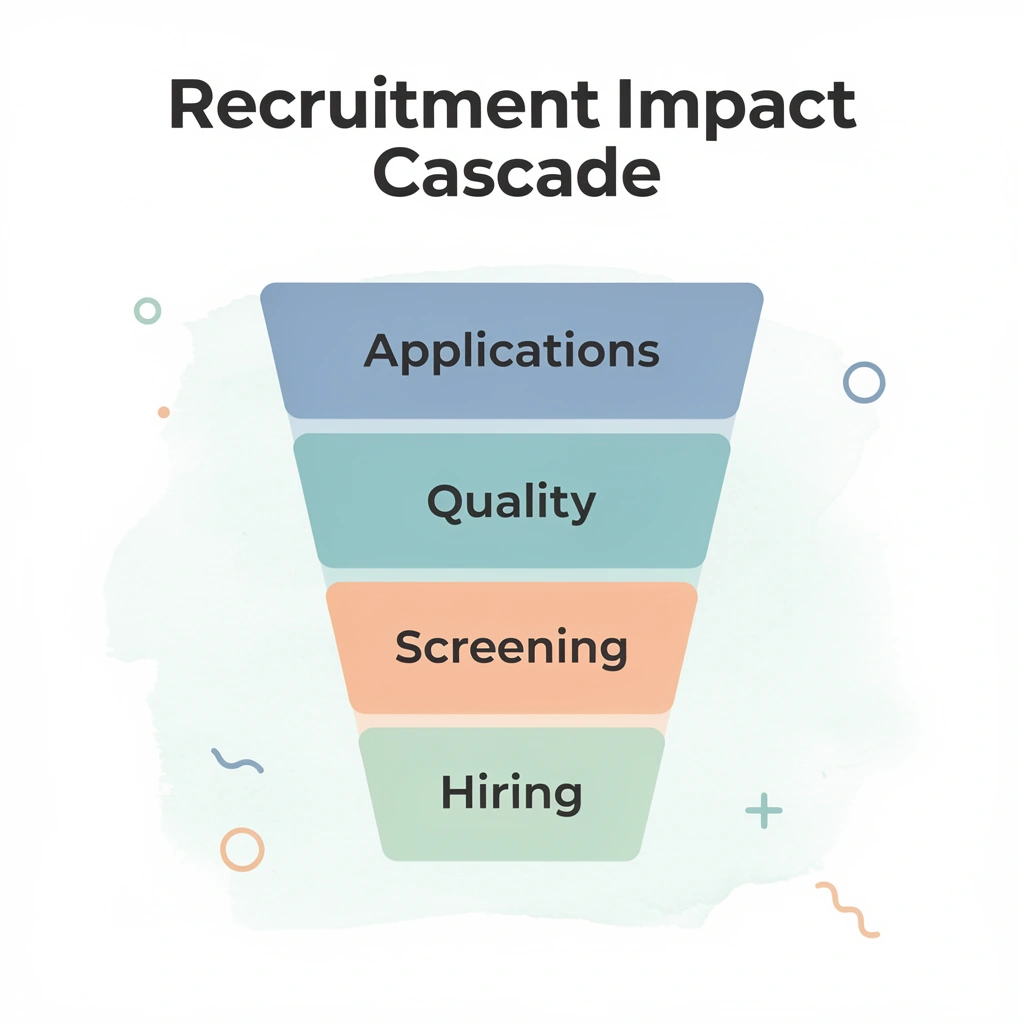
Many organizations treat job descriptions as administrative documents. In reality, they influence every stage of recruitment: who applies, who self-selects out, screening decisions, and ultimately hiring quality. Well-crafted job descriptions act as powerful filters that attract the right candidates while deterring poor fits before they apply.
🎯 Key Point: Your job description is your first and most critical recruitment tool—it determines the quality of your entire candidate pool.

"Job descriptions that clearly communicate role expectations and company culture can reduce time-to-hire by 30% and improve candidate quality significantly." — Recruitment Research Institute, 2024
Recruitment problems often begin long before the first application arrives. When job descriptions are vague, outdated, or fail to communicate company culture, they create a cascade of issues: wrong candidates apply, qualified prospects skip the opportunity, and hiring teams waste time screening mismatched applicants. The cost extends beyond time to the high-quality candidates you never reach because your job description didn't speak to them.
⚠️ Warning: Generic job descriptions copied from templates can actively repel top talent who are looking for specific challenges and clear growth opportunities.
Job Descriptions Influence Candidate Quality
A job description is an employer's first point of contact with potential candidates. Clear explanations of responsibilities, expectations, and required skills help candidates assess fit and attract applicants whose abilities match the organization's needs. Unclear, generic, or bloated descriptions attract unqualified applicants while deterring qualified candidates.
Poorly Written Roles Can Deter Qualified Candidates
Research shows that clear job descriptions attract higher-quality applicants. According to Insight Global, postings with clear, concise descriptions receive 30% more applications. Vague language about "dynamic team players" or "self-starters" obscures what success looks like in the role.
Harvard Business School research found that vague requirements discourage qualified candidates, particularly women. Only 6% of qualified women applied for an advanced role with unclear requirements compared to 22% of qualified men. When employers provided clearer guidance on qualifications, application rates among qualified women increased substantially. Unclear requirements reduce the number of qualified candidates in your recruitment funnel.
Vague Requirements Create Screening Inefficiencies
Many job descriptions fail to distinguish between essential skills and nice-to-have qualifications. This confusion deters qualified applicants and floods recruiters with unsuitable candidates, making screening more time-consuming and hindering the identification of top talent.
Traditional HR workflows treat job descriptions as separate documents disconnected from screening and hiring. Platforms like Cercli integrate job description creation into the recruitment workflow, learning from successful hires to suggest language that attracts better-fit candidates and prevents screening problems before they arise.
Why do recruitment problems start before applications arrive?
Organizations often focus on improving sourcing, screening, or interviewing when hiring results fall short. However, a poorly defined job description undermines these efforts by attracting unsuitable candidates. Unclear roles lead to lower-quality applications, increased screening workloads, longer hiring timelines, and misalignment between recruiters and hiring managers.
A well-structured job description creates a stronger foundation for every stage of recruitment.
How does job description quality affect applicant quality?
The quality of applicants is directly influenced by how well the job description is written. Before investing in new candidate-sourcing methods, screening tools, or recruitment technology, organizations should ensure that their job descriptions clearly explain the role's responsibilities, required skills, success metrics, and expectations.
This helps you attract better candidates, reduce screening inefficiencies, and improve the hiring process from the start. Writing better job descriptions by hand still leaves most teams guessing about what works.
Related Reading
- Candidate Screening Questions
- Candidate Screening Process
- Automated Candidate Screening
- Steps in the Recruitment Process
- End to End Recruitment Process
- Recruiting Funnel Metrics
- AI in Recruitment Examples
- Recruitment Lifecycle
- Best Recruitment Strategies
How Can AI Improve Job Descriptions?
AI helps recruitment teams build clearer, more structured job descriptions by creating first drafts, improving readability, and identifying gaps that hiring managers miss. AI functions as a drafting assistant, reducing the time spent creating documents while ensuring descriptions are more consistent and of higher quality across roles.

🎯 Key Point: AI-powered job descriptions eliminate the most common recruitment bottleneck - spending hours crafting role requirements from scratch.
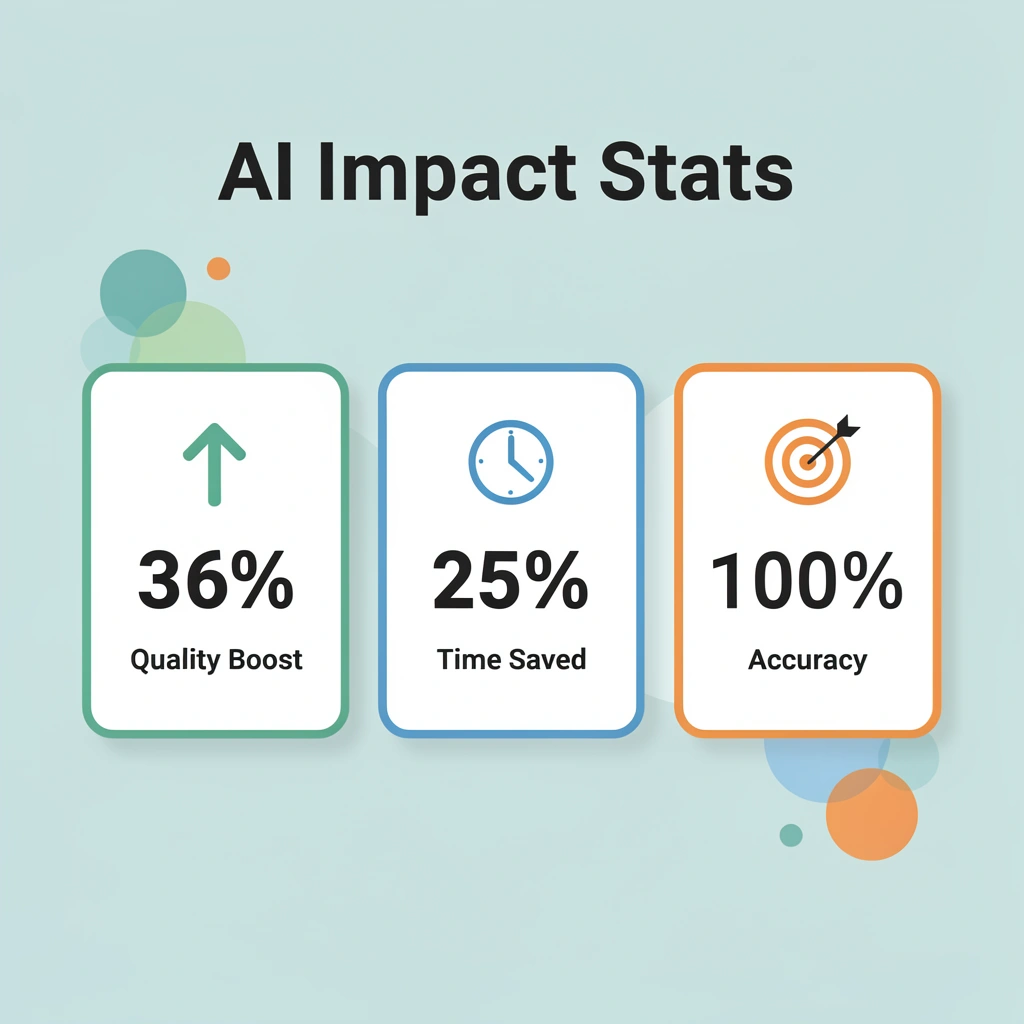
"Well-structured job descriptions can improve candidate quality by 36% and reduce time-to-hire by 25%." — Society for Human Resource Management, 2023
⚡ Pro Tip: Use AI tools to automatically identify missing requirements like soft skills, compliance needs, or diversity language that human reviewers typically overlook.
Draft Job Descriptions Faster
Recruiters typically spend hours creating job postings from scratch, especially for multiple similar roles. AI takes basic inputs—job title, key responsibilities, required experience, and skills—and generates a structured first draft within minutes. This eliminates the blank-page problem that slows hiring pipelines, allowing teams to focus on refining content rather than building it from scratch.
Improve Clarity and Readability
Job descriptions often fail because they're written in internal jargon or packed with complex language that candidates struggle to understand. AI can simplify sentence structure, reduce repetition, and organize content to clarify expectations. When candidates quickly determine whether they fit a role, application quality improves. According to Built In, AI automation effectively cleans up unclear job language, making descriptions more accessible without losing technical accuracy.
Identify Missing Requirements
Hiring managers naturally focus on technical responsibilities but frequently overlook soft skills, reporting relationships, or performance expectations. AI prompts teams to consider gaps by suggesting areas needing clarification: leadership capabilities, communication requirements, and regulatory knowledge. This reduces misunderstandings and creates more complete job descriptions.
Suggest Skills and Competencies
AI can recommend technical competencies, industry-specific skills, and problem-solving abilities based on job titles and responsibilities. These suggestions help hiring teams consider what success requires rather than relying on outdated templates.
However, recommendations should be reviewed: generic market assumptions don't always match organizational needs, and human oversight ensures alignment with actual team dynamics.
How do integrated platforms streamline job description workflows?
Platforms like Cercli's global HR system combine AI-assisted job description creation directly into recruitment workflows, allowing teams to draft, refine, and publish roles without switching between tools. This eliminates fragmented processes where job descriptions, candidate screening, and hiring decisions require manual data transfers across platforms.
The shift happens when job descriptions become strategic filters rather than administrative tasks.
10 Ways to Use AI to Improve Job Descriptions
Good job descriptions help you decide whether to interview qualified candidates or waste weeks on applications that don't match what you need. AI can help you build those filters with precision, but only if you use it to clarify what matters rather than generate content faster.

AI supports recruitment teams in creating job descriptions that attract qualified candidates, reduce screening time, and align hiring decisions with business needs.
1. Create a Strong First Draft Faster
AI can create an initial job description draft from role information, responsibilities, skills, and reporting structure, reducing writing time, standardizing formatting, and providing a structured starting point. However, human editing remains necessary to ensure accuracy and alignment with business needs.
2. Clarify Role Responsibilities
Many job descriptions fail because they describe duties too broadly or leave key expectations unclear. AI can help recruiters clarify core responsibilities, day-to-day activities, key deliverables, and expected outcomes.
Clear responsibilities help candidates understand what success looks like and improve the chances of attracting the right applicants. When candidates can picture their actual workday rather than decipher vague statements about "driving results" or "contributing to team success," they make better choices about whether to apply.
3. Identify Missing Skills and Competencies
AI can identify missing skills and competencies relevant to a job: technical skills, leadership abilities, communication skills, problem-solving abilities, industry-specific knowledge, and regulatory requirements.
Look over these suggestions carefully to ensure they're relevant rather than generic. The goal is to capture what the job needs, not create a long list that discourages qualified candidates.
4. Distinguish Required vs Preferred Qualifications
Job descriptions often conflate required skills with preferred ones. AI can distinguish among required qualifications, preferred qualifications, nice-to-have experience, and additional skills, creating clearer expectations and attracting a broader candidate pool by reducing unnecessary barriers to application. When candidates understand the difference between "must have" and "would be useful," they apply based on genuine fit rather than guesswork.
5. Improve Readability
Hard-to-understand language and excessive technical jargon deter qualified candidates from applying. AI can help by simplifying language, eliminating unnecessary words, improving sentence structure, and organizing information more effectively.
Job descriptions that are easier to understand help candidates decide if they are a good fit. According to research from Fuse Workforce, AI can reduce time-to-hire by up to 40% when job descriptions are optimized for clarity and candidate matching, since candidates with realistic expectations submit fewer mismatched applications.
6. Reduce Repetitive Content Creation
Organizations hiring for similar roles often unnecessarily recreate job descriptions. AI can streamline this by generating role variations, updating templates, adapting descriptions across teams, and ensuring consistency. This proves especially valuable for large-scale hiring, allowing recruiters to customize differentiating details rather than rewrite foundational content for each opening.
7. Support Skills-Based Hiring
Many employers are shifting towards skills-based hiring rather than relying heavily on formal credentials. AI can help recruiters identify and prioritize role-specific competencies, practical skills, transferable capabilities, and demonstrated experience. This opens roles to candidates with non-traditional backgrounds who might otherwise assume they're unqualified based on degree requirements alone.
8. Improve Consistency Across Teams
Different hiring managers often describe similar roles in different ways. AI can standardize formats, terminology, qualification frameworks, and role structures across teams.
Consistency improves candidate understanding and recruitment predictability. When departments define "senior" differently or use conflicting language for the same competencies, candidates cannot compare opportunities and recruiters lose credibility.
How can integrated platforms solve workflow fragmentation?
Most teams manage job descriptions through disconnected tools: drafting in one system, posting in another, and tracking candidates elsewhere. This fragmented approach creates version control issues, inconsistent language, and publishing delays.
Platforms like Cercli integrate AI-assisted job description creation into recruitment workflows, enabling teams to draft, refine, and publish roles without switching tools while maintaining consistency across all postings.
9. Generate Interview and Evaluation Criteria
Good job descriptions are the foundation for evaluating candidates. AI can create screening questions, assessment criteria, interview topics, and evaluation scorecards that align with job requirements. This reduces bias and makes hiring fairer by ensuring all candidates are judged against the same advertised criteria.
10. Support Multi-Country Hiring
For organizations hiring across multiple countries, AI can account for local role expectations, regional labor market differences, contractor versus employee classifications, language requirements, and compliance responsibilities.
This is particularly useful for organizations operating across the UAE, Saudi Arabia, and the wider MENA region, where hiring requirements vary significantly between jurisdictions. AI can flag when job descriptions use terminology or benefit structures misaligned with local employment standards, helping recruiters avoid compliance issues before posting.
Use AI to Improve Quality, Not Just Speed
The best use of AI is to improve the quality and consistency of job descriptions rather than to generate them faster. A Glassdoor study found that good job descriptions attract 30% more qualified applicants, demonstrating that clarity and precision directly impact candidate quality.
When recruiters combine AI-assisted drafting with human expertise, they create clearer role definitions, attract more qualified candidates, and improve hiring consistency. The technology handles structure, language clarity, and completeness checks, while recruiters provide judgment about what matters for the role and organization.
Using AI effectively requires understanding where it adds value and where it creates problems.
Common Mistakes When Using AI for Job Descriptions
The biggest mistake is assuming AI-generated content is ready to publish. AI produces structure and language quickly, but it doesn't know your team, business priorities, or what success looks like in the role. Polished descriptions that don't reflect actual hiring needs fail to attract the right candidates.

🎯 Key Point: AI-generated job descriptions require significant customization to reflect your company culture, specific requirements, and team dynamics before they're ready for publication.
"85% of hiring managers report that generic job descriptions fail to attract qualified candidates who understand the actual role requirements." — HR Technology Survey, 2024

⚠️ Warning: Publishing unedited AI content can lead to mismatched expectations, poor candidate fit, and ultimately longer hiring cycles that cost your organization time and money.
Publishing Without Validation
AI generates text based on patterns, not understanding. It cannot grasp your organization's specific hiring needs, team structure, business goals, or local employment requirements. Publishing unreviewed AI-generated job descriptions risks inaccurate responsibilities, missing requirements, misaligned qualifications, and generic expectations. Recruiters and hiring managers must review and refine AI-generated content before publishing, leveraging AI for structure and clarity while applying the judgment only humans close to the work can provide.
Using Generic Prompts
Generic prompts produce generic outputs. Asking AI to "write a software engineer job description" typically results in broad responsibilities and standard requirements that fail to distinguish the role. Providing detailed information about team goals, key responsibilities, required skills, reporting structure, and success metrics generates more relevant and useful outputs.
Overloading Descriptions With Requirements
AI can easily create long lists of qualifications, skills, and responsibilities. Without careful review, this produces job descriptions that ask for too much, discouraging qualified candidates from applying, reducing applicant diversity, increasing candidate uncertainty, and creating larger screening workloads. Prioritize clarity over comprehensiveness.
Ignoring Local Employment Considerations
This is particularly important for organizations hiring across the UAE, Saudi Arabia, and the wider MENA region. AI-generated content may not account for local employment regulations, work authorization requirements, language requirements, contractor versus employee distinctions, or country-specific hiring considerations. Platforms like Cercli's global HR system help cross-border hiring teams by combining AI-assisted job description creation with built-in compliance checks for local employment requirements, reducing the risk of publishing descriptions that misalign with regional hiring regulations.
Treating AI as a Replacement for Hiring Manager Input
AI can suggest responsibilities, skills, and qualifications, but it cannot replace a hiring manager's expertise. Hiring managers understand day-to-day responsibilities, team dynamics, performance expectations, business objectives, and operational requirements. Removing them from the job description process often leads to misalignment between the advertised role and the role that needs to be filled. According to research from the Juicebox AI Blog, 52% of recruiters admit they don't fully understand how their AI tools make decisions. This lack of transparency makes human review critical: recruiters must validate that AI-generated content reflects actual hiring needs rather than algorithmic assumptions.
Assuming AI Automatically Improves Hiring
AI helps with hiring when it works together with human expertise and structured practices. Recruiters and hiring managers should use AI to enhance clarity, consistency, and efficiency. However, they remain responsible for defining role requirements, verifying candidate qualifications, and ensuring job descriptions align with business needs. AI accelerates the process, but strong results depend on careful role design and sound human judgment.
AI doesn't work in isolation within modern recruitment systems. Understanding how it connects to other tools fundamentally changes what it can accomplish.
How AI and Recruitment Technology Work Together
AI doesn't replace recruitment systems: it connects information that used to sit in separate places. When job descriptions feed into applicant tracking systems, which connect to interview scheduling tools and hiring analytics, AI identifies patterns and surfaces insights that would otherwise remain hidden.
🎯 Key Point: The real power of AI in recruitment comes from data integration, not system replacement. It transforms disconnected tools into a unified intelligence network.
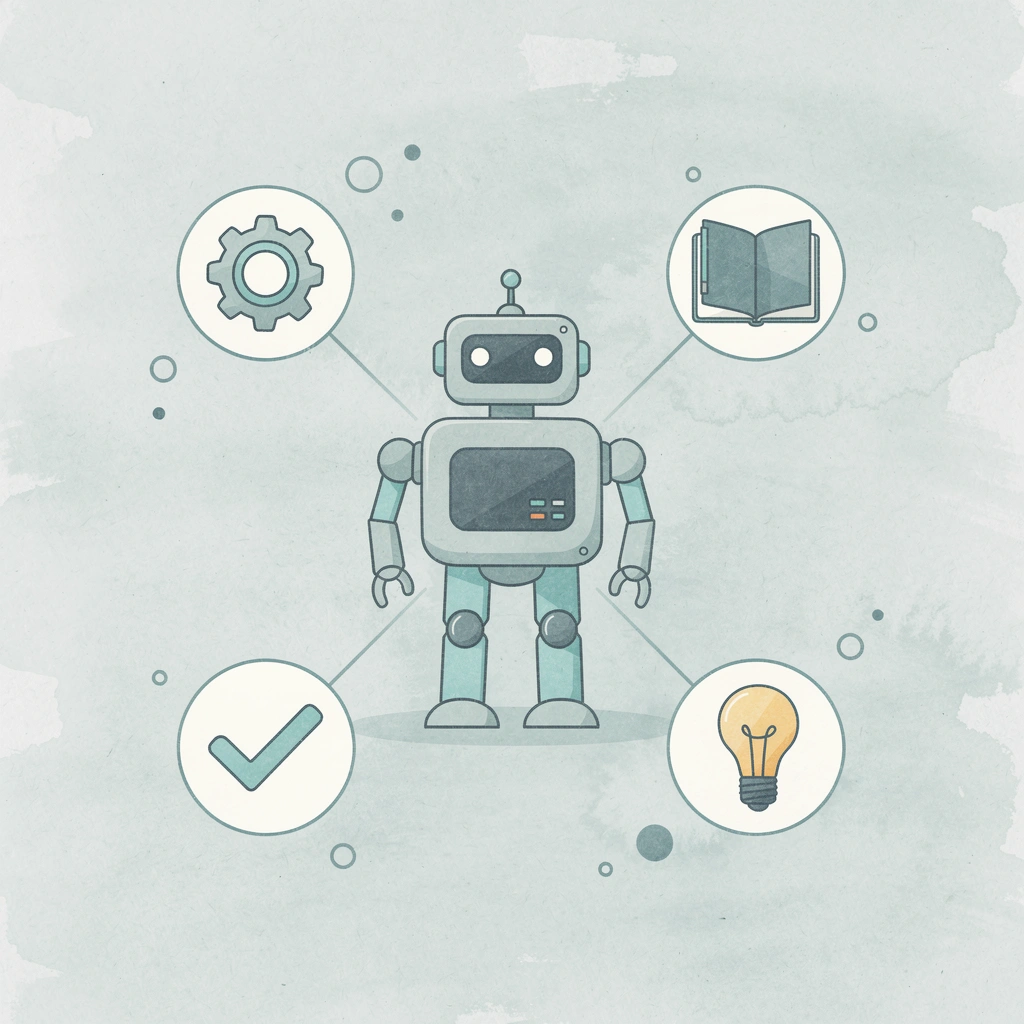
"AI identifies patterns and surfaces insights that would otherwise stay hidden, creating a unified intelligence network from previously disconnected recruitment tools." — Modern Recruitment Technology Analysis, 2024
💡 Best Practice: Focus on connecting your existing systems rather than replacing them entirely. AI integration works best when it can access data from multiple touchpoints across your recruitment pipeline.
Candidate Sourcing and Screening
AI can scan thousands of CVs against job requirements in seconds, but only if those requirements are clearly defined. A well-structured job description becomes the filter that determines which candidates surface first.
Most recruitment bottlenecks occur during initial screening, where recruiters spend hours reviewing mismatched applications. AI eliminates this work by automating candidate matching. According to HeroHunt.ai, AI-powered sourcing reduced time-to-hire by 40% in 2025 through improved accuracy in initial candidate matching.
Interview Coordination and Candidate Experience
Once candidates move past screening, AI handles the logistics that typically slow hiring: scheduling interviews across time zones, sending automatic status updates, and communicating with candidates. This momentum prevents the delays that cause candidates to lose interest.
Candidates with smooth, quick hiring processes are more likely to accept job offers. AI removes the obstacles that prevent recruiters from delivering that experience.
How does connecting recruitment data to workforce outcomes change hiring decisions?
The real shift happens when recruitment data connects to workforce outcomes. Most teams track application volumes and time-to-fill, but fewer connect those metrics to performance data, retention rates, or skills gaps. AI can surface those connections when systems talk to each other.
If candidates sourced through certain channels consistently perform better in their first year, that's worth knowing. If job descriptions emphasizing specific skills attract higher-quality applicants, that changes how you write the next one. HeroHunt.ai found that 85% of talent acquisition teams integrated AI into their recruitment workflow in 2025, with top-performing teams using AI for pattern recognition across the hiring lifecycle.
Why do disconnected recruitment tools limit hiring effectiveness?
Most teams manage hiring across disconnected tools: job postings, applicant tracking, interview scheduling, and spreadsheets. As hiring volume increases, information gets stuck in silos and context disappears between handoffs. Platforms like Cercli consolidate job description creation, applicant tracking, and workforce analytics into a single system, allowing teams to see how job-posting language affects candidate quality and how hiring decisions affect retention.
But having the right tools matters only if teams know what they're trying to build.
Related Reading
- Recruitment Analytics Software
- How Can I Use Ai To Improve My Job Descriptions
- Hr Automation Tools
- Best Job Descriptions
- How To Write A Job Description
- Automate Interview Scheduling
- How To Use Ai In Recruitment
- Candidate Screening Tools
- Best Tools For Remote Recruitment
- Companies Using Ai For Recruitment
- Best Recruitment Crm
Centralizing Workflows to Reduce Fragmentation
The problem usually isn't the job description itself. Recruiters lose track of candidates in the pipeline, hiring managers review applications using different criteria, and one department moves quickly while another takes weeks. Candidates notice the inconsistency.
Cercli's ATS brings recruitment workflows into a single system where every team follows the same process. Roles are managed through shared pipelines, candidates are evaluated using consistent frameworks, and hiring decisions become predictable because everyone works from the same playbook.
Improving Visibility Across the Hiring Lifecycle
Most organizations can't answer a simple question: where are our bottlenecks? Candidate information lives scattered across email threads, spreadsheets, and disconnected tools. According to Cercli's research on automated candidate screening, organizations using structured screening systems achieve a 50% improvement in candidate quality. This improvement stems from visibility: when teams track candidate progression, monitor recruitment performance, and identify workflow bottlenecks, they can fix what's broken instead of guessing.
Cercli provides that visibility. Recruiters see which stages take too long, hiring managers know when candidates await feedback, and stakeholders stay aligned through shared, real-time information.
Why should recruitment connect to workforce planning?
Recruitment shouldn't exist in isolation. Hiring decisions affect onboarding speed, payroll setup, compliance requirements, and contractor management. Most organizations treat these as separate workflows, creating manual handoffs that slow everything down.
How does integrated workforce management streamline hiring?
Cercli connects recruitment with onboarding, payroll, compliance, and EOR services. When a candidate is hired, their information flows directly into workforce systems. This proves particularly valuable for organizations hiring across the UAE, Saudi Arabia, and the wider MENA region, where compliance requirements vary by country and contractor arrangements are common.
Teams maintain a connected view of the employee lifecycle from job description through payroll, enabling hiring that aligns with long-term workforce needs rather than immediate vacancies.
Book a Demo to Speak with Our Team about Our Global HR System
If your organization is using AI to improve job descriptions but still faces hiring delays, inconsistent recruitment processes, or limited visibility into hiring performance, book a Cercli demo. The session identifies where recruitment workflows create friction and demonstrates how our connected ATS, onboarding, payroll, and workforce management platform deliver more consistent hiring outcomes across the entire employee lifecycle.

🎯 Key Point: Better job descriptions matter, but they're only the beginning. The real question is whether your systems can turn better descriptions into better hires, faster onboarding, and clearer workforce visibility. That's where most teams get stuck, and where the right platform makes the difference.
💡 Demo Tip: During your Cercli demo, you'll see how integrated HR systems eliminate the gaps between great job descriptions and successful hires. Our team will walk through your specific recruitment challenges and show how connected workflows reduce time-to-hire and improve the candidate experience.

"Better job descriptions are just the starting point – the real value comes from integrated systems that turn quality descriptions into quality hires with measurable outcomes." — Cercli HR Platform Team
Related Reading
- Social Media Recruitment Strategies
- Corporate Recruitment Strategies
- Recruitment Process Outsourcing
- Top Recruitment Process Outsourcing Companies
- How To Improve The Recruitment Process
- Workable Alternatives
- Manatal Alternatives
- Braintrust Alternatives
- Workable Vs Greenhouse


