How to Improve the Recruitment Process: 10 Practical Ways
How to Improve the Recruitment Process: 10 Practical Ways
A slow or disorganized hiring process does not just create internal headaches; it costs companies strong candidates who simply move on to faster-moving employers. Recruitment automation tools help teams screen smarter, communicate consistently, and reduce the manual work that stalls hiring decisions. The result is a faster, more structured process that improves both the candidate experience and the quality of hires.
Fixing recruitment inefficiencies does not require rebuilding everything from scratch. Small, deliberate improvements, from clearer job descriptions to better-coordinated interview stages, compound quickly into a measurably stronger hiring operation. Teams looking to centralize these efforts and manage their workforce without juggling multiple platforms can do so through Cercli's global HR system.
Table of Contents
- Why Improving the Recruitment Process Has Become More Important Than Ever
- Why Traditional Recruitment Processes Often Fail Today's Hiring Demands
- The Biggest Recruitment Process Challenges That Prevent Better Hiring
- 10 Practical Ways to Improve the Recruitment Process
- Recruitment Process Considerations for Employers in MENA
- How Cercli Helps Companies Improve Recruitment Processes End-to-End
- Book a Demo to Speak with Our Team about Our Global HR System
Summary
- Slow hiring timelines are one of the most costly and preventable problems in recruitment. Research from Norwin Technologies found that traditional hiring processes take an average of 42 days to fill a position, with 73% of hiring managers reporting they have lost a top candidate because the process moved too slowly. That time is not lost to assessment or deliberation. It is lost to coordination gaps between stages.
- High application volumes do not automatically produce better candidate pools. LinkedIn's 2025 research found that 73% of HR professionals report fewer than half of the applications they receive fully meet the requirements for the roles they are advertising. More volume creates more noise, and without structured screening, it adds workload without improving the quality of hiring decisions.
- Poor workforce planning turns recruitment into a reactive exercise rather than a strategic one. When organizations only begin hiring after a vacancy opens, they are already behind. Cisive reports that 75% of employers struggle to find qualified candidates, and urgency-driven hiring narrows the field to whoever is immediately available rather than whoever is genuinely right for the role.
- Structured processes consistently outperform improvised ones. Companies with structured interviews are twice as likely to make successful hires, according to MyCulture.ai's research on recruitment best practices. Defined evaluation criteria reduce the influence of familiarity bias and enable fair comparisons of candidates across hiring managers and interview panels.
- The cost of a bad hire extends well beyond the recruitment budget. According to Empxtrack's recruitment research, a bad hire can cost a company up to 30% of the employee's first-year earnings. That figure reflects not just replacement costs but the downstream effects of misaligned expectations, redistributed workload, and time spent managing performance rather than building team capacity.
- Onboarding is part of the recruitment outcome, not a separate process. Organizations with strong onboarding improve new hire retention by 82%, according to MyCulture.ai. When recruitment and onboarding run through disconnected tools, the transition from candidate to employee becomes slow and error-prone, and the first impression a new hire forms of the organization is shaped by that disorganization before they have attended a single meeting.
- Cercli's global HR system addresses the structural fragmentation that slows hiring by connecting recruitment, onboarding, payroll, and compliance into a single platform, so information collected during hiring flows directly into employee records without duplication or manual re-entry.
Why Improving the Recruitment Process Has Become More Important Than Ever
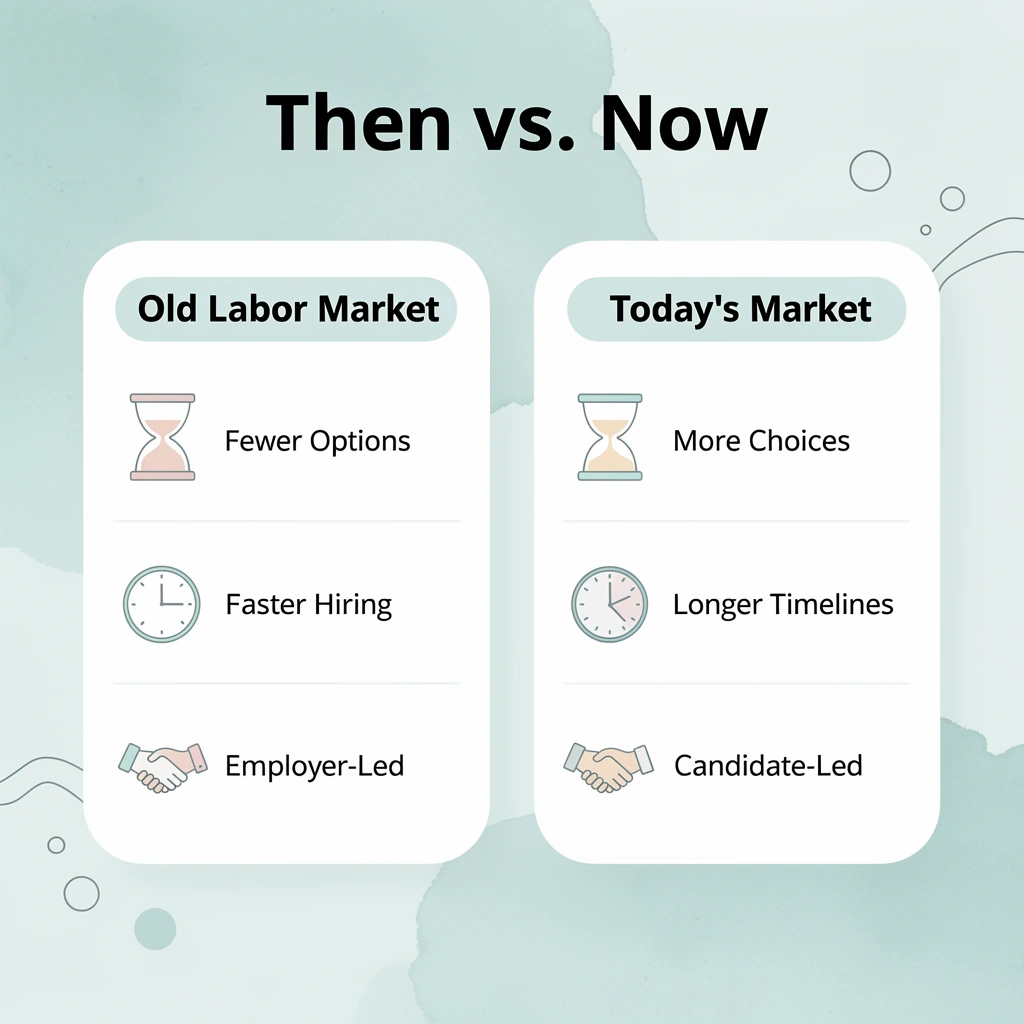
Recruitment has changed faster than hiring processes have. The labor market that shaped how organizations structure their workflows looks different from the one they operate in today. Skilled candidates have more options, hiring timelines have grown longer, and the cost of making a mistake has increased significantly. According to Empxtrack's recruitment research, a bad hire can cost a company up to 30% of the employee's first-year earnings.
"A bad hire can cost a company up to 30% of the employee's first-year earnings." — Empxtrack Recruitment Research
🔑 Takeaway: The gap between how companies used to hire and what today's talent market demands is no longer a minor inefficiency. It's a measurable financial risk that compounds with every poor hiring decision.
⚠️ Warning: Organizations that fail to modernize their recruitment process aren't just losing candidates. They're actively increasing the likelihood of costly mis-hires that drain budgets, morale, and productivity.
Why are recruiters getting fewer qualified applicants despite higher volumes?
The failure point is usually not effort. Most HR teams work hard. The problem is that the process itself was designed for a different era, when talent pools were larger, and spreadsheets could contain entire pipelines. Today, recruiters manage higher application volumes while identifying fewer qualified candidates. LinkedIn's 2025 research found that 73% of HR professionals report fewer than half of the applications they receive fully meet the requirements for advertised roles.
Most teams respond by posting to more job boards, scheduling more screening calls, and chasing more referrals. But when the underlying process is fragmented, adding more activity compounds the problem. Hiring data sits in one tool, candidate communication in another, and onboarding paperwork in a third. The result is a slow workflow where teams must repeat, re-enter, and reconcile information at every stage.
How does a unified platform reduce structural friction in hiring?
Cercli's global HR system addresses this structural friction by bringing recruitment, onboarding, and workforce management into a single platform with AI agents that score candidates and surface the right people faster. Our platform helps teams spend less time managing systems and more time making good decisions about people.
What happens when a recruitment process stays broken for too long?
According to the SHRM State of Recruiting 2025, only 1 in 4 HR professionals believe their organization's recruiting process works well. Three out of four operate with a process they know is inadequate, yet pressure to fill open positions continues to mount. Prolonged vacancies delay projects, overburden existing staff, increase burnout risk, and damage team culture.
Job seekers now assess the hiring process to understand how an organization operates. Slow responses, unclear timelines, and disorganized interview stages send a message before any job offer is made. Improving recruitment shapes how job seekers perceive your employer brand and whether they want to work for you.
Why Traditional Recruitment Processes Often Fail Today's Hiring Demands
Traditional recruitment processes fail because they were built for a completely different time—when talent was easier to find, there was less competition, and candidates had far fewer choices. The basic assumptions no longer hold: the idea that simply posting a job brings in a line of qualified applicants, that manual screening is complete and sufficient, or that merely filling a position equals true hiring success.
"The foundational beliefs of traditional hiring—post, screen, fill—were designed for a talent landscape that no longer exists." — Recruitment Industry Insight
⚠️ Warning: Relying on outdated recruitment methods in today's market doesn't just slow you down—it actively drives top candidates toward competitors who offer a faster, more engaging hiring experience.
🎯 Key Point: The three broken assumptions of traditional recruitment—effortless applicant flow, manual screening accuracy, and placement as success—are the root cause of why so many hiring processes fall short in the modern talent market.
Traditional Assumption
- Posting a job attracts qualified applicants
- Manual screening is thorough and complete
- Filling a position = hiring success
Modern Reality
- Talent scarcity means top candidates are rarely actively searching
- Volume and bias make manual review slow and inconsistent
- Retention and fit are the real measures of a successful hire
💡 Tip: To stay competitive, hiring teams must actively challenge each of these legacy assumptions and replace them with strategies built for today's talent-driven market.

Why is the failure structural rather than motivational?
The failure is structural, not motivational. Sourcing, screening, scheduling, feedback, and decision-making happen in separate tools, conversations, and timelines. According to Norwin Technologies via LinkedIn Pulse, traditional hiring processes take an average of 42 days to fill a position, reflecting coordination overhead rather than role difficulty.
This delay has direct costs. The best candidates do not wait. Norwin Technologies research found that 73% of hiring managers have lost a top candidate because their process was too slow. Speed is not about rushing judgment; it is about eliminating unnecessary gaps between stages.
How do extra steps make slow hiring processes even slower?
Most teams respond by adding more steps: screening rounds, approval layers, stakeholders. The result is delay, not rigor. As hiring volumes grow, extra steps add proportional weight to workload without proportional quality gains. Our Cercli platform uses AI agents to score candidates and surface priorities, enabling faster decision-making with better information instead of weeks of manual filtering.
Why does a reactive recruitment design hurt candidate experience?
Most traditional processes are reactive by design. A vacancy opens, applications arrive, the team responds. There is no proactive pipeline, no structured engagement of passive candidates, and no learning from previous cycles. Candidate experience suffers through slow responses, inconsistent communication, and unclear timelines, pushing qualified people toward employers who treat recruitment as a signal of how they operate.
Improving recruitment is not about doing the same things faster. The workflow itself is the bottleneck, and optimizing individual steps inside a broken system produces diminishing returns.
Related Reading
- Candidate Screening Questions
- Candidate Screening Process
- Automated Candidate Screening
- Steps in the Recruitment Process
- End to End Recruitment Process
- Recruiting Funnel Metrics
- AI in Recruitment Examples
- Recruitment Lifecycle
- Best Recruitment Strategies
The Biggest Recruitment Process Challenges That Prevent Better Hiring
Recruitment challenges accumulate quietly: delayed responses, missed follow-ups—until the process feels like it's running through wet concrete.
When planning is absent, pressure fills the gap
Poor workforce planning is at the root of most hiring problems. Recruiting only after a role becomes vacant leaves no time to build a pipeline, define what "good" looks like, or evaluate whether the vacancy needs to be filled in its traditional form. The result is hiring driven by urgency rather than judgment, and urgency rarely produces the right hire.
According to Cisive, 75% of employers struggle to find qualified candidates, and reactive hiring exacerbates this problem. Searching under pressure narrows your options to whoever is immediately available rather than whoever is genuinely right, a distinction most organizations acknowledge only after managing the consequences of a poor hire.
Where does speed go to die in the hiring process?
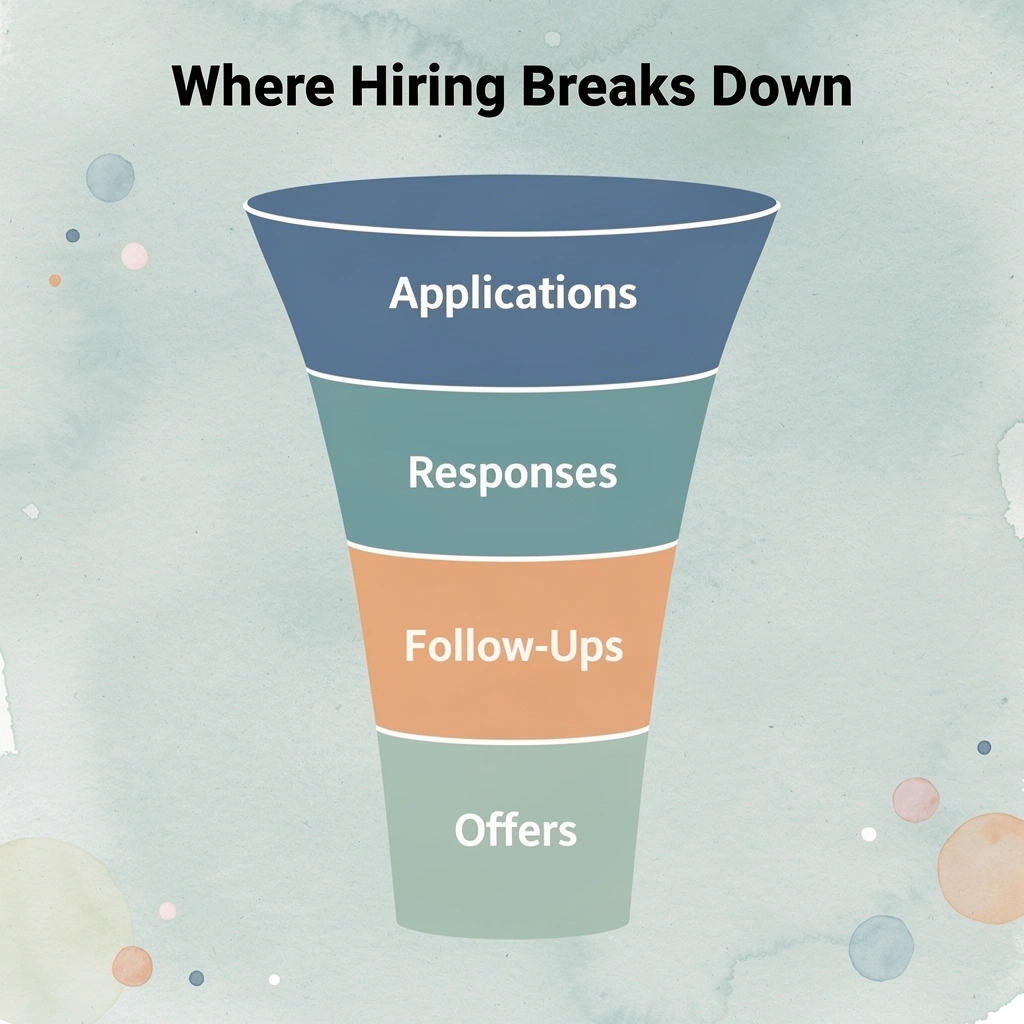
The failure point is usually the lack of candidates. It's what happens after a strong candidate enters the process: hiring manager feedback arrives late, interview panels cannot align on a date, approval chains stall decisions that should take hours. Meanwhile, the candidate is interviewing elsewhere. Cisive also reports that it takes an average of 44 days to hire a new employee, with a significant portion lost not to assessment, but to coordination.
How does consolidating hiring workflows reduce delays?
Most teams manage this through email threads, shared spreadsheets, and calendar invites scattered across different inboxes. As hiring volume grows or multiple roles run simultaneously, that patchwork collapses. Platforms like Cercli consolidate candidate tracking, feedback collection, and hiring workflows into one place, reducing the back-and-forth that stretches a two-week process into six weeks.
Why does inconsistency make hiring harder than it needs to be?
When different hiring managers run interviews differently, ask different questions, and apply different standards, organizations lose the ability to compare candidates fairly. Structured interview processes with defined evaluation criteria consistently produce better hiring decisions by reducing familiarity bias and gut feeling. Without that structure, organizations often hire the most confident candidate rather than the most capable one.
What happens when recruiters are buried in administrative work?
Recruiters have too much administrative work that impedes their strategic work. Scheduling, chasing feedback, updating records, and sending status emails consume hours that should be spent strengthening the employer brand, building relationships with passive candidates, or helping hiring managers clarify their needs. The goal should be a more effective recruitment team, not a busier one.
How specific do you need to be to actually fix the problem?
Knowing where problems live is useful. What changes them is harder to see and more specific than most people expect.
10 Practical Ways to Improve the Recruitment Process
Fixing recruitment starts with knowing where to look. The ten strategies below require clarity, discipline, and a willingness to stop optimizing processes that should not exist in the first place.
"The best recruitment process isn't the most complex one — it's the one that removes every step that shouldn't be there at all."
💡 Tip: Before adding tools or steps to your hiring workflow, audit what already exists. Eliminating broken processes delivers faster results than refining them.
🎯 Key Point: These ten strategies aren't about minor tweaks. They demand real discipline and a commitment to fundamentally rethinking how your organization attracts and selects talent.

1. Align hiring goals before opening a vacancy
When job openings are created without recruiter and hiring manager alignment, expensive delays result. Disagreements over required skills, experience levels, or interview formats force restarts, prolonging the process and frustrating candidates considering competing offers.
Before posting a job, the recruiter and hiring manager should agree on the jobis purpose, must-have qualifications, interview structure, and what success looks like in the first 90 days. This conversation eliminates hiring delays.
2. Build standardized recruitment workflows
Every recruiter runs the process slightly differently, creating inconsistent candidate experience, unreliable feedback loops, and hidden bottlenecks. Standardization removes confusion without removing judgment.
Define who owns each stage, what triggers completion, and how handoffs work. Visible, consistent workflows make problems obvious and fixable through process rather than personality.
3. Strengthen your employer brand
People researching jobs before applying want to understand company culture. A basic careers page without employee perspectives discourages quality applicants, who will pursue opportunities at companies that better demonstrate their workplace environment and values.
Sharing real employee stories, career progression examples, and honest team descriptions costs little but yields measurable results in attracting quality applications and improving offer acceptance rates.
4. Diversify candidate sourcing
Relying on two or three job boards creates vulnerability. A healthier talent pipeline draws from employee referrals, professional communities, university partnerships, and direct outreach to passive candidates.
Tracking source-of-hire data reveals which channels consistently produce candidates who reach the offer stage, enabling deliberate budget investment rather than spreading resources across underperforming channels.
5. Simplify the candidate experience
A complicated application process filters for persistence, not quality. When candidates face unnecessary steps, unclear timelines, or long silences after interviews, those with the most options leave first.
Reducing friction at the application stage, communicating clearly about next steps, and acknowledging receipt of applications measurably improve completion rates and offer acceptance. Candidates notice when a process respects their time.
6. Strengthen recruiter and hiring manager collaboration
The failure point is usually not finding or screening candidates, but the gap between when a recruiter submits candidates and when a hiring manager responds. Without clear expectations for review timelines and feedback, the gap can stretch from days to weeks, and the best candidates accept other offers.
Setting clear timelines for feedback, scheduling debrief calls rather than relying on email threads, and treating the recruiter-manager relationship as a partnership accelerates hiring without adding staff.
7. Use recruitment data to drive decisions
Most teams track time-to-fill because it's easy to measure. Fewer track quality-of-hire, interview-to-offer ratios, or source effectiveness: the metrics that reveal whether the process actually works. Without that data, improvement becomes guesswork.
Companies that use structured interviews are 2x more likely to make successful hires, according to research from MyCulture.ai. Structure enables comparability, which improves decision accuracy. Tracking which process elements are structured reveals where to focus your efforts.
8. Automate repetitive administrative tasks
Most teams handle interview scheduling, status update emails, and document collection manually. These tasks grow with hiring volume, consuming recruiter time that should go toward candidate relationships and hiring manager support.
Automating these workflows removes clerical work, not human judgment. When recruiters aren't chasing calendar confirmations or copying data between systems, they have capacity for conversations that move candidates forward. Platforms like Cercli connect recruitment workflows with HR operations in a single system, eliminating manual re-entry and cross-tool coordination at the candidate-to-new-hire handoff.
9. Connect recruitment with onboarding and HR operations
Organizations with strong onboarding improve new hire retention by 82%, according to MyCulture.ai. The hiring process doesn't end when a candidate signs an offer; what happens in the first 30 days determines whether that hire stays.
When recruitment, onboarding, compliance, and payroll are handled by disconnected tools, the transition from candidate to employee becomes slow, error-prone, and administratively heavy. Connecting these stages reduces duplicate work, accelerates day-one readiness, and creates a consistent experience that reflects well on the organization before the new hire's first meeting.
10. Continuously review and optimize recruitment performance
Recruitment processes that worked well 18 months ago may not work now. Labor market conditions change, hiring volumes change, and what worked for five hires a quarter may not work for twenty. The teams that stay effective treat their process as something to test, not preserve.
How do you identify what is slowing your recruitment down?
Looking at hiring numbers every three months, collecting organized feedback from applicants and hiring managers, and identifying repeated problems before they become standard practice separates a hiring team that improves from one that repeats the same mistakes. The goal is not perfection, but a process that improves with each hire.
What does a well-connected recruitment system actually look like?
Improving recruitment is not about making one part faster. It is about building a connected, measurable system where every stage reinforces the next, and where the people running it spend less time on process and more time on people.
But how these strategies work in practice depends heavily on where you are hiring, a context that most recruitment guides underacknowledge.
Related Reading
- Recruitment Analytics Software
- How Can I Use Ai To Improve My Job Descriptions
- Hr Automation Tools
- How To Write A Job Description
- Automate Interview Scheduling
- How To Use Ai In Recruitment
- Candidate Screening Tools
- Best Tools For Remote Recruitment
- Companies Using Ai For Recruitment
Recruitment Process Considerations for Employers in MENA
Hiring across the GCC involves multiple challenges that most recruitment processes aren't equipped to handle.
"Recruitment workflows across the GCC must navigate simultaneous regulatory, documentation, and onboarding demands — yet most systems are built as if these complexities don't exist." — Regional HR Compliance Insight
💡 Tip: Before launching any cross-border hiring campaign in the GCC, audit your existing recruitment workflow against each country's specific requirements, not just your primary market.

Each country has its own employment rules, documentation needs, and onboarding standards. A contract structure that works for UAE labor law may need big changes for Saudi Arabia or Qatar. The problem usually isn't that people don't know about these differences, but that recruitment workflows are designed as if they don't exist until a compliance issue forces the conversation.
UAE
- Federal labor law with free zone variations
Saudi Arabia
- Nitaqat (Saudization) quotas and Vision 2030 alignment
Qatar
- Kafala system reforms and updated sponsorship rules
⚠️ Warning: Applying a one-size-fits-all contract template across GCC markets is one of the most common — and most costly — compliance mistakes employers make during cross-border recruitment.
🔑 Takeaway: The real risk isn't ignorance of regional differences — it's building recruitment systems that treat those differences as an afterthought rather than a foundational design requirement.
Why must localization policies shape recruitment from the start?
Emiratisation and Saudisation (Nitaqat) are hiring rules that must shape how you find workers, design jobs, and plan your workforce before posting job openings. Organizations that treat localization targets as post-hire reporting exercises rush to meet quotas instead of building worker pipelines that naturally support them. When localization is built into hiring from the start, it becomes a planning tool rather than a compliance penalty.
How does outdated salary data affect your ability to compete for local talent?
Senior roles in Saudi Arabia are seeing salary increases of up to 35% in 2025, according to the MCG Talent 2025 MENA Recruitment Market Guide. Competing for experienced professionals without current market data will eliminate you from consideration before the process begins.
What happens when cross-border hiring relies on informal systems?
Most teams manage hiring across borders through email, shared folders, and country-specific HR contacts. As organizations expand across multiple GCC markets, these informal systems break down quickly. Visa sponsorship timelines, relocation documentation, and country-specific onboarding steps get tracked inconsistently, leaving new hires struggling in their first weeks. Our Cercli platform connects recruitment, onboarding, payroll, and compliance into a single workflow so information collected during hiring flows directly into employee records without duplication or manual transfer.
Worker Classification Shapes the Entire Process
Whether a role is filled by a full-time employee, contractor, freelancer, or Employer of Record has different legal, tax, and payroll implications in every GCC jurisdiction. Determining the right hiring approach should be part of the recruitment process, not an afterthought. Recruitment teams that delay this decision until HR or legal review after an offer is made risk delays and may need to reverse decisions that should have been made earlier.
What does misclassification signal to candidates in competitive talent markets?
People Connect Global's HR Trends in MENA 2025 guide reports that 44% of employees in MENA plan to switch jobs. A recruitment process that creates a poor candidate experience, delays onboarding, or misclassifies worker arrangements signals how the organization operates—a message that spreads quickly in a region where professional networks are dense and talent markets are competitive.
Is your recruitment process connected enough to stay compliant as you grow?
The question worth considering is not whether your recruitment process follows the rules, but whether it remains connected enough to stay compliant as your business grows.
How Cercli Helps Companies Improve Recruitment Processes End-to-End
Improving recruitment rarely involves solving one problem. Organizations may invest in better sourcing tools, shorten application forms, or automate interview scheduling, but if the overall hiring process remains fragmented, inefficiencies will persist from one stage to the next. The result is a system where time, budget, and talent are lost, not because of a lack of effort, but because of a lack of end-to-end connection.
"When hiring tools operate in silos, inefficiencies don't disappear — they migrate from one stage to the next, compounding delays and candidate drop-off across the entire funnel."
💡 Tip: Before investing in another point solution, audit your full hiring funnel to identify where handoffs break down. That's where the inefficiency hides.
⚠️ Warning: Fixing one stage in isolation — such as sourcing or scheduling — without addressing the connected workflow often creates bottlenecks downstream rather than eliminating them.

Cercli approaches recruitment differently by providing a connected platform that supports the entire employee lifecycle, rather than treating recruitment, onboarding, payroll, and workforce management as separate functions. This allows HR teams to streamline hiring, improve cross-functional collaboration, and maintain compliance from the moment a candidate enters the pipeline through to their first day — and beyond.
Standalone Tools
- Recruitment managed separately
- Manual handoffs between systems
- Compliance gaps between stages
- Siloed HR data
Cercli's Connected Platform
- Recruitment integrated with onboarding & payroll
- Automated workflows across the full lifecycle
- Continuous compliance from pipeline to payroll
- Unified employee data from day one
🎯 Key Point: By unifying recruitment, onboarding, and workforce management in a single platform, Cercli eliminates the fragmentation that causes most hiring inefficiencies — turning a disconnected process into a seamless employee journey.
How does Cercli solve scattered recruitment data across multiple systems?
Challenge: Recruitment data is scattered across multiple systems
Many organizations manage candidate information through job boards, email inboxes, spreadsheets, calendars, and messaging platforms. As applications increase, tracking candidate progress and ensuring everyone works with current information becomes difficult.
How Cercli helps: Cercli's integrated Applicant Tracking System (ATS) and Recruitment CRM create a single source of truth for every candidate. Recruiters can manage applications, monitor hiring pipelines, track candidate interactions, and organize recruitment activities from one central platform.
How does Cercli keep hiring managers and recruiters aligned?
Challenge: Hiring managers and recruiters struggle to stay aligned
Recruitment slows when interview feedback is delayed, hiring requirements change, or communication occurs across disconnected tools. These bottlenecks extend hiring timelines and increase the risk of losing qualified candidates.
How Cercli helps: Cercli enables recruiters and hiring managers to collaborate within a single platform. Candidate profiles, interview notes, hiring feedback, and approval workflows are centralized in one place, allowing stakeholders to make faster decisions without lengthy email chains.
How does Cercli reduce the burden of manual recruitment tasks?
Administrative tasks like updating candidate records, coordinating interviews, preparing offers, and managing documentation consume a significant portion of a recruiter's workload.
How Cercli helps: By consolidating recruitment workflows in one place and automating routine administrative tasks, Cercli reduces repetitive manual work, freeing recruiters to spend more time engaging with candidates and building stronger talent pipelines.
How does Cercli support compliant hiring as organizations expand across MENA?
Challenge: Hiring becomes more complex as organizations grow across MENA
Hiring across multiple GCC countries introduces labor regulations, localization requirements, onboarding processes, payroll administration, and contractor management. Managing these through disconnected systems increases compliance risks and operational complexity.
How Cercli helps: Built for organizations operating across the Middle East, our global HR system supports compliant workforce management in the UAE, Saudi Arabia, and the wider MENA region. Cercli manages country-specific employment requirements whilst supporting payroll, Employer of Record (EOR) services, contractor payments, and workforce administration from a unified system.
How does Cercli connect recruitment with the rest of the employee lifecycle?
Challenge: Recruitment ends, but HR work is only beginning
Many organizations treat recruitment as a standalone process. Once a candidate accepts an offer, HR teams often manually transfer information into separate onboarding, payroll, and HR systems, creating duplicate work and increasing errors.
How Cercli helps: Our global HR system connects recruitment directly with onboarding, payroll, compliance, and workforce management. Candidate information flows seamlessly into the next stage of the employee lifecycle, reducing duplicate data entry and ensuring employees are managed through a single platform from day one.
What does a connected recruitment workflow look like with Cercli?
Cercli supports a connected recruitment journey from start to finish: candidates are sourced through job boards, employee referrals, recruitment campaigns, or social media; applications are automatically captured in Cercli's Applicant Tracking System; recruiters review applications and coordinate interviews through a shared workspace; interview feedback, approvals, offers, and hiring decisions are managed centrally; once an offer is accepted, candidate information flows directly into onboarding; and payroll, compliance, contractor management, or EOR services continue the employee lifecycle without requiring teams to switch between disconnected platforms.
By connecting every stage of the hiring and workforce management process, Cercli helps organizations reduce administrative overhead, improve recruiter collaboration, accelerate hiring decisions, and maintain compliance across multiple countries.
Book a Demo to Speak with Our Team about Our Global HR System
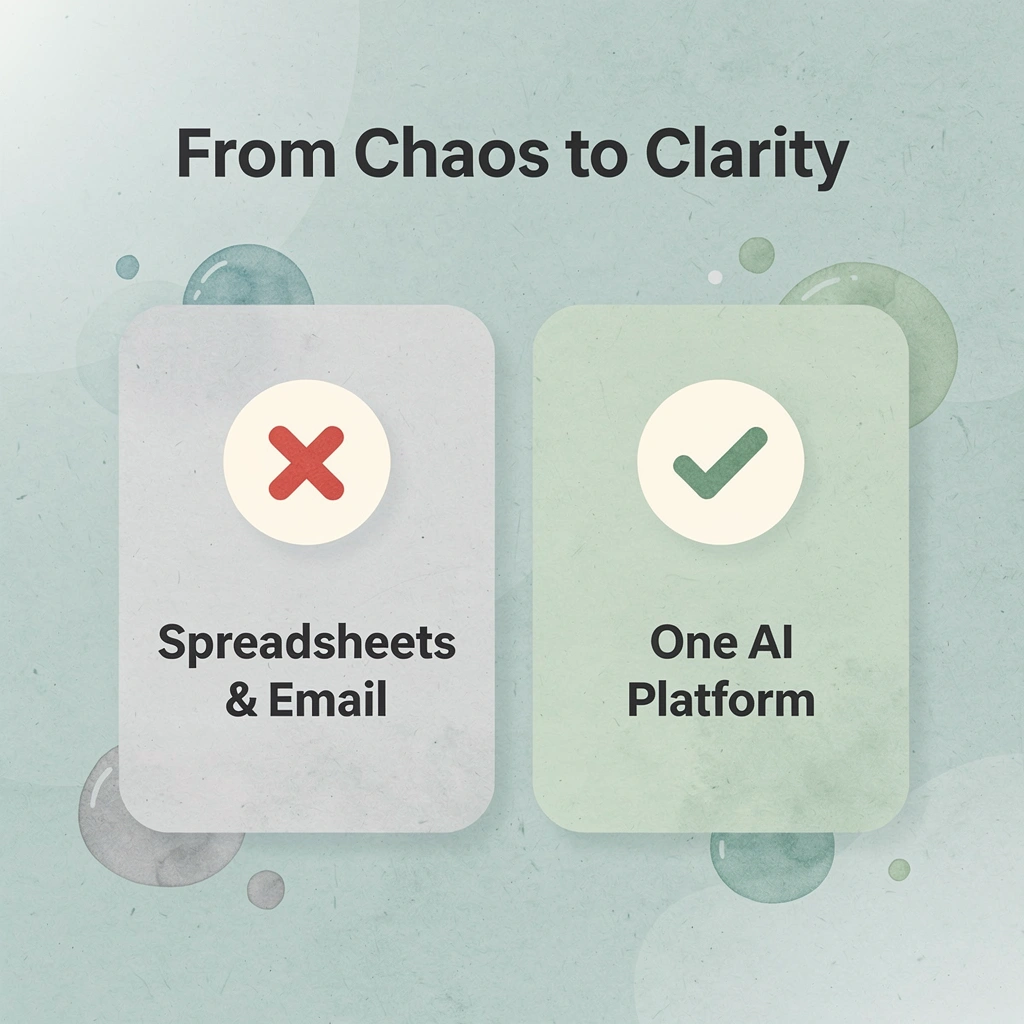
If your hiring process relies on spreadsheets, email chains, and disconnected tools, the problem is how things are set up, not how hard people are working. Cercli brings hiring, HR, and payroll into one AI-native platform, letting your team spend less time managing the process and more time making better decisions about people.
"The problem isn't how hard your team is working — it's that spreadsheets, email chains, and disconnected tools are built to slow you down." — Cercli
🎯 Key Point: Switching to an AI-native platform means your team stops managing the process and starts improving it — freeing up time for the decisions that actually matter.
Old Way
- Spreadsheets for tracking candidates
- Email chains for approvals
- Disconnected payroll tools
- Manual compliance checks
With Cercli
- Unified hiring dashboard
- Automated workflows
- Integrated HR & payroll
- Built-in compliance controls
Book a free 15-minute demo with a global HR system to see how teams across the UAE, Saudi Arabia, and the wider MENA region are bringing hiring workflows together, reducing delays, and growing while staying fully compliant. The Cercli team will review your current setup, identify where time and quality are lost, and show you what a connected hiring process looks like in practice.
💡 Tip: Come prepared to your free 15-minute demo with your biggest hiring bottleneck in mind so the Cercli team can show you the most relevant solution for your setup.
⚠️ Warning: Every week spent on disconnected tools costs you delays, compliance risk, and lost hiring quality. Don't wait for a costly mistake to trigger change.
Related Reading
- Social Media Recruitment Strategies
- Corporate Recruitment Strategies
- Recruitment Process Outsourcing
- Top Recruitment Process Outsourcing Companies
- Workable Alternatives
- Manatal Alternatives
- Braintrust Alternatives
- Workable Vs Greenhouse


