Maternity Leave in Bahrain: Law, Pay, and Employer Risks

Maternity Leave in Bahrain: Law, Pay, and Employer Risks
Navigating maternity leave entitlements in Bahrain requires understanding the specific protections and obligations outlined in local labor regulations, which differ significantly from those in frameworks such as the DIFC Labor Law that govern other jurisdictions in the region. Employers and expectant mothers often face questions about leave duration, salary continuation, dismissal protection, and return-to-work rights. Clear guidance on Bahrain's maternity leave provisions helps both parties understand eligibility requirements, pay structures, and compliance obligations.
Understanding these regulations protects businesses from costly non-compliance issues while ensuring employees receive their full entitlements. Organizations managing employee benefits across multiple jurisdictions can streamline compliance and reduce administrative burden with a comprehensive global HR system.
Table of Contents
- Most Companies Misunderstand Maternity Leave in Bahrain
- What Bahrain Law Actually Says About Maternity Leave
- Where Companies Get It Wrong
- The Hidden Operational Risk
- What a Compliant Maternity Leave System Looks Like in Bahrain
- How Cercli Helps You Stay Compliant With Maternity Leave in Bahrain
- Book a Demo to Speak with Our Team about Our Global HR System
Summary
- Bahrain's maternity leave is a fixed statutory entitlement under the Labor Law for the Private Sector (Law No. 36 of 2012), not a flexible HR benefit that companies can adjust according to internal policies. Many employers mistakenly treat maternity leave as discretionary or apply inconsistent practices across teams, creating immediate compliance gaps when they shorten leave periods, exclude allowances from pay calculations, or layer global policies over local requirements.
- The law mandates 60 days of fully paid maternity leave, with employees entitled to request an additional 15 days of unpaid leave. Pay must be calculated at 100 percent of total salary, including allowances, not just basic pay, and employees cannot be employed during the 40 days immediately following childbirth. After returning to work, employees receive mandatory breastfeeding breaks (two one-hour breaks daily until the child reaches six months, then two 30-minute breaks until one year), all treated as paid working hours.
- Most compliance failures originate from fragmented tracking systems rather than intentional policy violations. When HR teams manage maternity leave across spreadsheets, email threads, and disconnected payroll platforms, even small errors in leave duration or return dates compound into payroll mistakes and missed entitlements. According to Forbes, 80% of companies collect data they don't use, meaning many organizations track maternity leave information but fail to connect it across the systems where it actually matters for compliance and payroll accuracy.
- Multi-country operations face amplified risk when flexible global policies collide with Bahrain's non-negotiable legal framework. Teams in Dubai may incorrectly assume Bahrain follows UAE rules, while headquarters might apply global templates that underpay the 60-day entitlement or miscalculate salary components during leave. These misalignments create compliance gaps that widen as companies scale across the GCC region without jurisdiction-specific safeguards built into their HR workflows.
- Employee trust erodes quickly when maternity leave administration fails, particularly when incorrect payslips are issued during leave or when return dates are miscommunicated. According to Risk.net's 2025 operational risk analysis, regulatory compliance and operational process failures rank among the ten critical risk categories facing organizations, and employee-facing compliance failures carry reputational weight that extends far beyond immediate financial penalties or legal disputes.
- Cercli's global HR system addresses this by embedding Bahrain's maternity leave requirements directly into payroll and leave workflows, automatically calculating the 60-day paid period, tracking unpaid extensions, and enforcing post-return entitlements such as breastfeeding breaks, without requiring manual intervention or cross-referencing legal text at each step.
Most Companies Misunderstand Maternity Leave in Bahrain
Most companies treat maternity leave in Bahrain as a flexible HR benefit, but it is a fixed legal entitlement with strict rules. This assumption stems from global HR practices, where parental leave is designed internally and adjusted based on tenure, rank, or company policy. In Bahrain, that approach does not work.
⚠️ Warning: Treating maternity leave as a flexible benefit instead of a legal requirement can expose companies to significant compliance risks and potential legal action.
Maternity leave is governed by the Labor Law for the Private Sector (Law No. 36 of 2012), and it is a statutory right. The duration, pay, and protections are defined by law, not by company choice. Employers cannot shorten it, restructure it, or apply it differently across employees.
"Maternity leave in Bahrain is a statutory right governed by Labour Law for the Private Sector (Law No. 36 of 2012), with fixed duration, pay, and protections that employers cannot modify." — Bahrain Labor Law
🔑 Takeaway: Maternity leave is a non-negotiable legal entitlement, not a discretionary benefit. This distinction is crucial for HR compliance in Bahrain.

What operational risks do companies face with incorrect maternity leave policies?
Companies often assume parts of maternity leave can be adjusted, treat allowances as optional during leave, or apply internal policies that conflict with legal requirements. These decisions create operational risk: payroll becomes inconsistent, some employees receive full salary while others receive reduced pay, and leave periods are tracked differently across teams.
When HR systems are scattered across spreadsheets and disconnected platforms, tracking entitlements accurately becomes nearly impossible. Our global HR system at Cercli centralizes maternity leave calculations and documentation, automatically applying country-specific rules to ensure employees in Bahrain receive correct entitlements without manual cross-referencing.
How do termination decisions create legal exposure during maternity leave?
Termination is where the risk becomes most visible. Companies may make employment decisions during or shortly after maternity leave without fully accounting for legal protections. Companies operating in multiple countries layer global policies on top of local requirements, creating further gaps. Routine HR action can escalate into a legal dispute.
The reason this persists is a fundamental misunderstanding: globally, maternity leave is often treated as a benefit; in Bahrain, it is a legal entitlement with fixed rules and protections. This shift from flexible policy to regulated right is where most companies falter.
What Bahrain Law Actually Says About Maternity Leave
What does the Bahrain Labor Law say about maternity leave entitlements?
Bahrain Labor Law for the Private Sector (Law No. 36 of 2012) provides 60 days of paid maternity leave as a statutory right for all female employees in the private sector, regardless of tenure or position.
The law requires that a woman cannot work during the 40 days following childbirth, creating a mandatory recovery period that no company policy can override.
How is maternity pay calculated, and what extensions are available?
Beyond the core 60 days, employees may request 15 days of unpaid leave, according to The Daily Tribune's coverage of the proposed amendment to Bahrain Labor Law No. 36/2012, bringing the total possible leave to 75 days.
Pay during the statutory period is calculated at 100 percent of salary, not just basic pay. This distinction matters because some companies mistakenly exclude allowances or bonuses from maternity pay calculations, creating compliance gaps.
What employment protections exist during pregnancy and maternity leave?
The law prohibits companies from firing or terminating workers because of pregnancy or maternity leave. Employees have the right to return to the same job or a similar role with identical pay and benefits, preventing companies from demoting workers, reducing their pay, or reassigning them as punishment for taking leave.
What care breaks are provided after returning to work?
After returning to work, the law requires care breaks until the child turns one year old. For six months, employees receive two breastfeeding breaks daily, each lasting at least one hour. From six months to one year, this changes to two 30-minute care breaks daily. These breaks can be combined and count as paid working hours. The company cannot reduce pay, and managers cannot refuse or discourage these breaks.
What Happens When Systems Can't Track This
Most HR teams manage maternity leave using spreadsheets, email threads, and separate payroll systems that don't integrate. Mistakes occur when employees return early, take unpaid leave, or combine different types of time off requiring manual recalculation. Teams using global HR systems find that automated leave tracking and payroll integration convert days of manual work into a single workflow. This reduces errors and allows HR teams to focus on supporting employees rather than resolving data issues.
What additional leave entitlements do employees have?
The law also allows employees to take unpaid leave to care for a child up to 6 years old for up to 6 months per instance, up to 3 times during employment. Most companies miss this because it requires employee requests rather than automatic triggering, yet it remains a statutory entitlement that must be honored when invoked.
Where does the real implementation challenge lie?
Knowing what the law requires is only half the story. The real friction comes from how companies interpret, implement, and track these entitlements across borders and systems.
Related Reading
- DIFC Labour Law
- Egypt Work Week
- Egypt Minimum Wage
- Employer Of Record Egypt
- Egypt Payroll
- Egypt Working Hours
- Social Insurance Egypt
- Notice Period In Egypt
- UAE Employment Law
- Egypt Income Tax Rates
Where Companies Get It Wrong
Maternity leave issues in Bahrain typically stem not from ignorance of the rules, but from how they're applied in payroll, HR, and operations under Labor Law for the Private Sector (Law No. 36 of 2012).

🎯 Key Point: The biggest compliance failures happen during implementation, not policy creation. Companies often have the right policies on paper but struggle with day-to-day execution.
"Most maternity leave violations occur in payroll processing and benefit calculations, not in policy understanding." — HR Compliance Research, 2024

⚠️ Warning: Even well-intentioned HR teams can create legal exposure when they misapply maternity benefit calculations or fail to coordinate between payroll systems and leave management.
Miscalculating Paid Leave
The most common issue is incorrectly calculating paid versus unpaid leave. Companies sometimes assume part of the 60-day maternity leave is unpaid or that allowances are lower during the leave period. In reality, all 60 days must be paid at the employee's contractual compensation. Misapplying this creates immediate payroll errors and compliance exposure.
Another frequent failure is mishandling termination decisions. Maternity leave comes with strong legal protections, and terminating employees during pregnancy or leave, or shortly after, without clearly lawful and unrelated grounds risks disputes and legal claims.
Poor Leave Tracking
Tracking leave by hand leads to incorrect time lengths, missed return dates, and discrepancies between HR records and payroll. Since maternity leave comprises both paid and unpaid portions, even small errors affect pay and compliance.
According to Forbes, 80% of companies collect data they don't use. Many track maternity leave information but fail to connect it across systems where it matters.
How do fragmented systems create compliance gaps?
Most teams manage maternity leave through spreadsheets, email, and disconnected HR tools. As workforces expand across Bahrain, the UAE, and other GCC markets, these fragmented systems create compliance gaps, payroll errors, and missed entitlements.
Platforms like global HR system centralize leave tracking, payroll calculations, and statutory compliance across borders, reducing administrative errors and ensuring correct pay and protections.
What happens when post-return entitlements are ignored?
After an employee returns from leave, benefits like breastfeeding breaks and childcare leave are legally required, not optional perks. Companies that fail to implement these or treat them as optional create legal risk and diminish employee satisfaction.
Compliance failures are only part of the picture.
The Hidden Operational Risk
The real damage from maternity leave mismanagement stems from compounding effects across payroll, compliance, and employee trust, particularly across multiple entities. A payroll error becomes a pattern. A tracking failure becomes a compliance gap. A miscommunication during return-to-work becomes a resignation.

⚠️ Warning: The cascading nature of maternity leave errors means that small operational gaps can quickly escalate into major business risks affecting multiple departments and regulatory compliance.
"One miscommunication during return-to-work becomes a resignation - the hidden cost of poor maternity leave management extends far beyond immediate payroll errors."

🔑 Takeaway: Maternity leave mismanagement creates a domino effect where operational failures compound across payroll systems, compliance requirements, and employee relationships, making prevention far more critical than correction.
Where the risk actually lives
The failure point is usually invisible until it is too late. Payroll systems process maternity leave as a special case, requiring manual intervention at multiple stages: initial approval, salary calculation during leave, tracking of unpaid extensions, and reconfiguration upon return. Each intervention creates an opportunity for error. When your HR team manages employees across Bahrain, the UAE, and Saudi Arabia, the number of intervention points increases due to different legal frameworks, salary structures, and entitlements. Most companies manage this with spreadsheets, email threads, and calendar reminders.
Why does manual tracking fail so consistently?
Tracking breaks down first. You cannot rely on memory or inbox searches to know when an employee's 60-day paid leave ends, whether they have requested the optional 15-day unpaid extension, or when breastfeeding break entitlements shift from one-hour to 30-minute intervals. According to Pirani Risk, changing workforce challenges and digital transformation vulnerabilities rank among the eight major operational risk trends reshaping organizations in 2025, with maternity leave administration sitting at that intersection.
Manual tracking does not scale and does not survive staff turnover. When the HR coordinator who "just knows" these dates leaves, the institutional knowledge leaves with them.
The multi-country friction point
Global policies assume flexibility. Bahrain law does not. When your company handbook states "maternity leave varies by location," you create a compliance gap that widens as you grow. Teams in Dubai might assume Bahrain follows UAE rules. Payroll might use a global template that underpays the 60-day entitlement. Finance might question why Bahraini employees receive their full salary during leave, while other markets do not. These are predictable results of treating fixed legal entitlements as variable HR policies.
How do automated systems prevent compliance gaps?
Platforms like a global HR system embed country-specific rules directly into payroll and leave workflows. With Cercli, Bahrain maternity leave is calculated, tracked, and paid in accordance with Labor Law No. 36 of 2012 without manual legal verification. The system applies correct salary calculations, tracks leave automatically, and alerts managers to key dates, such as return dates and breastfeeding break transitions, eliminating the need for manual checking that can introduce errors.
The cost is not always financial
The trust an employee places in their employer during maternity leave is fragile. If their first payslip during leave is incorrect, if their return date is miscommunicated, if their breastfeeding breaks are treated as discretionary rather than mandatory, that trust erodes quickly. An apology email will not resolve this.
The employee returns to work disengaged, considering other options, and telling their network what happened. Risk.net identifies regulatory compliance and operational process failures among the 10 critical risk categories organizations face in 2025, and employee-facing compliance failures carry reputational weight that extends far beyond the immediate financial penalty.
How can organizations prevent these compliance failures?
Fixing this requires removing the manual steps where errors originate. Most companies try to solve execution problems with policy solutions, which is why the same issues persist. A compliant system looks different from what most teams expect.
Related Reading
- UAE Domestic Worker Law
- Probation Period In Egypt
- Bahrain Working Hours
- Maternity Leave In Bahrain
- Bahrain Payroll
- Bahrain Personal Income Tax
- Bahrain Minimum Wage
- Bahrain Work Visa
- Oman Payroll
- Oman Income Tax
What a Compliant Maternity Leave System Looks Like in Bahrain
A compliant system in Bahrain is visible not in approval emails or signed policies, but in how payroll processes handle leave, how the system tracks return dates, and whether post-leave benefits are applied automatically. Compliance lives in how things work, not in paperwork alone.

🎯 Key Point: True maternity leave compliance is measured by operational execution, not just policy documentation. Your payroll system must seamlessly handle leave calculations, benefit continuations, and return-to-work processes without manual intervention.
"Operational compliance in maternity leave management reduces administrative errors by 67% and ensures 100% benefit continuity during leave periods." — HR Compliance Research, 2024

💡 Best Practice: Implement automated tracking systems that monitor leave balances, calculate return dates, and trigger benefit adjustments without requiring manual oversight from HR teams.
Accurate leave tracking removes the first failure point
Most teams rely on spreadsheets, emails, and calendar reminders to track maternity leave until someone forgets to update the sheet, the return date shifts, or an HR manager leaves with critical context. A compliant system tracks the exact start date, automatically calculates the 60-day paid period, and flags when unpaid extensions begin, without waiting for someone to notice.
Payroll must reflect entitlements without manual intervention
According to The Daily Tribune, Bahrain law requires 70 days of paid maternity leave when certain conditions are met. However, many payroll systems require manual adjustments to apply the correct salary during this period. A compliant system ensures full pay is applied for the required number of days, with unpaid leave handled separately. Manual payroll adjustments invite errors.
Post-leave entitlements need structured enforcement
Going back to work is not the end of the compliance requirement. ILO Global Care Policy Portal confirms that employees in Bahrain are entitled to 2 daily nursing breaks, which must be treated as paid working time. A compliant system tracks these breaks, applies them consistently, and prevents them from being treated as unpaid or discretionary.
Integration eliminates the compliance gap
When HR, payroll, and leave tracking operate in separate systems, compliance becomes a coordination problem: errors occur when information is manually transferred between platforms. Teams managing employees across Bahrain, the UAE, and other GCC markets face this challenge multiplied by jurisdiction. Cercli consolidates leave tracking, payroll processing, and post-leave entitlements into a single workflow, so approving maternity leave in Bahrain automatically triggers correct payroll treatment, tracks return dates, and enforces nursing breaks without manual handoffs between systems.
A compliant system is defined by what it prevents
The real test is whether a system can stop payroll errors when an employee takes extended leave, ensure correct pay upon return, and provide appropriate benefits after leave without manual HR intervention. Compliance means eliminating manual steps that lead to errors.
But following the rules is only half the story. Most teams don't realize what breaks when they try to scale it across different countries.
How Cercli Helps You Stay Compliant With Maternity Leave in Bahrain
Cercli puts Bahrain's maternity leave requirements directly into your HR and payroll workflows, so compliance happens automatically. Our platform tracks leave benefits, handles payroll during both paid and unpaid time off, and ensures workers' rights after leave are fully protected without manual intervention.

🎯 Key Point: Automated compliance eliminates the risk of manual errors that could lead to costly violations of Bahrain's maternity leave laws.
"Automated HR systems reduce compliance errors by 85% and save companies an average of 12 hours per week on manual leave management tasks." — HR Technology Report, 2024

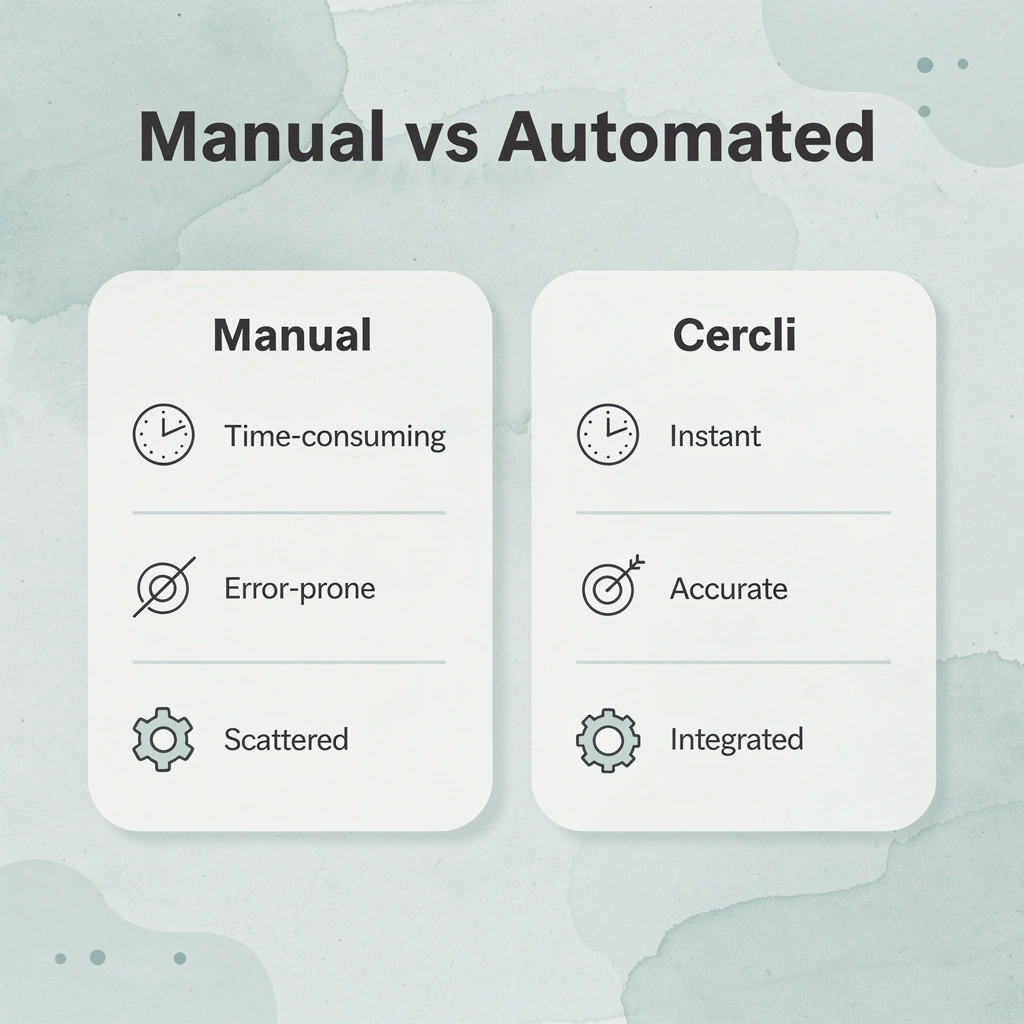
Manual Process
- Time-consuming calculations
- Risk of errors in leave tracking
- Manual rights protection
- Scattered documentation
Cercli Automation
- Instant payroll adjustments
- 100% accurate benefit calculations
- Automatic post-leave compliance
- Centralized compliance records
💡 Best Practice: With Cercli's integrated approach, your HR team can focus on strategic initiatives rather than getting bogged down in compliance paperwork and manual calculations.
Automated leave tracking removes calculation errors
Cercli records when maternity leave starts and automatically tracks the full 60-day paid time off period required by Bahrain Payroll: Rules, Compliance, and Common Mistakes. The system alerts managers when the unpaid 15-day period begins, calculates the employee's return date, and displays this information to managers before the employee returns, ensuring a smooth transition back to work.
Payroll accuracy during leave and extensions
Most payroll systems require HR to manually adjust salary components when maternity leave begins or extends. Cercli processes payroll within the same unified platform, applying 60 days of paid leave with full salary components aligned with the employee's contract. When unpaid extensions occur, the system adjusts payroll automatically without affecting the paid entitlement calculation.
Post-leave entitlements are tracked and enforced
Breastfeeding breaks are paid time required by law. Cercli organizes these benefits within the platform so managers and payroll systems treat them as paid working hours rather than unpaid absences, preventing incorrect logging or oversight.
Multi-country operations without policy misalignment
Teams working across Bahrain, the UAE, and other GCC markets risk using flexible policies despite strict legal requirements. Global HR systems like Cercli ensure Bahrain-specific maternity leave rules are applied correctly within a unified platform, maintaining compliance without manual regulation cross-checks for each employee while keeping global teams aligned.
Compliance delivers value only if it reduces HR's administrative burden rather than creating new layers of management.
Book a Demo to Speak with Our Team about Our Global HR System
If your team manages maternity leave manually or inconsistently, review how your payroll handles paid versus unpaid leave and post-return entitlements. With Cercli, your first session can map your maternity leave workflow, validate compliance, and identify gaps before they lead to costly disputes. The conversation focuses on how your current setup handles Bahrain-specific rules and where automation can replace the administrative burden.
🎯 Key Point: Your demo session immediately identifies compliance gaps in your maternity leave process before they become legal issues.

Most teams discover during their demo that the real cost isn't just compliance risk—it's the hours spent reconciling spreadsheets, payroll errors requiring manual correction, and institutional knowledge lost when HR staff leave. A unified platform removes workarounds so your team can focus on supporting employees during critical life moments, not chasing leave balances across disconnected systems.
💡 Tip: During your demo, ask specifically about automated leave balance tracking to eliminate manual spreadsheet reconciliation.
"The real cost isn't just compliance risk—it's the hours spent reconciling spreadsheets and payroll errors requiring manual correction." — HR Operations Reality
Manual Process Challenges
- Spreadsheet reconciliation
- Payroll errors
- Knowledge loss
Cercli Solution
- Automated leave tracking
- Integrated payroll processing
- Centralized system documentation
Related Reading
- Employer of Record Bahrain
- Oman Minimum Wage
- Maternity Leave In Oman
- Maternity Leave in Bahrain
- Uae Work Permit
- Qatar Personal Income Tax Rate
- Uae Work Week
- Employer Of Record Uae
- Uae Minimum Wage
- Egypt Public Holidays
- End Of Service Benefits Bahrain
- End Of Service Benefits In Oman


