10 Best Employer of Record in Egypt to Hire Fast and Stay Compliant

10 Best Employer of Record in Egypt to Hire Fast and Stay Compliant
Expanding your business into Egypt presents exciting opportunities, but navigating local employment regulations, payroll compliance, and labour contracts can quickly become overwhelming for foreign companies. While frameworks like DIFC labour law govern employment in specific free zones, Egyptian mainland operations require deep knowledge of national labour codes, tax obligations, and employee benefits structures. This article reveals how the best employer of record in Egypt enables you to hire talented professionals fast while maintaining full compliance with Egyptian employment law.
Finding the right partner to manage employment contracts, statutory benefits, and workforce administration transforms what could be months of legal setup into days of productive hiring. Cercli's global HR system streamlines the entire process, connecting you with compliant employment solutions across Egypt and beyond, so you can focus on growing your team rather than decoding complex regulations.
Summary
- Egyptian employment compliance demands continuous precision across payroll, tax, and statutory reporting, not just correct onboarding. Over 60% of Egyptian companies report compliance challenges when hiring, and the complexity multiplies with each payroll cycle. Employers must calculate and remit social insurance contributions (around 18.75% employer, 11% employee), progressive income tax withholdings (0% to 27.5% depending on income), and submit monthly declarations by strict deadlines, often the 15th of the following month.
- Non-compliance penalties in Egypt can reach up to 50,000 EGP per violation, turning minor administrative oversights into significant financial exposure. The International Employment Risk Report found that the average cost of compliance violations reached $420,000 per incident, reflecting not just fines but the operational cost of retroactive payroll corrections, amended filings, and audit responses that compound over time.
- The critical failure point for most EOR arrangements is visibility into how payroll is actually calculated behind the scenes. When basic pay and allowances are miscategorised for tax versus social insurance purposes, contributions become inaccurate, and employees face unexpected liabilities during annual reconciliation.
- Many EOR providers rely on third-party payroll vendors or local accounting firms to handle actual calculations and filings, creating coordination risk. Changes to employee status, salary adjustments, or contract amendments do not always flow cleanly between systems, meaning what looks aligned in the contract may not match what gets processed in payroll.
- Salary structures in Egypt require precise handling because components are treated differently for statutory purposes. Housing allowances, transport allowances, and basic pay each have different implications for social insurance calculation bases and tax withholding.
Cercli's global HR system addresses this by centralising employee data, contracts, payroll calculations, and compliance workflows on a single platform, ensuring that salary components, tax calculations, and social insurance contributions are processed from a single source of truth across Egypt and 150+ countries.
Table of Contents
- Hiring in Egypt Looks Simple, Until Compliance Starts
- The Hidden Risk: Most EOR Providers Don’t Solve Execution Gaps
- 10 Best Employer of Record Companies in Egypt
- Why Choosing an EOR Based on Speed Alone Backfires
- A Smarter Framework for Choosing an EOR in Egypt
- How Cercli Helps You Stay Compliant Beyond EOR in Egypt
- Book a Demo to Speak With Our Team About Our Global HR System
Hiring in Egypt Looks Simple, Until Compliance Starts
At first glance, hiring in Egypt feels straightforward. You find talent, agree on a salary, and onboard them. That is the easy part. The complexity starts the moment payroll runs. Most companies assume compliance is a one-time setup. In Egypt, it is an ongoing system with multiple moving parts, each with financial and legal consequences if handled incorrectly. Over 60% of Egyptian companies report compliance challenges when hiring, not because they lack intention, but because the system demands continuous precision across payroll, tax, and statutory reporting. What looked manageable during onboarding becomes a monthly test of accuracy.
The Payroll Calculation Trap
Take payroll alone. Employers are not just paying salaries. They are responsible for calculating and remitting multiple layers of statutory obligations every month:
- Social insurance contributions (around 18.75% of salary from the employer, plus 11% from the employee)
- Income tax withholding (a progressive system ranging from 0% to 27.5% depending on income)
- Additional contributions and filings, including monthly declarations to both tax and social insurance authorities.
All of this must be calculated accurately, deducted correctly, and submitted on strict timelines, often by the 15th of the following month. That is where risk begins to build.
Execution and Statutory Payroll Compliance
It is not just about knowing the rules. It is about executing them consistently across contracts, payroll, and reporting. Salary in Egypt is often split into basic pay and allowances, each treated differently for tax and social insurance purposes. Misclassify one component, and every downstream calculation becomes incorrect. On top of that, employers must register employees with the social insurance authority within strict deadlines, maintain compliant, locally structured employment contracts, accurately track benefits, leave, and statutory entitlements, and file and reconcile payroll data monthly and annually.
Where Most Companies Get it Wrong
Compliance is not static. It is continuous. They focus on hiring speed, often through an Employer of Record, but underestimate what happens after onboarding. The system appears compliant at first, but small inconsistencies in payroll, taxes, or contributions compound over time.
Mitigating Non-Compliance Liabilities
By the time issues surface (during an audit, employee dispute, or exit), they are no longer small. They are liabilities. Non-compliance penalties can reach up to 50,000 EGP per violation, turning what seemed like minor administrative oversights into significant financial exposure. That is why the real value of an Employer of Record in Egypt is not just hiring quickly. It is maintaining alignment across payroll, tax, and compliance every single month, where the actual risk lives. But here is what most people miss: not all EOR providers actually solve this execution problem.
The Hidden Risk: Most EOR Providers Don’t Solve Execution Gaps

Most EOR providers in Egypt handle the legal framework well. They register as the employer of record, draft compliant contracts, and manage the official relationship with local authorities. But compliance is not just about contracts. It is about how those contracts translate into payroll calculations, tax withholdings, and social insurance filings every single month. That is where the gap opens.
The Opacity Problem
The failure point is usually visibility. You do not see how payroll is calculated behind the scenes. You do not see how salary components are categorised for tax versus social insurance purposes. You do not see whether contributions are submitted on time or reconciled correctly. The system works as a black box. Inputs go in (employee data, salary agreements), and outputs come out (payroll runs, compliance filings). What happens in between remains hidden.
Compounding Compliance and Tax Liabilities
This creates a risk that compounds quietly. When basic pay and allowances are miscategorised, social insurance contributions become inaccurate. When tax withholdings do not align with the progressive brackets (0% to 27.5% depending on income), employees face unexpected liabilities during annual reconciliation. When monthly filings to the social insurance authority miss deadlines or contain errors, penalties accumulate without immediate notice. You only discover these issues during audits, employee disputes, or exits, when records need to be explained and reconciled.
Why Execution Gaps Persist
The problem is not always incompetence. It is fragmentation. Many EOR providers rely on third-party payroll vendors or local accounting firms to handle the actual calculations and filings. The EOR manages the employment relationship, but the payroll execution happens elsewhere. That separation creates coordination risk. Changes to employee status, salary adjustments, or contract amendments do not always flow cleanly between systems. What looks aligned in the contract may not match what gets processed in payroll.
Unified Systems and Verifiable Transparency
Platforms like Cercli address this by unifying employment and payroll in a single system. When contracts, payroll calculations, and compliance filings operate from the same source of truth, categorisation errors and submission delays drop significantly. Teams gain real-time visibility into how contributions are calculated and filed, rather than waiting for monthly summaries that cannot be verified. That transparency turns compliance from a trust exercise into a verifiable process.
The False Sense of Security
You have outsourced employment, but you have not eliminated accountability. If contributions are miscalculated or filings are late, the liability still sits with your company, not the EOR. Egyptian authorities hold the employer of record responsible, and, by extension, your business relationship with that provider becomes a source of risk rather than a source of protection. The assumption that outsourcing equals safety only holds if the execution layer is actually reliable and transparent. Most companies discover this too late. Not all EOR providers are built the same, and the differences only become clear when you need to verify what has been done on your behalf.
Related Reading
- DIFC Labour Law
- Egypt Working Hours
- Work Permit Egypt
- Egypt Work Week
- Egypt Minimum Wage
- Employer Of Record Egypt
- Egypt Payroll
10 Best Employer of Record Companies in Egypt
1. Cercli
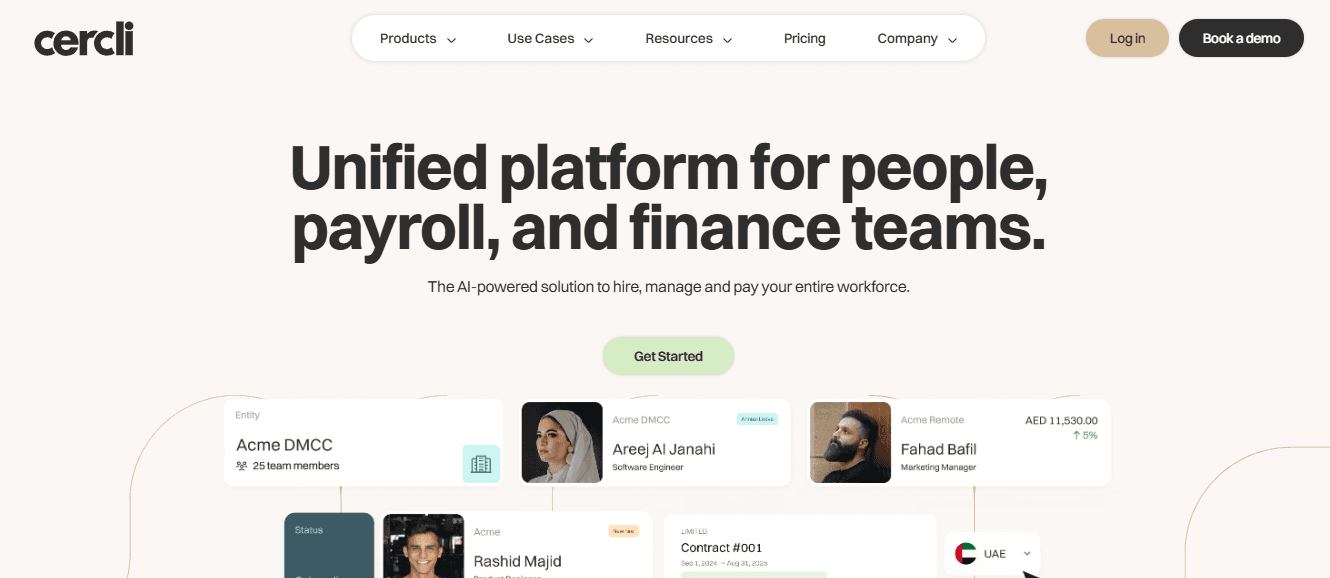
Cercli is built for companies that want alignment across HR, payroll, and compliance, rather than treating EOR as a standalone service. Instead of operating as a black box, it centralises employee data, payroll, and compliance workflows into one system. This makes it especially valuable for companies operating across the UAE and GCC and expanding into Egypt, where ongoing compliance consistency matters more than initial onboarding. Teams gain visibility into how payroll, contracts, and statutory obligations are actually executed. When contracts, payroll calculations, and social insurance filings operate from the same source of truth, categorisation errors and submission delays drop significantly. Cercli is best suited for teams that want to see what happens between onboarding and monthly payroll runs, not just trust that it is being handled correctly.
Compliance Visibility
High, with unified workflows across HR, payroll, and compliance.
2. Deel

Deel is one of the most widely used global EOR platforms, known for its scale and for quickly onboarding employees across many countries. It is best for companies prioritising speed and global coverage, especially those hiring across multiple regions at once. According to NEO's 2026 marketplace analysis, Deel ranks among the top 11 EOR services in Egypt for its breadth of coverage across countries. Where companies can run into challenges is in local nuance. Egypt-specific requirements may not always receive the same level of depth as more mature markets. The platform excels at getting people hired fast, but the ongoing execution of payroll and statutory filings can feel less transparent when you need to verify details.
Compliance Visibility
Moderate, with strong systems but less granular insight into local execution.
3. Remote

Remote focuses on building owned infrastructure across different countries, giving it more control over compliance processes than marketplace-style providers. It is best for companies that prioritise compliance control and long-term scalability in international hiring. The owned infrastructure model reduces reliance on third-party vendors, thereby improving consistency. However, this model can sometimes introduce rigidity, especially for companies that need flexibility or faster onboarding in less standard cases. The structure works well for predictable, high-volume hiring, but can feel slower when dealing with contract variations or non-standard employment arrangements.
Compliance Visibility
Moderate to high, depending on the market and setup.
4. Papaya Global
Papaya Global is a payroll-first platform with strong global capabilities, making it a good fit for finance-led teams managing multi-country operations. It works well for organisations that prioritise reporting, payroll accuracy, and financial oversight. The platform excels at providing detailed payroll breakdowns and reconciliation tools that finance teams value. The trade-off is that it is more payroll-centric and less focused on the full employee lifecycle than more HR-integrated platforms. If your priority is statutory accuracy and financial reporting, Papaya delivers. If you need broader HR workflows integrated into the same system, you may need additional tools.
Compliance Visibility
High for payroll, moderate across broader HR processes.
5. Oyster
Oyster is designed for distributed and remote-first teams, with a strong focus on simplicity and user experience. It is a good option for startups scaling internationally and looking for a straightforward way to hire across borders. The interface is clean, onboarding is fast, and the experience feels modern. In Egypt, companies may need to pay closer attention to how local compliance requirements are handled, especially for more complex cases. The emphasis on simplicity can sometimes mean less depth in handling nuanced statutory obligations or contract variations that require local expertise.
Compliance Visibility
Moderate, with a strong interface but lighter compliance depth.
6. Velocity Global
Velocity Global is an enterprise-focused EOR provider with strong global infrastructure and experience supporting large organisations. It is best suited for companies entering Egypt at scale or managing complex, multi-country workforces. The approach is more structured and service-driven, which can be beneficial for governance, but less flexible for fast-moving teams. If you need dedicated account management, structured processes, and enterprise-grade compliance oversight, Velocity delivers. If you need speed and self-service flexibility, the model may feel heavier than it needs to be.
Compliance Visibility
High, typically delivered through managed services.
7. Safeguard Global

Safeguard Global specialises in helping companies operate in complex regulatory environments, with a strong emphasis on compliance and advisory. It is a good fit for organisations that need guidance in navigating local regulations alongside EOR services. The model is more service-heavy, which can require closer coordination compared to product-led platforms. For companies entering Egypt without prior market experience, Safeguard provides valuable advisory support. For companies that prefer self-service platforms with less reliance on account managers, the model may feel slower.
Compliance Visibility
High, supported by advisory and managed services.
8. Horizons
Horizons offers a more locally grounded approach with infrastructure in Egypt, including a presence in Cairo. It is well-suited for companies that want a balance between global reach and local expertise, particularly for larger or more structured teams. The local presence can improve responsiveness to Egypt-specific issues. The experience tends to be more enterprise-oriented, which may feel heavier for smaller teams. If you need hands-on local support and are hiring at scale, Horizons makes sense. If you are a smaller team looking for speed and simplicity, the model may feel too structured.
Compliance Visibility
Moderate to high, with stronger local handling but less unified global workflows.
9. Mercans
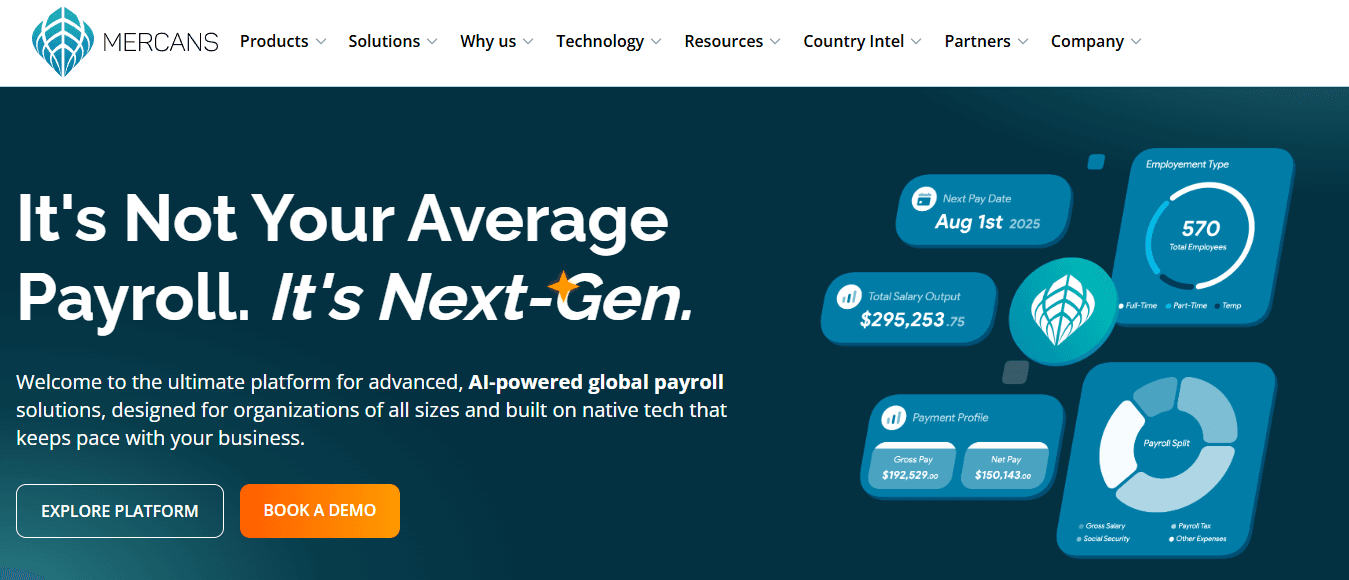
Mercans is known for its strength in payroll and compliance across the MENA region, making it a strong option for companies prioritising statutory accuracy. It is particularly useful for organisations seeking deeper regional expertise in handling tax and social insurance. The platform is more payroll-driven, which may require additional coordination for broader HR needs. If your focus is on getting payroll right in Egypt and across MENA, Mercans delivers. If you need a unified HR and payroll system that handles the full employee lifecycle, you may need to supplement with other tools.
Compliance Visibility
High, especially in payroll and statutory compliance.
10. Africa-Focused or Local EOR Providers
Local and regional EOR providers often bring a deeper understanding of Egypt-specific regulations, employment practices, and administrative processes. They are best suited for companies seeking tailored, hands-on support in Egypt. The tradeoff is that these providers may not offer the same level of technology, automation, or multi-country scalability as global platforms. If you are hiring exclusively in Egypt and value local relationships and responsiveness, a local provider can be a good fit. If you plan to expand beyond Egypt or need unified systems across multiple countries, you may quickly outgrow the model.
Compliance Visibility
Varies, often strong locally, but less standardised across systems.
What Actually Separates These Providers
The real difference is not in who can hire someone in Egypt. Most providers can do that. The difference is in how they handle what happens after onboarding.
- Do you see how payroll is calculated, or do you receive a summary?
- Can you verify that social insurance contributions match contract terms, or do you trust that it is correct?
When an employee disputes a deduction or an audit surfaces a discrepancy, can you trace the source, or do you wait for the provider to investigate?
Visibility is not a feature. It is the foundation of accountability. When HR, payroll, and compliance operate from the same system, you can verify execution in real time rather than discovering issues months later. That is why platforms like [Cercli](https://www.cercli.com/) centralise employment and payroll workflows, turning compliance from a trust exercise into a verifiable process.
Why Choosing an EOR Based on Speed Alone Backfires
Speed feels productive. You post a role on Monday, sign contracts by Wednesday, and have someone working by Friday. That momentum creates confidence. The problem is that speed optimises for the moment of hiring, not the months that follow. In Egypt, where payroll runs monthly and statutory obligations compound across multiple employees, what happens after onboarding determines whether your compliance strategy actually works.
Ongoing Compliance and Calculation Accuracy
The critical mistake is treating onboarding as the finish line. Getting someone hired quickly does not guarantee that their salary components are categorized correctly for tax and social insurance purposes. It does not ensure that progressive income tax withholdings (ranging from 0% to 27.5%) are calculated accurately each month. It does not verify that employer contributions of roughly 18.75% to social insurance are submitted on time to the National Organisation for Social Insurance. Those processes happen behind the scenes every month, and small errors accumulate silently until an audit, an employee dispute, or an exit forces you to reconcile records.
What Fast Onboarding Hides
According to the Global Compliance Survey 2024, 73% of companies that prioritised speed over compliance faced regulatory penalties within their first year. The issue is not that fast providers are careless. The issue is that speed incentivises simplification. Complex salary structures get flattened. Allowances that should be treated differently for tax versus social insurance purposes get bundled together. Monthly filings that require precise reconciliation get automated without verification. The system works until it needs to be explained.
Retroactive Corrections and Compliance Exposure
A company hires three employees through a fast EOR in Cairo. Six months later, during an employee exit, the final settlement reveals that housing allowances were incorrectly included in the social insurance calculation base. The error affects all three employees across six months of payroll. Contributions need to be recalculated retroactively, corrected filings submitted, and potential penalties addressed. What looked like a clean process at the start now requires manual intervention to fix what should have been correct from the beginning.
The Cost of Discovering Problems Late
The International Employment Risk Report found that the average cost of compliance violations reached $420,000 per incident. That figure reflects not just fines but also the operational costs of fixing errors after they have compounded. Retroactive payroll corrections, amended filings, employee disputes, and audit responses all require time and coordination. The longer an error runs undetected, the more expensive it becomes to resolve. Platforms like Cercli address this by unifying contracts, payroll, and compliance workflows into a single system. When salary components, tax calculations, and social insurance contributions are processed from a single source of truth, categorization errors decrease, and monthly filings align with contract terms. Teams can verify execution in real time rather than discovering discrepancies months later when reconciliation becomes unavoidable.
Related Reading
- Probation Period In Egypt
- Maternity Leave In Egypt
- Bahrain Work Visa
- Probation Period In Bahrain
- Social Insurance Egypt
- Egypt Working Hours
- Work Permit Egypt
- Notice Period In Egypt
- Egypt Income Tax Rates
A Smarter Framework for Choosing an EOR in Egypt
If speed alone creates risk, the next step is not to slow down hiring. It is to change how you evaluate an Employer of Record altogether. Most companies choose an EOR based on surface-level factors:
- Onboarding time
- Brand
- Pricing
But as the previous section showed, the real risk in Egypt lies in how payroll, tax, and social insurance are executed over time. A better approach is to evaluate the system behind the service.
Start With How Payroll is Actually Calculated
It is not enough for an EOR to say they handle payroll. You need to understand how salaries are structured, how tax is applied, and how social insurance contributions are computed each month. In Egypt, where salary components are treated differently for statutory purposes, small inconsistencies here can quickly compound.
Verifying Payroll and Contractual Alignment
Ask to see a full payroll breakdown for one employee:
- Gross salary
- Tax deductions
- Social insurance contributions
- Net pay, along with how each figure is calculated.
Next, look at alignment. Contracts, payroll, and compliance should not operate as separate layers. The terms in the employment contract should directly match how payroll is processed and how statutory obligations are calculated. If these are managed in different systems or workflows, discrepancies are almost inevitable.
The Visibility Filter
You should be able to see how employee data, payroll outputs, and compliance obligations are structured. If the process is opaque, you are relying entirely on the provider's internal execution without a way to verify accuracy. That is where most hidden risks sit. This is why it is important to avoid black-box providers. When you cannot trace how numbers are calculated or how filings are handled, you are not removing risk. You are simply moving it somewhere you cannot see. The familiar approach is to trust that the EOR has local expertise and assume they are handling everything correctly. That works until an audit surfaces a discrepancy, an employee disputes a deduction, or an exit requires full payroll reconciliation. At that point, you need to explain six months of calculations you never saw.
Centralized Execution and Verifiable Compliance
Platforms like Cercli centralise contracts, payroll, and compliance workflows within one system, turning execution into something verifiable rather than assumed. Teams can trace how contributions are calculated and confirm that monthly filings align with contract terms before issues surface. This is the shift. Choosing an EOR in Egypt is not about who can hire the fastest. It is about who can execute compliance accurately, consistently, and transparently every month. According to Playroll's 2026 global hiring data, companies operating across over 180 countries increasingly prioritise execution transparency over speed, recognising that visibility determines whether compliance actually works. But knowing what to look for only matters if you can verify it beyond the sales conversation.
How Cercli Helps You Stay Compliant Beyond EOR in Egypt
Once you move from choosing an EOR to actually operating in Egypt, the real challenge begins. Compliance is no longer about onboarding. It is about making sure every payroll run, every contribution, and every record stays accurate over time. This is where most setups break. Cercli is designed to solve that gap. Instead of treating EOR as a standalone solution, it ensures that everything around it (HR, payroll, and compliance) stays aligned and visible as your operations scale.
Why Unified Systems Prevent Compliance Drift
The failure point is usually disconnection. When contracts live in one system, payroll runs through another, and compliance filings happen through a third, discrepancies become inevitable. A salary adjustment approved in HR does not automatically update the payroll calculation. A change in the contract allowance does not flow through to social insurance contributions. Each layer operates independently, and errors accumulate in the gaps between them.
Centralized Payroll and Statutory Alignment
Cercli addresses this by centralising these processes on a single platform built for companies operating across the UAE, the GCC, and markets such as Egypt. When employee data, payroll logic, and statutory obligations operate from the same source of truth, categorization errors drop, and monthly filings align with contract terms. Teams can verify in real time that social insurance contributions match salary structures, rather than discovering mismatches during an audit or employee exit.
What This Looks Like in Practice
A company using an EOR in Egypt can use Cercli to maintain structured employee records aligned with Egyptian labour, tax, and social insurance requirements, ensure payroll calculations consistently match statutory obligations (including correct handling of salary components), track contracts, benefits, and compliance workflows in one system, and gain real visibility into how employment obligations are calculated, processed, and reported.
Global Scalability and Continuous Alignment
According to Cercli's 2026 global EOR page, the platform now supports operations across 150+ countries, making it viable for companies expanding beyond Egypt while maintaining consistent compliance standards. Instead of waiting for problems to appear, the company stays continuously aligned. When an employee disputes a deduction or an authority requests documentation, the data is already structured and verifiable. The system does not require manual reconciliation because the source data was correct from the start.
Where Transparency Replaces Trust
Most EOR setups require you to trust that everything is being handled correctly. You receive monthly summaries, but you cannot verify how figures were calculated or whether filings were submitted accurately. That trust becomes risk when something goes wrong. Cercli shifts this by making execution visible. You can see how payroll is structured, how tax is applied, and how contributions are calculated before they are submitted. That visibility turns compliance from a trust exercise into a verifiable process, which is what matters when accountability sits with your business, not the provider. But even with the right tools in place, most teams still need to understand how to actually implement this approach beyond the platform itself.
Related Reading
- UAE Employment Law
- Maternity Leave In Egypt
- Probation Period In Egypt
- Bahrain Payroll
- UAE Domestic Worker Law
Book a Demo to Speak With Our Team About Our Global HR System
If the biggest risk in Egypt is not hiring, but what happens after, the advantage comes from visibility and alignment. Book a demo with Cercli to run a compliance check on your Egypt workforce and get a clear breakdown of payroll, contracts, and statutory obligations from day one. The difference between managing compliance and hoping it is handled correctly comes down to whether you can verify execution in real time. When contracts, payroll calculations, and social insurance filings operate from the same system, you stop discovering problems months later and start preventing them before they compound. That shift turns compliance from a trust exercise into something you can see, trace, and defend when it matters.


