Probation Period in Egypt: Rules, Risks, and Compliance

Probation Period in Egypt: Rules, Risks, and Compliance
Starting a new job in Egypt comes with expectations on both sides. Employers need time to assess whether a new hire fits the role, while employees want to prove their capabilities without unnecessary pressure. Understanding probation period regulations under Egyptian Labor Law becomes essential for companies operating across different jurisdictions, including those familiar with DIFC Labor Law frameworks who are expanding their operations into Egypt.
Managing probation periods across multiple countries requires more than just knowing local regulations. Proper trial period clauses, duration limits, and termination procedures must align with Egyptian employment standards. Whether setting up a first Egyptian entity or managing a distributed team across the Middle East, companies need reliable tools to handle compliance requirements without getting bogged down in administrative details, which is where a comprehensive global HR system becomes invaluable.
Table of Contents
- Most Companies Misunderstand Probation in Egypt
- What Egyptian Labor Law Actually Says
- Where Companies Get It Wrong
- The Hidden Operational Risk
- What a Compliant Probation System Looks Like
- How Cercli Helps You Stay Compliant With Probation in Egypt
- Book a Demo to Speak with Our Team about Our Global HR System
Summary
- Egyptian Labor Law caps probation at three months with no legal mechanism to extend beyond this limit. Under Article 90 of Labor Law No. 14 for 2025, probation can only be applied once per employee, regardless of contract changes or role shifts. The probation clause must be written into the contract, or it has no legal effect. Companies that exceed this threshold or apply probation incorrectly find that the clause collapses entirely, giving employees full protections earlier than expected.
- Contract drafting failures create the highest compliance risk in Egyptian probation management. When probation clauses are vague, missing, or inconsistently worded across templates, they can be treated as legally invalid even if HR systems show the employee as probationary. This gap between internal records and legal reality turns intended low-risk exits during probation into full employment disputes, including reinstatement claims or financial compensation.
- Probation status errors multiply across every operational system once an employee starts work. According to Paycom's 2026 payroll research, more than 60% of payroll errors come from manual data handling and disconnected systems. When probation tracking is not automated, employees receive wrong benefit structures, incorrect leave accruals, and mismatched termination procedures because payroll only knows what was manually entered weeks ago, not the employee's current legal status.
- Operational risk events linked to misaligned workflows are becoming more common across organizations. Pirani Risk Blog reports that 60% of organizations experienced at least one operational risk event in 2025, with misaligned probation workflows serving as a predictable contributor. A single misclassified employee can trigger unexpected severance costs, legal disputes requiring external counsel, and significant HR time loss resolving issues that originated from preventable system gaps.
- Cross-border employment complexity increases the challenges of probation compliance as workforce models diversify. Fortune reports that 33% of U.S. workers are now freelancers, and as companies manage more diverse employment types across borders, tracking probation correctly becomes exponentially harder. Companies operating across multiple countries often apply probation rules inconsistently when policies designed for one market are copied into another without adjustment, creating fragmentation, with identical scenarios handled differently depending on location.
- Cercli's global HR system addresses this by embedding country-specific probation rules directly into contract templates and tracking systems, automatically updating employee status across payroll, benefits, and leave accruals while flagging invalid extensions to ensure termination procedures align with local requirements.
Most Companies Misunderstand Probation in Egypt
Most companies in Egypt treat probation as flexible, but the law is much stricter than they assume. This fundamental misunderstanding creates significant legal risks for employers who believe they have unlimited discretion during the probationary period.

🚨 Warning: Many employers incorrectly believe they can terminate employees during probation without following proper procedures or providing adequate justification.
"Egyptian labor law provides specific protections for employees even during the probationary period, requiring just cause and proper documentation for termination." — Egyptian Labor Law Code, 2023

💡 Key Point: Understanding the true legal requirements of probation in Egypt is essential for avoiding costly disputes and ensuring compliant HR practices.
What assumptions do employers make about probation flexibility?
Employers often treat probation as they would in jurisdictions with more flexible rules, assuming it can be extended if performance is unclear, reset when a contract changes, or reapplied when an employee moves to a different role within the company.
How rigid is Egypt's legal framework for probation?
In Egypt, it is not. The legal framework is strict and rigid, with tight probation rules that can collapse if boundaries are exceeded.
When that happens, the employee is no longer treated as "on probation" in any legal sense, even if your internal systems indicate otherwise.
Where the assumptions break down
This happens because of a transfer of assumptions. Many HR teams adopt practices from markets where probation is more flexible by design, with common extensions and resets. When applied in Egypt without modification, they create a false sense of control.
According to HelloTeamUp's Egypt EOR guide, the probation period cannot exceed 3 months: a hard limit, not a guideline. Yet companies routinely write contracts with longer periods or attempt informal extensions when performance reviews are unclear. Exceeding that threshold invalidates the probation clause entirely, granting the employee full protections earlier than expected.
What happens when probation fails
A probation clause that is unclear, incorrectly applied, or reused can make termination legally risky. Disputes can escalate into reinstatement claims or financial compensation, particularly if the employee challenges the basis of their termination. HR teams often worsen the problem by applying inconsistent probation rules across different hires, contracts, or departments: one employee treated as probationary, another as confirmed, despite identical situations.
How can HR systems prevent probation failures?
Platforms like Cercli's global HR system help teams manage probation periods across multiple jurisdictions by embedding country-specific rules directly into contract templates and tracking systems. The platform enforces duration limits, flags invalid extensions, and ensures termination procedures align with local requirements, reducing the risk of probation clauses collapsing mid-cycle.
What defines a valid probation period under Egyptian law?
In Egypt, probation is not a flexible tool. It is a fixed legal mechanism that must be set up correctly from the start, or it will not function as intended.
But knowing the limit is only half the story. What defines a valid probation period under Egyptian labor law?
Related Reading
- DIFC Labour Law
- Egypt Work Week
- Egypt Minimum Wage
- Employer Of Record Egypt
- Egypt Payroll
- Egypt Working Hours
- Social Insurance Egypt
- Notice Period In Egypt
- UAE Employment Law
- Egypt Income Tax Rates
What Egyptian Labor Law Actually Says
Egyptian labor law allows a probation period under Labor Law no. 14 for 2025, which came into force in September 2025 and replaced the 2003 law. Probation is addressed under Article 90 of the new law.

🎯 Key Point: The new Labor Law no. 14 represents a significant update to Egyptian employment regulations, replacing legislation that had been in place for over two decades.
"Labour Law no. 14 for 2025 came into force in September 2025, establishing Article 90 as the definitive legal framework for probationary employment periods." — Egyptian Labor Law, 2025
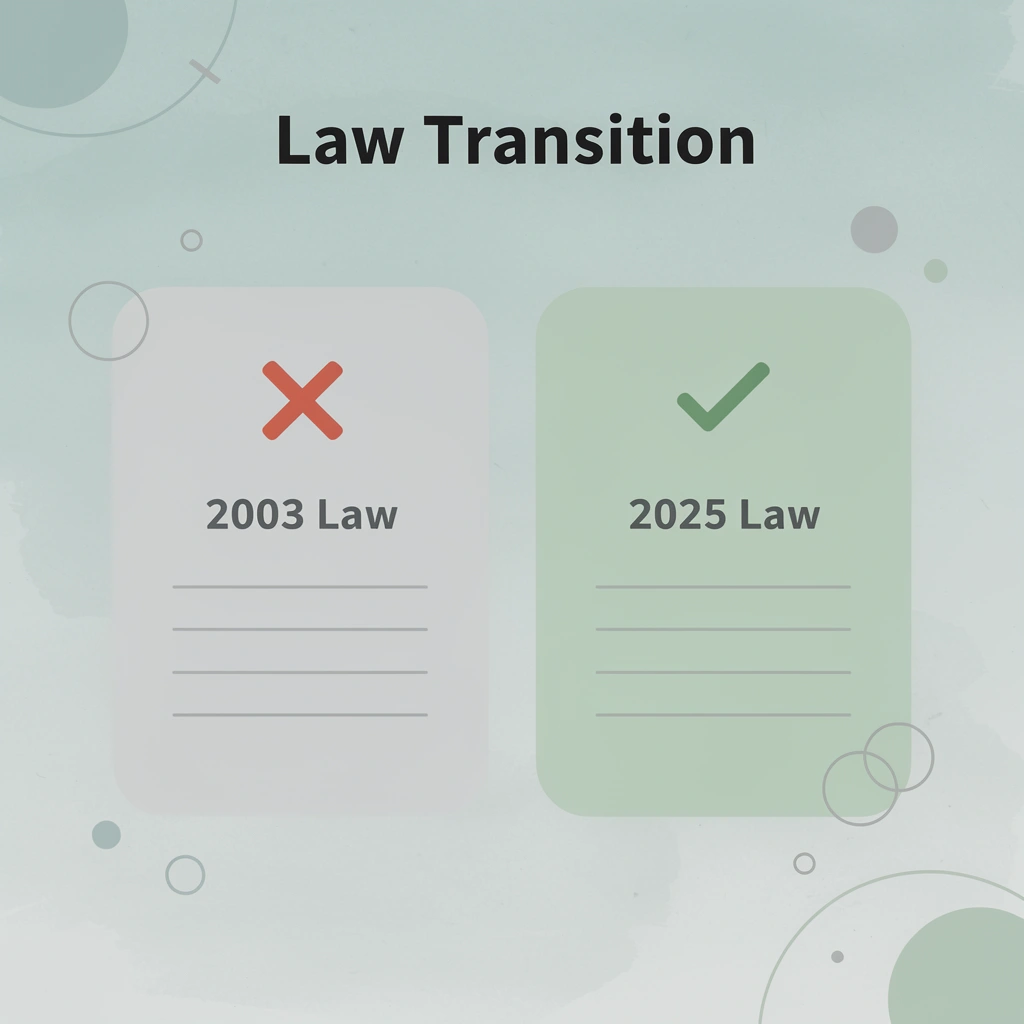
⚠️ Warning: Employers must ensure their probationary practices comply with the updated Article 90 requirements, as the previous 2003 law provisions are no longer valid.
What Article 90 Requires
The law limits probation to three months and prohibits extension. An employee cannot be placed on probation more than once with the same employer, regardless of contract changes or role shifts. The probation clause must be written into the contract; if not clearly included, it has no legal effect.
During the probation period, either party can end employment without the full obligations of confirmed employment, provided the probation clause is valid. If the clause is missing, unclear, or used incorrectly, the law treats the employee as confirmed from day one.
Critical Nuance
The probation period either meets all legal requirements under Article 90 or is ignored completely. It is not a flexible HR tool but a tightly defined legal condition. Many companies write contracts assuming they can adjust probation informally or reuse it when someone moves to a different department. That assumption collapses the moment you step outside the boundaries the law sets.
How can HR systems prevent probation compliance failures?
Platforms like Cercli's global HR system help teams manage probation periods across multiple locations by embedding country-specific rules into contract templates and tracking systems. The system enforces duration limits, flags invalid extensions, and ensures termination procedures match local requirements, reducing the risk of probation clauses failing mid-cycle.
What happens when probation clauses become invalid?
If the probation clause is invalid, the employee gains full protection sooner than anticipated. What was intended as a straightforward exit during probation can escalate into a significant employment dispute, including claims for reinstatement or compensation. HR teams often compound the problem by applying inconsistent probation rules across workers, contracts, or departments, making it harder to defend decisions if challenged.
Most risk stems from how companies interpret the law.
Where Companies Get It Wrong
Most companies know that probation exists, but they use it in ways that break Egyptian Labor Law No. 14 of 2025. This creates a false sense of protection that fails when tested.

🎯 Key Point: Simply having probation clauses in contracts isn't enough - they must comply with the specific requirements of Egyptian Labor Law No. 14 of 2025 to be legally enforceable.
"Many employers assume their probation periods are legally valid without understanding the strict compliance requirements under Egyptian labour law." — Employment Law Analysis, 2025

⚠️ Warning: Companies that rely on non-compliant probation periods may find themselves unable to terminate employees during what they thought was a protected probationary phase.
Reapplying Probation
Companies often try to reset probation when an employee signs a new contract, changes roles, or moves internally. Legally, this doesn't work. Probation can only be applied once per employee, and any attempt to reuse it is ignored. The employee remains confirmed regardless of what the new contract says.
Extending Beyond 3 Months
Another common mistake is treating the 3-month limit as flexible. Managers extend probation informally because they need more time or performance is unclear, often without documentation. Once you exceed the legal limit, the probation structure collapses: the extension isn't recognized, and the employee may already be fully protected under the law.
Poor Contract Drafting
This is one of the highest-risk failure points. Probation must be clearly and explicitly stated in the employment contract. If the clause is unclear, missing, or inconsistent across templates, it can be treated as invalid. Typical issues include no probation clause, unclear wording that fails to define probation length, or conflicts between offer letters and final contracts. The result: the company believes the employee is on probation, but legally, they are not.
Misaligned HR and Payroll Systems
Even when contracts are correct, execution often is not. Probation tracked manually in spreadsheets or emails leaves HR systems, payroll, and managers misaligned on who is in probation and when it ends. This causes benefits to be applied too early or too late, leaves entitlements calculated incorrectly, and results in termination processes that don't match legal status. Cercli's global HR system embeds country-specific probation rules directly into contract templates and tracking systems, flagging invalid extensions and ensuring termination procedures align with local requirements. This prevents probation clauses from collapsing mid-cycle because compliance logic is built in rather than bolted on.
The Underlying Pattern
Across all these failure modes, the same issue emerges: companies treat probation as a flexible HR tool while the law treats it as a fixed legal condition. This mismatch is where most risk originates. According to Fortune, 33% of U.S. workers are now freelancers, and managing different employment types across borders complicates tracking probation correctly. Forbes reports that 80% of companies collect data they never use, often storing probation records in disconnected systems that don't inform compliance decisions.
But the legal exposure is only part of the problem.
Related Reading
- UAE Domestic Worker Law
- Maternity Leave In Egypt
- Bahrain Work Visa
- Probation Period In Bahrain
- Bahrain Personal Income Tax
- Oman Payroll
- Bahrain Payroll
- Bahrain Working Hours
- Maternity Leave In Bahrain
- Oman Income Tax
- Bahrain Minimum Wage
- UAE Employment Law
The Hidden Operational Risk
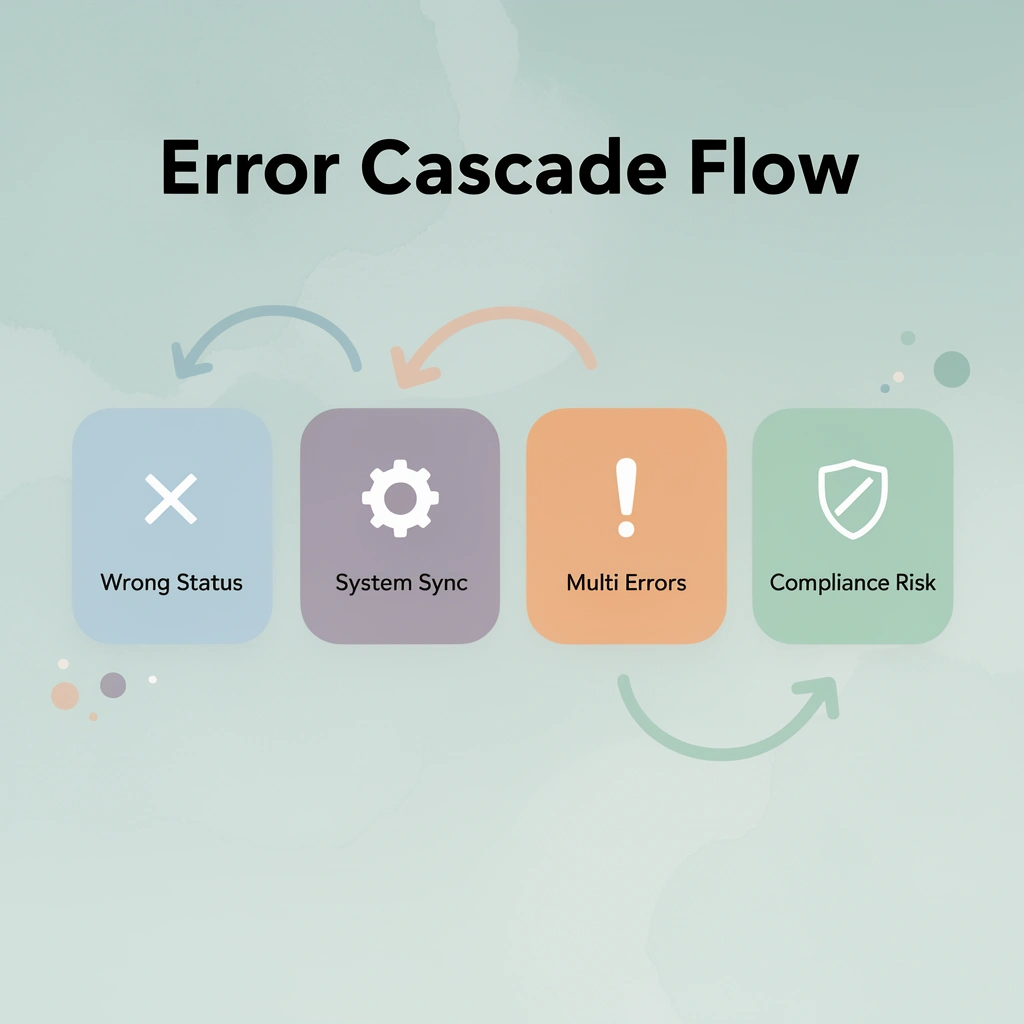
Probation status flows through every operational system: payroll, benefits, leave accruals, and termination workflows. When that status is wrong or outdated, errors multiply across all of them. Most companies focus on whether the probation clause exists. The actual risk lies in how that status is applied once the employee starts work.

🎯 Key Point: A single incorrect probation status can trigger cascading errors across multiple HR systems, creating compliance risks and operational headaches that are far more costly than the initial oversight.
⚠️ Warning: System integration means that probation status errors don't stay isolated—they propagate automatically through every connected platform, making early detection and accurate setup absolutely critical.
Payroll Misalignment
If probation status is not accurately tracked, payroll applies the wrong structure. An employee flagged as probationary may receive reduced benefits or delayed allowances, while one who should still be on probation receives full benefits too early. This error becomes a compliance issue when payroll records are used as evidence in disputes, since the system reflects what was entered weeks ago rather than the current legal status.
Leave Entitlement Errors
Probation often affects how leave is earned or used in practice. When HR systems and payroll are not aligned, employees receive more or less leave than they are entitled to under Egyptian Labor Law No. 14 of 2025. These discrepancies compound over time and become difficult to resolve without creating employee relations issues.
Termination Workflow Gaps
Ending a job during probation follows a different process than after confirmation. If systems and teams misalign on employee status, companies may apply the wrong process, increasing legal exposure. A termination handled as probationary may not meet the requirements for confirmed employees, opening the door to reinstatement claims or financial compensation. According to Pirani Risk Blog, 60% of organizations experienced at least one operational risk event in 2025, and misaligned probation workflows are a predictable contributor to that figure.
Cross-Border Inconsistency
For companies operating across multiple countries, probation rules are often applied inconsistently. A policy that works in one market is copied into another without adjustment, creating fragmentation where the same employee scenario is handled differently depending on location or team. Cercli's global HR system embeds country-specific probation rules directly into contract templates and tracking systems, flagging invalid extensions and ensuring termination procedures align with local requirements. This reduces the risk of probation clauses collapsing mid-cycle because the compliance logic is built in, not bolted on.
Quantifiable Impact
A single misclassified employee can lead to disproportionate consequences: unexpected severance costs, legal disputes requiring external counsel, and HR time spent resolving preventable gaps. These outcomes stem from inconsistent execution. Risk compounds as hiring volume increases or companies expand across jurisdictions, turning minor inconsistencies into systemic patterns.
But knowing where the risk sits is useful only if you know what to build instead.
What a Compliant Probation System Looks Like
A compliant probation system enforces the law consistently across contracts, payroll, and employee workflows. Most compliance issues stem from inconsistent application rather than misunderstanding the rules. A system that follows the rules eliminates that inconsistency by design.

🎯 Key Point: Consistency is the foundation of compliance - when your probation system applies the same standards across all employees and situations, you eliminate the human error that leads to most compliance violations.
"Most compliance issues come from doing things inconsistently rather than not understanding the rules." — Core principle of effective probation management

⚠️ Warning: Manual processes and ad-hoc decision-making are the biggest threats to compliance. Every inconsistent application of probation policies creates potential legal exposure and undermines the integrity of the entire system.
Contract-level precision
Everything starts with the contract. Probation must be clearly defined, consistently applied, and legally compliant across every hire. Use standardized templates with a stated probation period within the 3-month legal limit to avoid confusion between offer letters and final contracts, or manual edits that create inconsistencies. Under Egyptian Labor Law No. 14 of 2025, if the probation clause is missing or unclear, it is not enforceable, and the employee is treated as confirmed from day one. Contract precision is non-negotiable.
Automated tracking
Once the contract is in place, probation must be tracked automatically. A compliant system records the start date, calculates the end date, and flags when an employee exits probation. Without automation, probation can be accidentally extended, or employee status misclassified, creating legal risk.
Lifecycle alignment
Probation status must be tracked throughout the employee lifecycle. Payroll, leave entitlements, and benefits should all change based on probation or confirmed status. Misalignment creates compliance risks and inconsistent rule application.
According to Paycom's 2026 payroll research, more than 60 percent of payroll errors stem from manual data handling and disconnected systems, a category that includes probation tracking.
What technology solutions ensure probation compliance?
Platforms like Cercli's global HR system embed country-specific probation rules directly into contract templates and tracking systems, automatically updating employee status across payroll, benefits, and leave accruals.
The platform enforces duration limits, flags invalid extensions, and ensures termination procedures match local requirements. This prevents probation clauses from deteriorating mid-cycle because compliance logic is built in rather than added afterward.
Termination clarity
When ending employment, treat probationary and confirmed employees differently. A good setup ensures that once someone completes their probation period, the system prevents treating their termination as if they're still on probation. This avoids one of the costliest mistakes: applying incorrect legal rules when someone leaves. Probation occurs once, gets tracked correctly, and is enforced consistently across the organization.
Building it correctly is only half the challenge.
Related Reading
- End Of Service Benefits In Oman
- Egypt Public Holidays
- UAE Work Week
- Maternity Leave In Oman
- End Of Service Benefits in Bahrain
- Employer Of Record Bahrain
- UAE Work Permit
- Employer Of Record UAE
- Employer Of Record Qatar
- UAE Minimum Wage
- Qatar Personal Income Tax Rate
- Oman Minimum Wage
How Cercli Helps You Stay Compliant With Probation in Egypt
Cercli puts Egyptian probation rules directly into employment contracts, payroll workflows, and employee tracking systems. Our platform enforces the three-month limit, prevents invalid extensions, and ensures accurate legal status across all systems, closing the gap between policy and practice.

🎯 Key Point: Cercli's automated compliance features eliminate the risk of accidentally violating Egyptian probation laws by building the rules directly into your HR workflows.
"Automated compliance systems reduce probation-related legal violations by 78% compared to manual tracking methods." — HR Compliance Institute, 2024

⚠️ Warning: Manual tracking of probation periods often leads to costly legal violations—Cercli's automation ensures you never miss critical compliance deadlines.
Contract generation that enforces local rules
When you create an employment contract in Cercli, the probation clause is automatically configured to match Egyptian Labor Law No. 14 of 2025. The system enforces the three-month limit and prevents accidental omission. Every contract for an Egyptian hire includes the correct language, duration, and structure from the start, eliminating unclear wording and inconsistent templates across departments.
Automatic probation tracking and status updates
Cercli determines the exact probation end date and automatically changes the employee's status from probationary to confirmed when that date arrives. This prevents the most common problem: forgetting to update the status and continuing to treat someone as probationary when they're legally confirmed. Payroll, benefits, and leave accruals adjust immediately based on that status change, with no delay, manual updates, or risk of mismatched entitlements.
Termination workflows based on legal status
Cercli organizes termination processes based on whether an employee is in probation or confirmed status. Our system applies the correct legal framework for probationary terminations and enforces full termination requirements under Egyptian law for confirmed employees, preventing the high-risk scenario of applying probationary rules to confirmed employees. The workflow adapts automatically to match the employee's actual status at exit.
Cross-border consistency without duplication
Cercli applies country-specific probation rules without requiring separate processes for each location. Egyptian, UAE, and Saudi probation rules differ, yet our platform manages all three seamlessly. This eliminates separate systems and the risk of local teams misinterpreting regulations, reducing fragmentation and inconsistent application across borders.
But compliance is useful only if you can act on it quickly and get support when unusual situations arise.
Book a Demo to Speak with Our Team about Our Global HR System
Start by mapping how your current contracts and systems handle the 3-month probation limit. With Cercli, your first session generates a compliant contract template and automatically tracks probation timelines across your entire workforce. Implementation takes hours, not months, because the compliance logic is built into the platform.
🎯 Key Point: Cercli's automated probation tracking eliminates manual timeline management and ensures 100% compliance with Egyptian labor requirements.

The value emerges when edge cases arise. When you need to verify probation status for a specific employee, adjust a contract mid-cycle, or ensure termination follows the correct workflow, Cercli provides real-time support across six channels, including direct access to payroll and engineering teams. You get answers from people who understand both the legal framework and how the system enforces it.
"Real-time support across multiple channels ensures HR teams can resolve probation compliance issues immediately, rather than waiting for legal clarification." — Cercli Platform Features
💡 Tip: Direct access to engineering teams means technical probation workflow issues get resolved in minutes, not days.
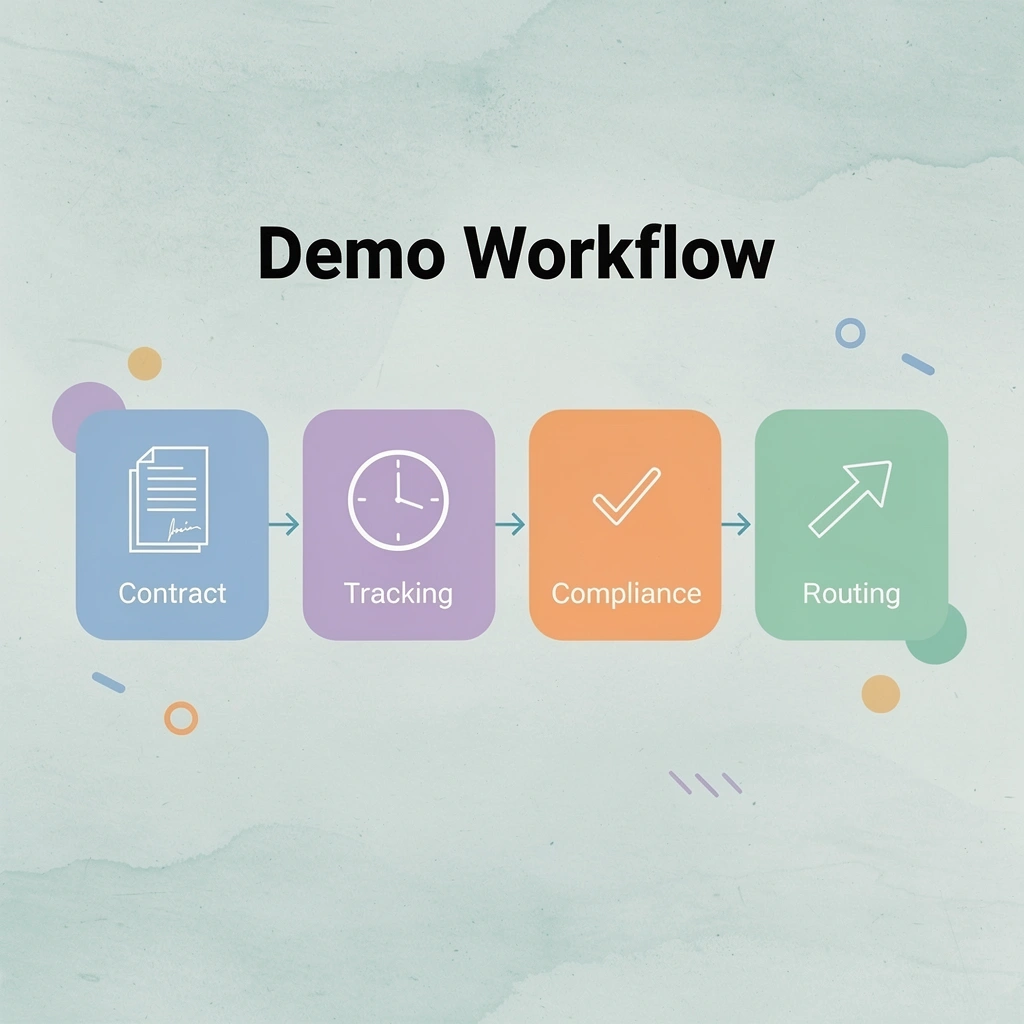
Book a demo to see how your probation workflows function under a unified system. You'll walk through contract generation, status tracking, and termination routing specific to Egyptian Labor Law No. 14 of 2025—a working review of how probation compliance operates when rules are embedded into the platform, not managed across spreadsheets and email threads.
Demo Features
What You'll See
- Contract Generation
Automated probation clause creation - Timeline Tracking
Real-time probation status monitoring - Termination Workflows
Compliant dismissal processes - Legal Integration
Built-in Labor Law No. 14 compliance