Bahrain Work Visa: Employer Guide to Process and Compliance
Bahrain Work Visa: Employer Guide to Process and Compliance
Expanding into Bahrain requires employers to navigate the country's work permit process, residency requirements, and employment regulations for foreign workers. The Labor Market Regulatory Authority (LMRA) oversees all work visa applications, employer sponsorship obligations, and compliance standards. Understanding these requirements helps businesses secure the necessary permits while meeting local labor regulations.
Managing work visa processes across Gulf countries demands efficient systems to handle documentation, track applications, and ensure compliance. Employers need streamlined approaches for processing permits, managing employee records, and coordinating with government authorities. Companies seeking to optimize these complex procedures can benefit from implementing a comprehensive global HR system.
Table of Contents
- Most Companies Underestimate Work Visa Complexity in Bahrain
- What Bahrain Law Actually Requires for Work Visas
- Where Companies Get It Wrong
- The Hidden Operational Risk
- What a Compliant Work Visa Process Looks Like
- How Cercli Helps You Stay Compliant With Bahrain Work Visas
- Book a Demo to Speak with Our Team about Our Global HR System
Summary
- Most companies treat Bahrain work visas as a procurement task, but the process is managed by the Labor Market Regulatory Authority and encompasses employment contracts, company eligibility, medical clearances, biometric registration, and ongoing compliance obligations throughout the employment lifecycle. A single inconsistency, such as a misspelled name, job description mismatch, or missing attestation, can delay approval by weeks or trigger outright rejection, and companies that repeatedly submit incomplete applications face fines or restrictions on future sponsorship.
- Work visa approvals are assessed against whether the company meets Bahrainisation quotas for Bahraini citizens. A highly qualified candidate with perfect documentation can still be rejected if the employer hasn't met national employment thresholds, which means failing to monitor compliance makes every new hire a gamble, regardless of individual qualifications.
- Employee information flows through multiple touchpoints during visa processing, including employment contracts, LMRA submissions, payroll setup, medical records, and biometric registration. When each of these lives in a separate system, data gets re-entered manually at every step, creating structural inevitabilities for errors. LinkedIn's analysis found that 60% of organizations experienced at least one operational risk event in 2025, with data inconsistencies and process fragmentation ranking among the top triggers.
- Work permits in Bahrain have fixed validity periods and require renewal in line with contract terms. Teams focus on getting someone in the door, then lose track of what happens six months later when the permit needs to be extended or the employee gets promoted, creating immediate legal exposure when LMRA updates are missed.
- LMRA approvals typically take three to five working days for straightforward cases, but end-to-end processing, including entry, medical examinations, and residency, usually spans two to four weeks. Companies that set start dates based on business urgency before visa approvals are even submitted create either compliance violations from starting employees early or operational disruption from roles sitting empty while approvals drag.
- Cercli's global HR system centralizes employee records, contracts, and visa applications on a single platform, so that LMRA submissions match internal documentation automatically, eliminating version-control issues that cause rejections and enabling real-time tracking of approval status across Bahrain and other MENA markets.
Most Companies Underestimate Work Visa Complexity in Bahrain
Most companies treat Bahrain work visas as straightforward: submit documents, wait for approval, and move on. In reality, work visas are managed by the Labor Market Regulatory Authority and connect employment contracts, company eligibility, medical clearances, biometric registration, and ongoing compliance obligations. The process isn't a single approval but a complex workflow spanning hiring, payroll, residency permits, and government reporting across the entire employment lifecycle.

🎯 Key Point: Work visa complexity extends far beyond initial approval—it requires continuous compliance management throughout the employee lifecycle.
"The Labor Market Regulatory Authority oversees a multi-stage process that integrates employment authorization with residency requirements and ongoing compliance obligations." — Bahrain Immigration Guidelines, 2024

⚠️ Warning: Companies that treat work visas as a one-time task often face compliance issues, renewal delays, and regulatory penalties down the line.
What are the common application pitfalls?
The application looks manageable at first glance, but each stage has dependencies that are easy to miss. The job title must align with approved classifications. The company must meet Bahrainisation quotas. Employment contracts must match visa applications exactly.
Medical examinations, fingerprinting, and residency permits must follow in strict order. A single inconsistency (a misspelled name, job description mismatch, or missing attestation) can delay approval by weeks or trigger rejection. Teams often discover these errors only after submission, when timelines are tight and new hires are waiting to start.
How do delays impact business operations?
Those delays create operational problems: roles stay unfilled longer than planned, projects lose momentum, and in serious cases, companies allow employees to start work before visa approvals are finalized, creating direct compliance exposure.
Repeated incomplete or inaccurate applications can result in LMRA fines or restrictions on future sponsorships. The core issue is a misalignment between business hiring timelines and regulatory processes: hiring managers set start dates based on business needs, while visa approvals follow government timelines that don't align with quarterly targets.
Why companies keep getting this wrong
The root cause is structural. Most teams treat visa applications as a one-time administrative task rather than a compliance system spanning multiple departments: HR prepares the employment contract, Finance handles payroll setup, Operations books travel and accommodation, and Legal reviews sponsor obligations.
Each function operates in its own workflow, often using separate tools or spreadsheets. When these pieces don't connect, data becomes inconsistent: a job title in the contract doesn't match the visa application, or a salary figure in payroll differs from what was submitted to the LMRA. These gaps result from fragmentation, not intent.
How do global HR systems solve these coordination problems?
Global HR systems like Cercli consolidate employee records, automate compliance checks, and track visa statuses to reduce errors. When employment data lives in a single source of truth, the system ensures that contract details, payroll inputs, and visa applications are pulled from the same record. Automated reminders flag upcoming renewals before expiry. Audit trails document every submission and approval, eliminating the manual coordination that causes most delays.
What shift do companies need to make for better compliance?
The shift from treating visas as paperwork to managing them as part of a broader compliance system is where most companies struggle. It requires rethinking how hiring, payroll, and government reporting connect, building workflows that account for dependencies, and ensuring data accuracy.
Companies that make this shift onboard faster avoid penalties and maintain their ability to sponsor employees without interruption. Those who don't repeat the same mistakes.
But knowing the process is broken is only half the picture. The real question is what the Bahrain law requires and where most companies misread the rules.
Related Reading
- DIFC Labour Law
- Egypt Work Week
- Egypt Minimum Wage
- Employer Of Record Egypt
- Egypt Payroll
- Egypt Working Hours
- Social Insurance Egypt
- Notice Period In Egypt
- UAE Employment Law
- Egypt Income Tax Rates
What Bahrain Law Actually Requires for Work Visas
The Core Legal Framework
Any non-GCC national working in Bahrain must have a valid work permit from the Labor Market Regulatory Authority (LMRA). The employer sponsors the permit: the company applies for it, holds it, and remains legally responsible for the employee's status. Without LMRA approval, onboarding and payroll cannot legally commence.
How does the employer sponsorship system work?
The system works on employer sponsorship, creating a binding relationship. The company must be registered with the LMRA, comply with Bahrainisation quotas, and demonstrate that the role meets regulatory standards. The employee must be at least 18 years old, have a valid passport with at least 6 months remaining, and hold qualifications that match the job description.
Documentation Requirements
The application requires numerous documents, and mistakes accumulate quickly. Employees must submit a valid passport, a signed employment contract (often in both Arabic and English), educational certificates, a CV, and sometimes a police clearance. Employers provide company registration records, proof of LMRA compliance, and pay fees starting around BHD 100, excluding medical and processing costs. Medical fitness certificates must come from approved centers, such as GAMCA clinics, for applicants abroad.
How can document inconsistencies delay visa processing?
Inconsistencies across documents cause delays or rejections: a misspelled name, missing attestation, or misaligned contract clause can halt the entire process. Teams managing hiring across multiple countries find that Bahrain's step-by-step requirements clash with parallel workflows used elsewhere. Platforms like global HR system centralize document collection and validation across borders, flagging mismatches before submission and reducing back-and-forth that stretches timelines from days to weeks.
The Step-by-Step Process
The process follows a strict sequence: job offer and contract signing, employer application through the LMRA Expat Management System, authority review (coordinating with entities like the National Public Registration Authority), entry visa issuance if needed, medical tests and biometric registration upon arrival, and residence permit and CPR (identity card) issuance. Each step depends on the previous one completing correctly. LMRA approvals typically take three to five working days for straightforward cases, while the entire process takes two to four weeks.
Validity and Mobility Constraints
Work visas are valid for one to two years and can be renewed as long as the employment relationship continues. Because the visa is tied to the employer, changing jobs requires either a transfer to a new sponsor or a new work permit application. Recent enforcement has clarified that visit visas cannot be converted into work visas without proper employer sponsorship and approval, closing a loophole some companies previously exploited.
Many companies still struggle to comply with these requirements despite the clear legal framework.
Where Companies Get It Wrong
Most work visa failures stem from poor execution rather than not knowing the rules. Companies treat visa management as separate tasks rather than as a connected workflow. The Labor Market Regulatory Authority publishes clear guidelines, but execution across departments breaks down: HR assumptions, hiring timelines, and documentation practices rarely align.

⚠️ Warning: The biggest mistake companies make is treating visa processing as a last-minute administrative task rather than an integrated part of their hiring strategy.
"Poor execution accounts for the majority of work visa failures, not lack of regulatory knowledge." — Labor Market Analysis, 2024

🔑 Takeaway: Successful visa management requires seamless coordination between HR teams, hiring managers, and documentation processes from day one of the recruitment cycle.
The One-Time Approval Trap
Companies celebrate initial visa approval as if it were the final step. Work permits in Bahrain have fixed validity periods that require renewal, aligned with contract terms, and immediate action when employees change roles or departments. A visa is not a credential to file away—it is an ongoing compliance obligation tied to employment status. Missing a renewal date or failing to update LMRA when job titles shift creates immediate legal exposure. Teams focus energy on getting someone in the door, then lose track of what happens six months later when the permit needs to be extended, or the employee gets promoted.
Documentation Inconsistencies Across Systems
Visa applications depend on data consistency across employment contracts, educational certificates, passport details, and company registration records. When job titles don't match between the contract and the LMRA application, or when a name appears differently on a degree certificate versus a passport, the application stalls. Small differences trigger additional review, extending timelines by weeks. According to Data Axle, bad data drives customers away, and in visa processing, inconsistent records result in outright rejections. Companies rarely check their documentation workflows until an application fails, by which point the candidate's start date has passed.
Bahrainisation Quotas Block Individual Approvals
Work visa approvals are checked against national employment quotas for Bahraini citizens. A highly qualified candidate with perfect documentation can still be rejected if the employer hasn't satisfied Bahrainisation thresholds. Companies discover this too late, after investing weeks in interviews and offers, only to find their application blocked at the regulatory level. The quota acts as a gatekeeper: failing to monitor compliance means every new hire becomes a gamble.
Hiring Timelines Ignore Regulatory Reality
Hiring managers set start dates based on business urgency, assuming visa approvals will happen quickly. In reality, approvals depend on the completeness of documentation, regulatory checks, and processing timelines that don't align with internal deadlines.
Announcing a fixed onboarding date before visa submission risks compliance violations (starting someone early) or operational disruption (unfilled roles). Cercli centralizes visa tracking with hiring workflows, surfacing approval status in real time, and flagging documentation gaps before they delay onboarding.
Why does fragmented visa management lead to failures?
Companies manage visas in spreadsheets, hire in an ATS, manage contracts in one tool, and handle compliance in another. This fragmentation creates gaps that lead to rejections, fines, or employees stuck in limbo.
But even when companies fix their workflows, they still face an unforeseen risk.
The Hidden Operational Risk
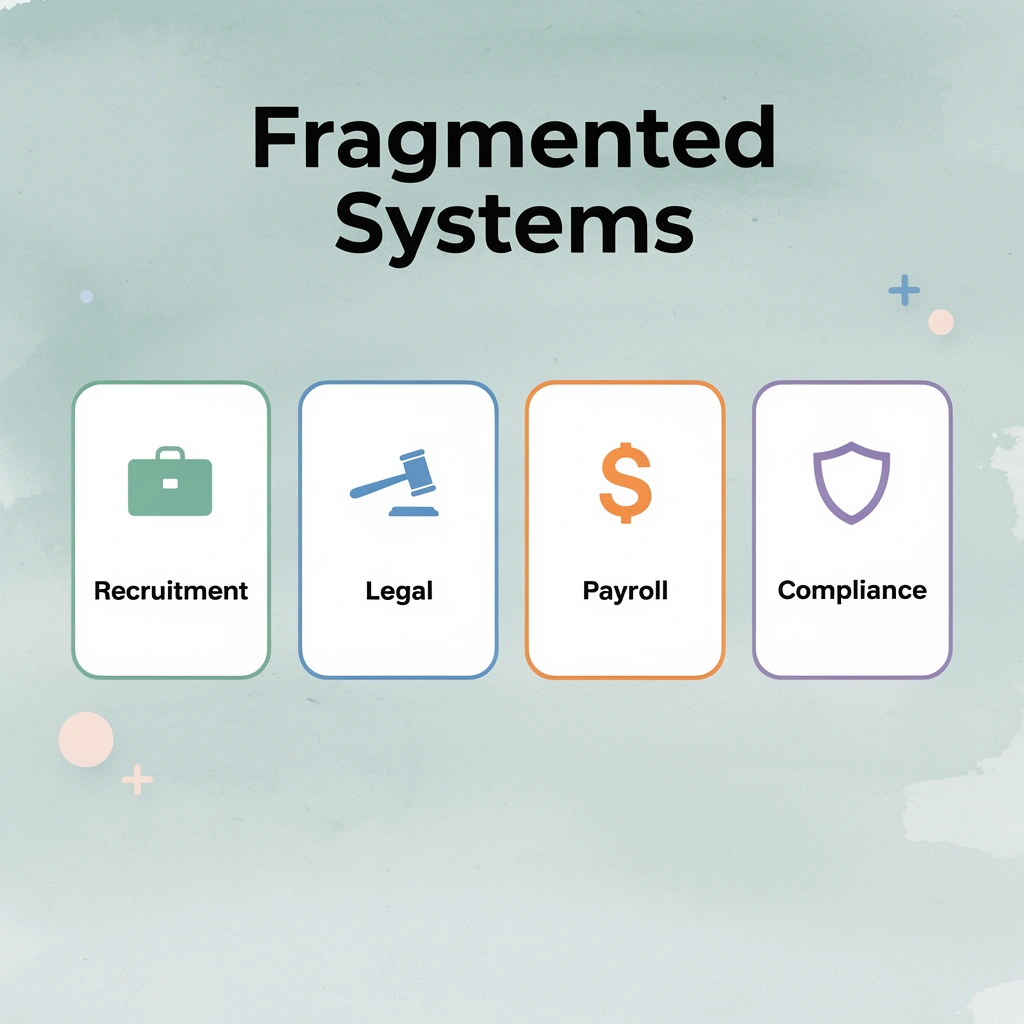
Work visa coordination in Bahrain fails not because of LMRA requirements, but because companies manage them across disconnected systems. Recruitment, legal reviews, payroll, and compliance tracking operate separately, creating delays at each handoff, data entry errors, and conflicting employee information across platforms.

🎯 Key Point: The real problem isn't regulatory complexity — it's system fragmentation that turns simple processes into operational nightmares.
"Disconnected systems create 3x more delays in visa processing than regulatory requirements themselves." — HR Operations Study, 2024
⚠️ Warning: When employee data exists in multiple systems, even minor discrepancies can trigger LMRA rejections and force companies to restart the entire visa application process.
When hiring speed collides with approval reality
Recruitment teams face pressure to fill jobs quickly, with new employees expected to start within weeks. The visa process, medical clearances, and LMRA reviews follow government timelines that cannot be accelerated. When these timelines clash with hiring urgency, companies either push employees to start before approval is complete, creating legal risk, or accept delays that frustrate both the new hire and the waiting team. Both outcomes reveal systemic misalignment rather than poor planning.
The data consistency problem no one sees coming
Employee information moves through multiple channels during visa processing: the employment contract, the LMRA submission portal, payroll setup, medical examination records, and biometric registration. When each system operates independently, data gets re-entered at every step—a name spelled differently between passport and degree, a job title phrased one way in the contract and another in the LMRA application, a start date changed in recruitment but not updated in legal documents. These aren't careless mistakes; they're structural inevitabilities without a single source of truth. LinkedIn's 2025 analysis of operational risks found that 60% of organizations experienced at least one operational risk event, with data inconsistencies and process fragmentation among the top triggers.
Why do multi-country teams amplify visa problems?
Companies that hire across different countries often use the same business processes everywhere. What works in Dubai or Riyadh gets assumed to work in Bahrain. But visa requirements, approval sequences, and documentation standards differ between markets.
Bahrain requires specific medical certifications from approved centers. The LMRA enforces strict sequencing between contract approval, medical clearance, and permit issuance. Assuming flexibility that doesn't exist creates delays that only surface after submission, when corrections become slower and more expensive.
How do unified HR systems solve these challenges?
Platforms like Cercli's global HR system solve this problem by consolidating hiring, contracts, payroll, and compliance in one place. The system automatically moves employee information from recruitment through visa application to onboarding, without requiring manual re-entry.
Contract details match LMRA submissions because they come from the same source. Approval workflows send information to legal and HR simultaneously rather than sequentially. Teams managing operations across multiple countries see Bahrain-specific requirements flagged in context rather than discovered after the fact.
The operational cost isn't just time alone. It's the friction of fixing errors after submission, managing follow-ups across departments, and explaining delays to candidates who've already quit their previous jobs. These issues don't get solved by working harder; they get solved by eliminating the fragmentation that creates them.
What a Compliant Work Visa Process Looks Like
A work visa process in Bahrain that follows the rules connects hiring decisions, employment documentation, and LMRA submissions from the start. When these three critical elements work together seamlessly, compliance becomes a natural result of the workflow, not a separate task to manage.

🎯 Key Point: Integrated compliance means your hiring process, documentation, and LMRA requirements are aligned from day one, eliminating last-minute scrambles and potential violations.
"When compliance is built into the workflow rather than treated as an afterthought, organizations see significantly fewer visa processing delays and regulatory issues." — Immigration Compliance Best Practices, 2024

⚠️ Warning: Many companies treat compliance as a final step rather than an integrated process, leading to costly delays and potential legal complications during the work visa application phase.
Pre-Approval Role Validation
Before offering a job to someone, ensure the role complies with Bahrain's regulations. Verify that the job matches approved LMRA job types, confirm the company has met its Bahrainisation quota for that job category, and check that the company can sponsor someone for this role.
The problem usually occurs here: companies offer jobs based on business needs, then discover weeks later they cannot sponsor someone for that role within their current quota. This delay harms the candidate and creates friction between hiring managers who promised start dates and compliance teams seeking nonexistent solutions.
Unified Documentation Standards
Every work permit application requires exact alignment between LMRA submissions and your employment records. Contracts, educational certificates, passport copies, and job descriptions must match across all systems. According to Alma Immigration, employment-based visa processes worldwide face significant delays due to documentation inconsistencies, and Bahrain is no exception.
What causes documentation misalignment in work permit applications?
Most teams manage documentation across separate folders, email attachments, and departmental drives, creating inevitable inconsistencies. When finance holds one contract version, HR another, and LMRA submissions pull from a third, misaligned details become costly. A misspelled name or a mismatched job title triggers rejection and resets your timeline by weeks.
How can centralized systems prevent documentation errors?
Platforms like a global HR system consolidate employee records in one place, ensuring contract data, visa applications, and payroll information come from a single source. Our Cercli system eliminates version-control issues, ensuring LMRA submissions match what your finance and legal teams use.
Real-Time Application Tracking
Work visa processing involves connected stages: medical clearances, biometric registration, and LMRA approvals. Timelines vary with submission volume and regulatory updates, and one-time submissions lack visibility into bottlenecks.
A compliant system tracks each stage in real time: submission dates, pending approvals, and required next actions. This prevents applications from stalling due to expired medical certificates or missed biometric appointments.
Timeline Integrity
Hiring managers want people to start right away, but regulatory approval doesn't work that fast. A compliant process sets realistic timelines for bringing new employees on board, based on actual LMRA processing times rather than optimistic estimates. Start dates are confirmed only after full approval is granted, with internal stakeholders aligned from the offer stage.
This prevents the operational chaos that occurs when employees resign, relocate to Bahrain, and discover their work permit is still pending because the company moved faster than the law allows.
Compliance is not a one-time achievement; most systems fail when this is overlooked.
Related Reading
- UAE Domestic Worker Law
- Probation Period In Egypt
- Bahrain Working Hours
- Maternity Leave In Bahrain
- Bahrain Payroll
- Bahrain Personal Income Tax
- Bahrain Minimum Wage
- Probation Period In Bahrain
- Oman Payroll
- Oman Income Tax
- UAE Employment Law
How Cercli Helps You Stay Compliant With Bahrain Work Visas
The biggest risk in Bahrain work visa management is managing the process across disconnected systems where hiring, documentation, and compliance fail to align. Cercli removes that fragmentation by integrating visa compliance into hiring and onboarding workflows, ensuring legal clearance occurs before employees leave their current jobs or relocate.

🎯 Key Point: Integrated visa management eliminates the costly delays and compliance gaps that occur when HR systems, legal documentation, and hiring processes operate in isolation.
"Visa processing delays can cost companies up to 30% of new hire productivity in the first quarter due to extended waiting periods and last-minute compliance issues." — Middle East HR Analytics Report, 2024

⚠️ Warning: Traditional visa management approaches that rely on manual coordination between multiple departments create critical vulnerabilities where compliance deadlines are missed, and new hires face unexpected employment delays.
Hiring and Visa Alignment
Most teams set start dates based on business needs, then rush to get work permits afterward. Cercli aligns onboarding timelines with LMRA approval schedules from the offer stage, ensuring employees are onboarded only once they are legally cleared to work. This eliminates situations where employees relocate while permits are pending, avoiding weeks in temporary housing, unnecessary accommodation costs, and lost productivity.
Centralized Data and Documentation
Work visa applications fail when job titles on contracts don't match LMRA submissions, or when names on educational certificates differ from passport spellings. Cercli consolidates employee information, contracts, and supporting documents in one place, ensuring submissions to LMRA match internal records exactly. This eliminates the need to reconcile conflicting information across recruitment platforms, legal systems, and payroll tools.
Real-Time Tracking and Visibility
Cercli gives you a clear view of your visa application status, approval timelines, and renewal deadlines without contacting immigration consultants. You can track where each permit stands in the LMRA process without separate tools or manual updates, preventing applications from stalling due to missing medical clearance results or biometric registration confirmations.
Built-In Compliance with Local Requirements
According to G-P's Bahrain visa and permits guide, managing work permit requirements across 180+ countries requires local knowledge embedded in your processes, not basic checklists. Cercli integrates Bahrain-specific requirements into the system, aligns with LMRA processes, ensures paperwork accuracy, and enforces Bahrainisation quotas. Compliance is built into the workflow itself, eliminating reliance on team knowledge or manual checks that fail when staff turnover or processes change.
Consistency Across Multi-Country Hiring
For companies hiring across multiple regions, applying the same visa process everywhere is a common mistake. Each country's requirements, including Bahrain's LMRA rules, must be handled within the same platform and applied correctly in accordance with local regulations. This allows companies to expand hiring across MENA markets without creating compliance gaps or relying on different tools for each country.
Compliance is only half the challenge.
Related Reading
- UAE Work Permit
- UAE Work Week
- Employer Of Record Qatar
- End Of Service Benefits In Oman
- Qatar Personal Income Tax Rate
- Employer Of Record Bahrain
- UAE Minimum Wage
- Maternity Leave In Oman
- Oman Minimum Wage
- Employer Of Record UAE
- Egypt Public Holidays
- End Of Service Benefits in Bahrain
Book a Demo to Speak with Our Team about Our Global HR System
The harder part is ensuring your internal operations support visa compliance without slowing hiring. When recruitment, contract generation, and LMRA submission occur on different schedules across different systems, even perfect documentation won't prevent delays. The question isn't whether you can get a work visa approved in Bahrain—it's whether your workflows can support the employee from offer acceptance through their first day without friction, rework, or compliance gaps.

🎯 Key Point: Most teams manage this by coordinating across separate platforms for hiring, contracts, payroll, and visa tracking, updating each system manually as applications progress. As you scale across Bahrain, the UAE, Saudi Arabia, and other MENA markets, the fragmentation worsens. A job title approved in your recruitment system doesn't automatically sync with your LMRA application. Start dates in your offer letter don't trigger visa renewal reminders 12 months later.
"A job title approved in your recruitment system doesn't automatically sync with your LMRA application—creating critical gaps in visa compliance workflows."

With Cercli, your first session maps how hiring timelines, employment contracts, and visa workflows work together, then identifies where delays or inconsistencies occur. You'll see where your process breaks down: mismatched documentation between systems, unclear approval handoffs, or renewal deadlines that surface too late. From there, you can build a compliant onboarding timeline using our global HR system that handles HRIS, payroll, recruitment, and regulatory compliance across every country you operate in.
⚠️ Warning: If your hiring timelines consistently miss visa approval windows or you're manually checking LMRA status through email and spreadsheets, book a demo to walk through your current process with our team and see how our unified platform handles Bahrain work visas alongside your broader people operations across MENA markets.