Work Permit in Egypt: Requirements, Process & Employer Guide
Work Permit in Egypt: Requirements, Process & Employer Guide
Expanding into Egypt requires navigating the country's employment regulations, visa requirements, and work authorization procedures. Companies hiring Egyptian nationals or bringing foreign employees to Cairo or Alexandria must obtain proper work permits to comply with legal requirements and protect their workforce. Egypt operates under its own distinct labor framework, with specific documentation, ministry approvals, and compliance standards that differ from those in systems like the DIFC Labour Law. Understanding eligibility criteria, required documents, application timelines, and employer responsibilities helps businesses avoid common challenges when building their Egyptian teams.
Managing work permits across different countries becomes significantly easier with proper support systems in place. The process involves coordinating among HR teams, legal advisors, and Egyptian authorities, tracking renewal dates, and maintaining compliance documentation. Companies can streamline these complex procedures and focus on business growth rather than administrative burdens by implementing a comprehensive global HR system.
Table of Contents
- Why Getting a Work Permit in Egypt Is Not Straightforward
- Who Needs a Work Permit in Egypt
- Core Requirements for a Work Permit in Egypt
- Step-by-Step Work Permit Process in Egypt
- Common Mistakes That Delay Work Permits
- How Cercli Helps Manage Work Permits in Egypt
- Book a Demo to Speak with Our Team about Our Global HR System
Summary
- Egypt's work permit process operates under a labor protection framework that prioritizes local employment over open hiring. Employers must prove the role requires specialized expertise unavailable locally, stay within strict foreign worker quotas (typically 10% of the total workforce), and satisfy multiple regulatory authorities before authorization is granted. According to CAPMAS data published in 2024, the national unemployment rate fell to 6.6%, underscoring why authorities scrutinize foreign hiring closely. Every application is evaluated against national employment priorities, and approval depends on demonstrating necessity, not just eligibility.
- Work authorization in Egypt requires alignment between three separate legal requirements: a valid entry visa, a residence permit, and a work permit issued by the Ministry of Manpower. All three must remain current and synchronized. A common misconception is that short visits or temporary assignments do not require permits, but Egyptian law treats any physical work activity in the country as regulated employment regardless of assignment length. Confusing entry visas with work authorization creates immediate compliance exposure.
- Role justification is one of the most important and most overlooked parts of the application process. Employers must provide a justification letter explaining why the role cannot be filled by an Egyptian national, evidence of the foreign employee's unique expertise or specialization, and in some cases, proof of knowledge transfer, such as training Egyptian assistants. Generic statements about needing "international experience" or "specialized skills" are not enough. Authorities expect specific evidence, including proof of recruitment efforts within Egypt and documentation of the foreign employee's unique qualifications.
- Final work permit approvals can take 8 to 10 months in some cases, even when the process is handled correctly. Applications move through Ministry of Manpower reviews, security vetting, and residency alignment, and any gap between what is submitted and what is expected extends timelines by weeks. Missing signatures, inconsistent job titles across documents, or unclear role descriptions cause authorities to return incomplete applications rather than process them. Companies face compliance risks, including fines of up to $2,000 per worker for non-compliance.
- Under the New Labor Law (Law No. 14 of 2025) and Ministerial Decree No. 279 of 2025, foreign employees generally cannot exceed 10% of a company's total insured Egyptian staff, and this is actively monitored by the Ministry of Manpower. The calculation is tied to registered social insurance records, so employers cannot simply adjust internal numbers to meet the quota. The system cross-references actual insured employees, and any mismatch creates immediate compliance exposure, resulting in delayed or outright rejected applications.
- Cercli's global HR system addresses this by centralizing work permit documentation, tracking renewal deadlines across visa, residency, and permit requirements, and maintaining compliance records, so teams can identify misalignments before they create legal exposure or force employees to leave the country to restart the process.
Why Getting a Work Permit in Egypt Is Not Straightforward
Egypt's work permit process operates under a labour protection framework, not an open employment system. Employers must prove the role requires specialized expertise unavailable locally, stay within strict foreign worker quotas, and satisfy multiple regulatory authorities before authorization is granted.

💡 Key Insight: The Egyptian system prioritizes local employment first, making foreign worker approval a complex exception rather than a standard process.
"Every application is evaluated against national employment priorities, and approval depends on demonstrating necessity, not just eligibility." — Egyptian Labor Protection Framework

Every application is evaluated against national employment priorities, and approval depends on demonstrating necessity, not eligibility alone. Employers must build a compelling case that goes beyond basic qualification matching to prove economic necessity.
⚠️ Critical Warning: Simply meeting the minimum requirements does not guarantee approval - you must demonstrate irreplaceable value to the Egyptian economy.

Why is the process restrictive by design?
Egypt's labour framework prioritizes local employment. According to CAPMAS data published in 2024, the national unemployment rate dropped to 6.6%, prompting authorities to scrutinize foreign hiring closely. Every application must demonstrate whether hiring a foreign worker fills a genuine economic need or displaces a qualified Egyptian candidate.
Employers must follow quota limits (typically capping foreign workers at 10% of the total workforce), match employment contracts with visa categories, and submit documentation showing the role cannot be filled domestically. Weak or incomplete justification results in rejection or delays.
Where applications break down
Most delays occur because employers treat work permits as administrative tasks rather than regulatory approvals. A missing signature, an inconsistent job title across documents, or an unclear role description can extend timelines by weeks. Security clearances, medical examinations, and multi-authority reviews add layers that cannot be rushed.
How can employers effectively manage the complexity of work permits?
Cercli's global HR system helps employers manage this complexity by centralizing work permit documentation, tracking renewal deadlines, and maintaining compliance records across Egyptian regulatory requirements. The platform coordinates between HR teams, legal advisors, and authorities to prevent critical steps from being overlooked.
Why do applications fail even when requirements are met?
Getting approval is never guaranteed, even when you meet all the requirements. Applications go through Ministry of Manpower reviews, security vetting, and residency alignment. Any gap between what you submit and what is expected creates problems.
Related Reading
- DIFC Labour Law
- Egypt Work Week
- Egypt Minimum Wage
- Employer Of Record Egypt
- Egypt Payroll
- Egypt Working Hours
- Social Insurance Egypt
- Notice Period In Egypt
- UAE Employment Law
- Egypt Income Tax Rates
Who Needs a Work Permit in Egypt
Any foreign national doing paid work in Egypt must obtain a work permit, regardless of job duration, contract type, or project length. Egyptian authorities focus on where the work occurs rather than on how the job is classified.

🎯 Key Point: The location of work determines permit requirements, not the employment structure or contract type. Whether you're a freelancer, consultant, or full-time employee, the same work permit rules apply.
"Any foreign national performing paid work in Egypt requires proper work authorization, regardless of contract duration or employment classification." — Egyptian Labor Law Guidelines

⚠️ Warning: Many foreign workers mistakenly believe short-term projects or consulting arrangements are exempt from work permit requirements. This is a costly misconception that can lead to legal complications and deportation.
Who this includes
Full-time foreign employees hired directly by Egyptian companies, company directors, executives, managers, technical experts, and specialists all need permits. Short-term workers, secondees, and foreign contractors who physically work in Egypt must also obtain permits.
The common thread is physical presence. If the work happens in Egypt, it is regulated employment.
What many employers get wrong
A common misconception is that short visits or temporary assignments don't require permits. Egyptian law treats any physical work activity as regulated employment with no exemption for brief assignments. Foreign nationals need the same authorization regardless of assignment length, which catches many employers off guard.
Another gap appears when employers confuse entry visas with work authorisation. A business visa allows entry, not employment. These are separate legal requirements.
Limited exceptions
Some people don't need work permits, but these cases are limited. Diplomats and embassy staff covered by international agreements, employees of certain international organisations with bilateral treaties, and some foreign reporters and government-approved investors may not require standard work permits.
These cases are defined by law or international agreements and do not apply to standard hiring. Assuming your role qualifies without legal confirmation is risky.
What is the alignment problem with Egyptian work permits?
A work permit is only one part of following the rules. To legally work in Egypt, a foreign employee must have a valid entry visa, a residence permit, and a work permit issued by the Ministry of Manpower. All three must align—a detail many employers miss when focusing solely on getting someone into the country.
How do fragmented systems complicate work permit compliance?
Fragmented systems worsen this problem. When visa documentation, residence permit records, and work permit timelines exist separately, tracking whether all three remain current becomes difficult. Our global HR system consolidates these compliance records across Egyptian regulatory requirements, tracks renewal deadlines, and centralizes documentation, so teams can spot misalignments before they create legal exposure. Cercli helps by centralizing all compliance data in one accessible location.
But even when all three are secured, the question remains: what does the application require?
Core Requirements for a Work Permit in Egypt
Work permits in Egypt require careful alignment between the employer, the employee, and the role, all verified through comprehensive documentation and government review. They involve substantially more than submitting a few documents.
🎯 Key Point: The Egyptian work permit process is a three-way verification system that ensures complete alignment between all parties and roles before approval.

"Work permits in Egypt involve comprehensive documentation and government review that goes far beyond simple paperwork submission." — Egyptian Ministry of Manpower Guidelines
⚠️ Warning: Many applicants underestimate the complexity of Egypt's work permit requirements, leading to unnecessary delays and rejections in the approval process.
Employer requirements
Before applying, the company must be fully compliant. According to Consortio Law Firm, employers must demonstrate valid commercial registration, tax compliance, and adherence to foreign worker quotas that typically limit foreign employees to around 10% of the total workforce. Non-compliant applications will not proceed.
Employee requirements
The foreign employee must provide a complete and verified profile, including a valid passport, certified academic qualifications, documentation of professional experience, medical clearance (often including HIV screening), and police clearance certificates. All foreign-issued documents must be translated into Arabic and legalized before submission.
Role justification (critical requirement)
Employers must provide a letter explaining why the role cannot be filled by an Egyptian national, evidence of the foreign employee's unique expertise or specialization, and proof of knowledge transfer, such as training Egyptian assistants. Without strong justification, applications are often delayed or rejected.
The underlying question is whether hiring a foreign worker serves a genuine economic need or displaces a qualified local candidate.
How can employers streamline work permit documentation management?
When employers manage these requirements across spreadsheets, email threads, and physical filing systems, critical documents get lost or expire without notice. Our global HR system consolidates work permit documentation in one place, tracks renewal deadlines, and organizes compliance records across Egyptian regulatory requirements, so teams can identify mismatches in permits, qualifications, or corporate registrations before creating legal problems. Cercli helps you centralize this complexity, reducing the risk of missed deadlines and compliance gaps.
Government and compliance checks
Resolution 279 of 2025 requires approval from the Ministry of Manpower, security clearance from state authorities, alignment with residency and visa status, and registration with tax and social insurance systems. Any gap between submission and requirements can extend timelines by weeks.
What happens when you submit the application?
Related Reading
- Probation Period In Egypt
- Maternity Leave In Egypt
- Bahrain Work Visa
- Probation Period In Bahrain
- Maternity Leave In Bahrain
- Oman Payroll
- UAE Domestic Worker Law
- Bahrain Working Hours
- Oman Income Tax
- Bahrain Minimum Wage
- Bahrain Personal Income Tax
- Bahrain Payroll
Step-by-Step Work Permit Process in Egypt
Submitting the application begins a sequence where each stage depends on the previous one completing without error. The process follows a fixed order through multiple authorities, and any inconsistency halts progress until it is resolved.
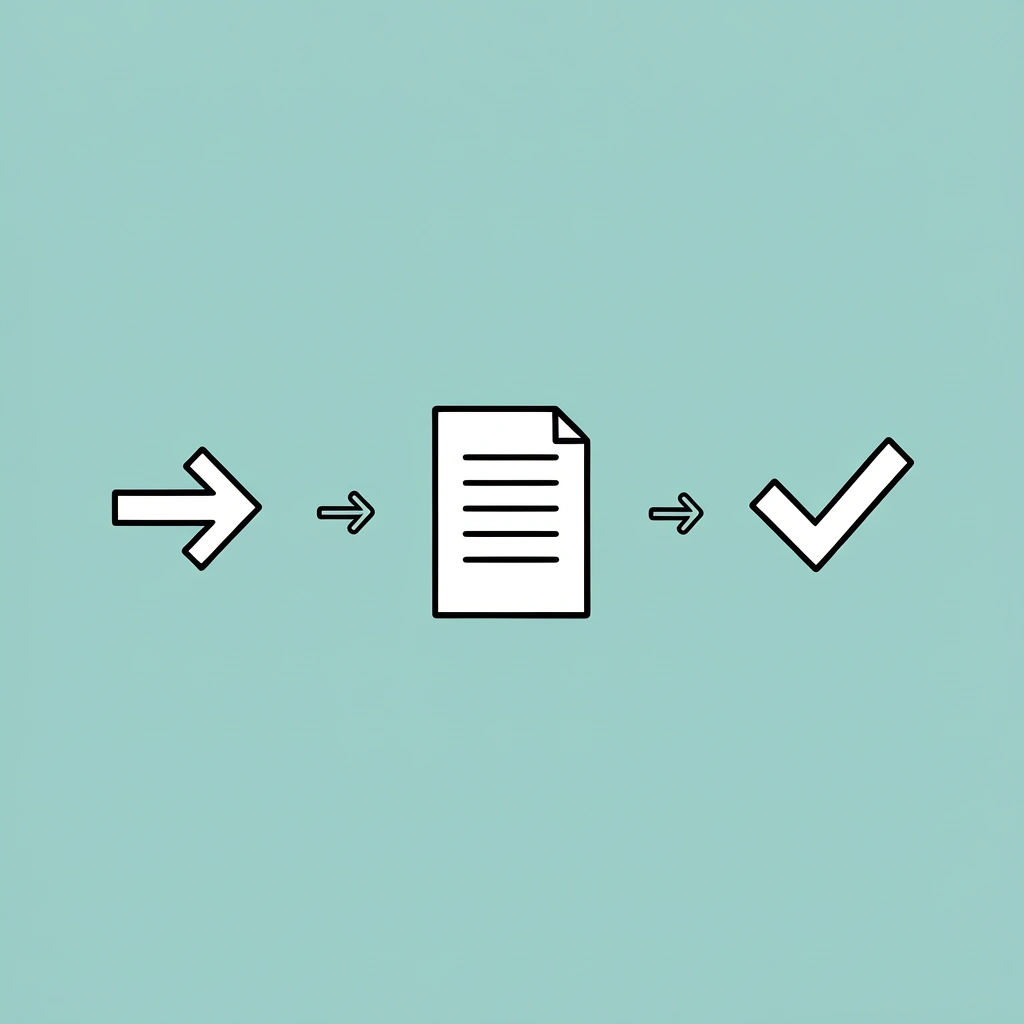
🎯 Key Point: The Egyptian work permit process operates as a sequential chain - if one step fails, the entire process halts until that specific issue is completely resolved.
"The work permit application process requires strict sequential completion through multiple government authorities, with zero tolerance for documentation errors." — Egyptian Ministry of Manpower Guidelines, 2024

⚠️ Warning: Document inconsistencies are the most common reason for application delays. Even minor discrepancies in names, dates, or reference numbers can halt progress for weeks while corrections are processed.
Entry visa first
A foreign employee must enter Egypt with a valid entry visa, usually a business or temporary visa, before applying for a work permit. Entering with the wrong visa type creates immediate compliance problems that delay the process.
Application submission
Once the employee arrives in Egypt, the employer submits the work permit application to the Ministry of Manpower. Required documents include the employer's commercial registration, tax card, and insurance documentation; the employee's passport, qualifications, and clearances; and role justification letters explaining why the position requires a foreign national. Missing signatures, inconsistent job titles across documents, or unclear role descriptions cause authorities to reject incomplete applications, extending timelines by weeks.
Security clearance and medical examination
After you submit the application, security authorities review the employee's background, verify the job is real, and assess whether hiring someone from another country aligns with the country's employment goals.
How do medical examinations and permit timelines work together?
The employee must complete a required medical examination at an approved facility in Egypt. According to the Egypt Work Visa 2025, work permits are initially valid for 6 months, so medical clearance and security approval must be completed within tight timeframes to avoid expiration before the permit is issued.
When teams manage these moving parts across email threads, spreadsheets, and physical filing systems, important deadlines get missed. Our global HR system consolidates work permit documentation and tracks renewal deadlines across Egyptian regulatory requirements, enabling teams to monitor when security clearances, medical exams, and employer documents approach expiration.
Issuance and residency alignment
Once approvals are secured, the work permit is issued, usually valid for one year and tied to the specific employer and role. Any change in employment requires a new application. The work permit must align with the employee's residence permit: both must remain valid and consistent. If one expires or becomes invalid, the employee's legal working status is affected immediately.
Even perfect execution cannot guarantee smooth timelines when mistakes remain invisible until it is too late.
Common Mistakes That Delay Work Permits
Work permit delays in Egypt follow predictable patterns: incomplete documentation, quota overruns, or breakdowns in internal coordination. Understanding these common pitfalls helps applicants avoid costly setbacks and ensures smoother processing of their employment authorization.

⚠️ Warning: The most frequent cause of delays stems from missing supporting documents - particularly authenticated educational certificates, medical clearances, and employer sponsorship letters. Even minor omissions can push your application back by weeks or months.
"85% of work permit delays in Egypt result from incomplete documentation or failure to meet quota requirements during peak application periods." — Egyptian Ministry of Manpower, 2024

Common Mistake
Impact
Prevention
Missing documents
2-4 week delay
Double-check requirements
Quota exceeded
Monthly wait
Apply early in the quota period
Coordination issues
1-6 week delay
Follow up regularly
Incorrect fees
Processing halt
Verify the current fee structure
🔑 Takeaway: Proactive preparation and thorough review of documentation eliminate 90% of preventable delays. Always submit applications early in the month when quota availability is highest, and maintain regular communication with processing offices to catch coordination issues before they become major setbacks.

Missing or inconsistent documentation
This is the most common issue. Work permit applications require fully legalized, translated, and consistent documents from both the employer and employee. Even minor discrepancies can delay the process. Authorities cite incomplete files as a primary cause of delays, particularly when documents lack proper legalization or Arabic translation. A passport name that doesn't match an academic certificate, a job title that differs between the contract and the application form, or a missing apostille on a foreign degree halts the entire review until it is corrected.
Exceeding foreign worker quota limits
Egypt enforces a strict quota system under the New Labor Law (Law No. 14 of 2025) and Ministerial Decree No. 279 of 2025. Foreign employees generally cannot exceed 10% of a company's total insured Egyptian staff, as monitored by the Ministry of Manpower. Companies exceeding this limit without an approved exemption face delayed or rejected applications. The calculation is based on registered social insurance records rather than employee headcount, preventing employers from manipulating internal numbers to meet the quota. Any discrepancy between the reported and insured employee counts creates an immediate compliance risk.
Weak justification for hiring a foreign employee
Employers must prove that the role cannot be filled locally. Regulations require demonstrating a real business need for foreign expertise, a lack of available Egyptian candidates, and plans for knowledge transfer. Generic statements about needing "international experience" or "specialized skills" are insufficient. Authorities expect specific evidence: proof of recruitment efforts within Egypt, documentation of the foreign employee's unique qualifications, or details about how the employee will train Egyptian staff to eventually assume the role. Applications lacking strong justification often slow down or fail.
Misalignment between visa, residency, and permit
Getting work permission in Egypt requires aligning your entry visa, work permit, and residence permit. Mismatches can delay approvals by months. Managing these documents across spreadsheets and email threads risks missing critical deadlines. Cercli's global HR system consolidates all work permit paperwork in one place and tracks renewal dates based on Egyptian regulations, preventing legal issues and keeping employees from having to leave the country to restart the process.
Lack of coordination across teams
Work permits are central to HR, legal, and government relations. When these teams operate separately, documents are submitted late or incorrectly, steps are missed or duplicated, and communication with authorities becomes inconsistent. Final work permit approvals can take 8 to 10 months in some cases, even when handled correctly. Mistakes extend timelines further, resulting in delayed onboarding, lost productivity, candidates withdrawing due to uncertainty, and compliance risks, including fines of up to $2,000 per worker for non-compliance.
Most delays can be avoided with proper coordination across teams.
How Cercli Helps Manage Work Permits in Egypt
Work permits in Egypt fail not because the processes are unclear, but because they are fragmented: documents are scattered across different locations, teams work in separate silos, and steps get missed or repeated. This coordination breakdown creates delays, compliance risks, and unnecessary costs for businesses seeking legal employment status for their workforce.

🎯 Key Point: The main challenge isn't understanding Egypt's work permit requirements—it's coordinating all the moving pieces across different departments and stakeholders.
"Fragmented processes are the leading cause of work permit delays, with coordination issues accounting for more permit failures than regulatory complexity." — HR Compliance Research, 2024

Cercli is built to solve that coordination problem. The platform centralizes document management, streamlines team collaboration, and automates workflow tracking to ensure nothing falls through the cracks. Rather than juggling multiple spreadsheets, email chains, and manual check-ins, Cercli provides a single source of truth for your entire work permit process.
💡 Best Practice: Use Cercli's centralized dashboard to track all work permit applications in real-time, ensuring complete visibility across your HR and legal teams.

Centralized compliance tracking
Cercli brings work permits into a single, organized workflow that connects compliance, HR, and payroll. It consolidates employee records, documents, and compliance requirements in one place, eliminating back-and-forth between teams and ensuring every required document is tracked and easy to find.
You track work permit status alongside onboarding and payroll, seeing where each employee stands, what is pending, and what needs action, rather than managing permits separately from employment.
How does centralized tracking prevent compliance gaps?
You can line up visa, residency, and employment data in one system. This matters in Egypt, where misalignment between these elements commonly causes delays. According to Resolution 279 of 2025, work permits must remain synchronized with residency status and visa validity, and any lapse in any of them will affect the others.
When these records live in separate spreadsheets or email threads, teams discover misalignment only after it creates legal exposure.
What are the benefits of structured workflows?
Keeping track of everything in one place prevents gaps that occur when information is scattered across multiple locations. Structured workflows reduce compliance risk and delays by ensuring teams follow the same system rather than working independently.
Instead of dealing with problems after they happen, you can manage the process ahead of time, turning work permits from something that slows things down into something you can control.
Related Reading
- End Of Service Benefits in Bahrain
- Employer Of Record Qatar
- Maternity Leave In Oman
- Employer Of Record Bahrain
- UAE Work Permit
- UAE Work Week
- Employer Of Record UAE
- Egypt Public Holidays
- UAE Minimum Wage
- Oman Minimum Wage
- Qatar Personal Income Tax Rate
- End Of Service Benefits In Oman
Book a Demo to Speak with Our Team about Our Global HR System
If work permits in Egypt are slowing down your hiring, explore Cercli. In your first session, you can map your current workflow, identify delays or compliance gaps, and discover how to streamline approvals before your next hire. You'll review how your team manages documentation, where permit timelines break down, and what centralized compliance tracking looks like in practice.
🎯 Key Point: Your first demo session focuses on identifying specific bottlenecks in your Egyptian work permit process, not generic features.

Most companies discover the problem isn't understanding Egyptian regulations—it's coordinating them across teams, tracking expiration dates, and maintaining alignment between visas, residency permits, and work authorizations while managing payroll and onboarding simultaneously. Cercli's global HR system was built to meet MENA compliance requirements, accounting for the Ministry of Manpower's workflows, quota tracking, and documentation standards that Egyptian authorities expect. Our platform is designed around local rules, not adapting a generic tool to fit them.
💡 Tip: During your demo, ask how Cercli coordinates different permit types—this is where most delays occur.
"The challenge isn't understanding Egyptian work permit regulations—it's coordinating multiple compliance requirements across teams while maintaining real-time tracking of critical deadlines." — HR Compliance Best Practices, 2024


