Behavioral Hiring Assessments: Evaluate Candidates Effectively
Behavioral Hiring Assessments: Evaluate Candidates Effectively
Resumes reveal work history, but they rarely show how a candidate thinks under pressure, navigates conflict, or collaborates with a team. That gap is why behavioral hiring assessments have become a cornerstone of modern recruitment, with AI-powered candidate screening tools now helping employers spot behavioral patterns, predict on-the-job performance, and reduce evaluation bias. Structured interview techniques, competency-based questions, and personality profiling give hiring teams a much clearer picture of who they are actually bringing on board.
For organizations hiring across multiple countries or at scale, managing these assessments consistently is a real operational challenge. Tracking candidate evaluations, standardizing scoring, and keeping people data in one place requires more than spreadsheets. Teams that want both structure and flexibility in their hiring process can simplify the entire workflow with a global HR system built to handle complexity without adding friction.
Table of Contents
- Why Behavioral Hiring Assessments Matter More in Modern Recruitment
- What Behavioral Hiring Assessments Actually Measure
- Where Behavioral Hiring Assessments Can Go Wrong
- How to Use Behavioral Hiring Assessments Effectively
- Behavioral Hiring Assessment Considerations for Employers in MENA
- How Cercli Helps Companies Build a More Connected Candidate Assessment Process
- Book a Demo to Speak with Our Team about Our Global HR System
Summary
- Behavioral assessments improve hiring accuracy by measuring how candidates actually respond to workplace situations, not just what credentials they hold. Research from Thomas.co indicates that behavioral assessments can improve hiring accuracy by up to 85%, a meaningful difference when credentials alone consistently fail to predict how someone performs under pressure, manages conflict, or adapts when a role evolves. The gap between technical qualification and behavioral readiness is where most costly hiring mistakes originate.
- Bad hiring decisions carry significant financial consequences that extend well beyond salary costs. A mis-hire can cost a business up to 30% of the employee's first-year earnings, according to Thomas.co, and that figure typically reflects gaps in judgment, communication, or adaptability rather than a skills mismatch. Still, 75% of employers report hiring the wrong person for a role, suggesting most hiring processes still lack the structured behavioral evidence needed to catch these gaps before an offer is made.
- The failure point in most behavioral assessment programs is interpretation, not the assessment itself. When hiring teams treat a behavioral profile as a final verdict rather than one data point among several, they filter out well-qualified candidates based on misapplied criteria. A Leadership IQ study cited by ODRL found that 46% of new hires fail within 18 months, and the majority of those failures are behavioral rather than technical. This argues not for more assessments, but for better-targeted ones built around each role's specific demands.
- Skills-based hiring is accelerating the adoption of structured behavioral evaluation. LinkedIn's 2025 Future of Recruiting research found that 93% of talent acquisition professionals believe accurately assessing candidate skills is crucial to improving quality of hire, and organizations running the most skills-based searches were 12% more likely to make a quality hire. Behavioral assessments fit directly into this shift because they surface capabilities that resumes and technical screens cannot capture, including how someone reasons through uncertainty and handles competing priorities in real time.
- Applying behavioral frameworks consistently across multicultural candidate pools adds complexity that most assessment tools aren't designed to handle. In MENA specifically, communication norms, professional hierarchies, and career histories vary significantly across markets, and assessments calibrated to a single cultural default will misread candidates who operate differently without lacking capability. Companies using structured behavioral assessments see up to 24% higher employee performance according to Zenithr, but that outcome depends entirely on the assessment measuring role-relevant behavior rather than cultural familiarity.
- Validating whether assessments predict useful outcomes is the step most organizations skip, and skipping it compounds every other error in the process. Organizations that validate their assessment criteria against post-hire performance data reduce mis-hire rates by up to 36%, according to a 2023 Corporate Executive Board report. Behavioral assessments should evolve based on what post-hire data reveals, not remain static because they were expensive to set up or difficult to revisit.
- Cercli's global HR system addresses fragmentation by bringing behavioral assessment data, interview records, and role requirements into a single connected workflow, so hiring decisions are based on complete information rather than scattered across disconnected tools.
Why Behavioral Hiring Assessments Matter More in Modern Recruitment
Technical qualifications confirm that a candidate can do the work. Behavioral assessment helps you understand how they will do it — and whether the way they operate under pressure will hold up when conditions shift, priorities conflict, or the role evolves.
"Hiring for technical skill alone ignores the real differentiator: how a candidate thinks, adapts, and performs when the environment stops being predictable." — Behavioral Recruitment Research
🎯 Key Point: A candidate's technical ability gets them to the interview — their behavioral profile determines whether they succeed in the role long-term.
💡 Tip: Use behavioral hiring assessments to evaluate not just what a candidate has done, but how they responded to challenge, ambiguity, and change — the conditions that define modern workplaces.
Hiring Dimension
- Technical Assessment
- What it measures
- Skills & qualifications
- What it predicts
- Can they do the job?
- When it matters most
- At the screening stage
- Risk if ignored
- Underqualified hires
- What it measures
- Behavioural Assessment
- What it measures
- Mindset & working style
- What it predicts
- How will they do the job?
- When it matters most
- When conditions shift or evolve
- Risk if ignored
- Cultural misfit or performance breakdown
- What it measures
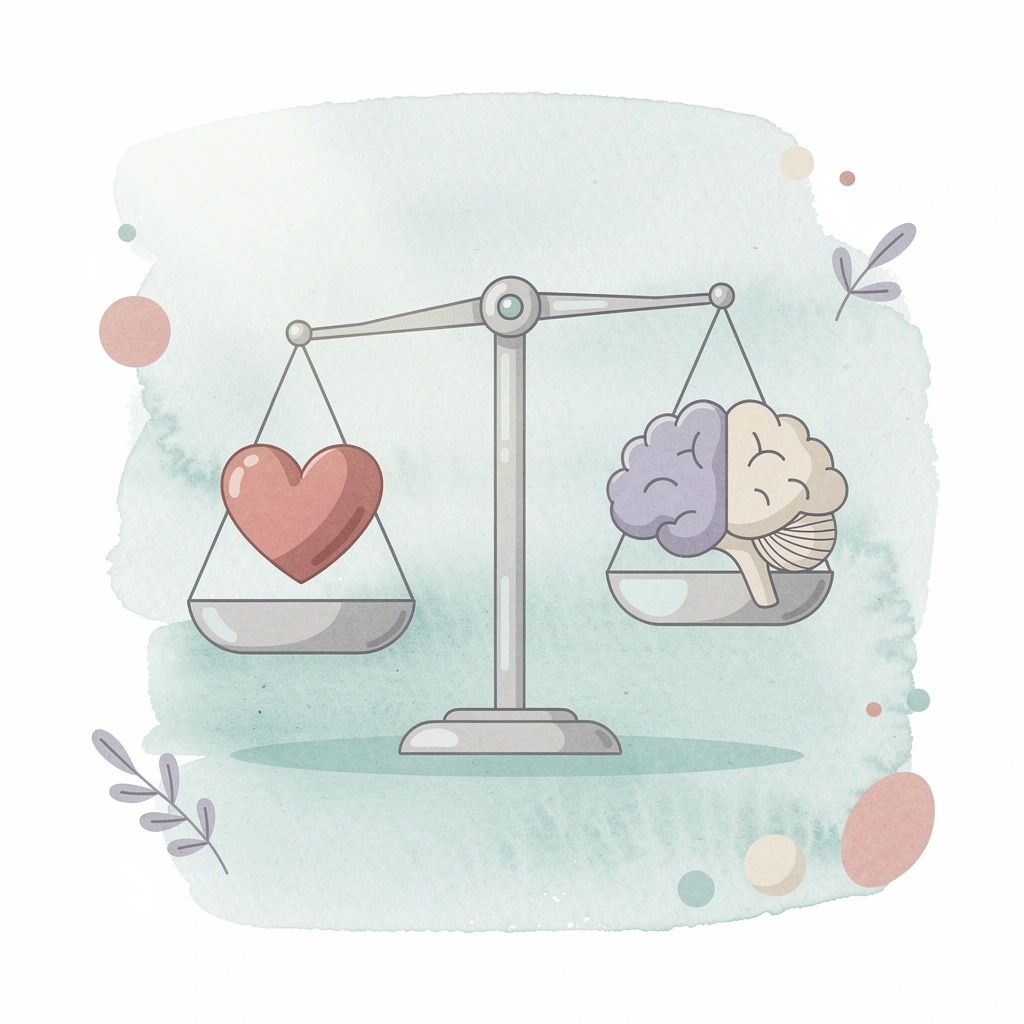
What does a technical screen miss about a candidate?
A candidate can pass every technical screen and still struggle with unclear situations, speaking up for their work, or fitting into a team's way of working. According to Thomas.co, a bad hire can cost a business up to 30% of the employee's first-year earnings, usually because of gaps in judgment, communication, or adaptability that no resume or coding test can detect.
A strong individual contributor joins, performs well working alone, then creates problems when teamwork is needed. Or someone technically skilled shuts down under stress instead of working through it. These outcomes are predictable when hiring decisions rely only on credentials and interview impressions without structured behavioral evidence.
Why do unstructured interviews produce inconsistent hiring decisions?
Most teams evaluate behavior informally, relying on gut feel during interviews. Unstructured interviews are inconsistent by design: different interviewers focus on different signals, and a candidate's confidence can easily be mistaken for competence. A global HR system like Cercli brings candidate assessment workflows and structured evaluation data into one place, enabling hiring teams to make decisions based on comparable, consistent evidence.
How does behavioral assessment improve quality of hire?
LinkedIn's 2025 Future of Recruiting research found that 93% of talent acquisition professionals believe accurately assessing candidate skills is crucial to improving quality of hire, and organizations running skills-based searches were 12% more likely to make a quality hire. Behavioral assessment examines capabilities absent from a CV: how someone makes decisions under pressure, handles disagreement, and demonstrates adaptability when technical requirements change faster than job descriptions.
The strongest hiring processes treat behavioral and technical assessment as complementary. A candidate needs the knowledge to do the work, but behavioral evidence shows how they apply that knowledge within a real team under real conditions.
Behavioral assessments measure something far more specific than personality, and understanding what they capture changes how you use them.
What Behavioral Hiring Assessments Actually Measure
Behavioral assessments measure exact patterns in how a person responds to workplace situations — not broad personality categories. A personality label says someone is "introverted" or "analytical." A well-designed behavioral assessment shows how they handle competing deadlines, communicate when a project shifts direction, and take ownership when outcomes are unclear.
"A well-designed behavioral assessment doesn't tell you who someone is — it tells you how they act when the pressure is real." — Behavioral Hiring Research
🎯 Key Point: Behavioral assessments go beyond surface-level labels to reveal how candidates actually perform under real workplace conditions — making them far more predictive than traditional personality tests.
⚠️ Warning: Relying on personality categories alone — like "introverted" or "analytical" — gives you a static snapshot, not a reliable indicator of on-the-job behavior.
Assessment Type
- Personality Labels
- What It Measures: Broad traits (e.g., introverted, analytical)
- Practical Value: Low — describes identity, not action
- Behavioral Assessments
- What It Measures: Responses to specific workplace situations
- Practical Value: High — predicts real performance
- Situational Examples
- What It Measures: Competing deadlines, shifting projects, unclear outcomes
- Practical Value: Critical — mirrors actual job demands

Behavioral traits versus personality types
The failure point is mixing up the two. Personality tests categorize stable traits broadly, which rarely translates directly into job performance. Behavioral assessments examine how tendencies manifest in work situations: how someone approaches collaboration under pressure, how they process conflicting information before deciding, or how they manage conflict without managerial intervention. According to Thomas.co's Behavioral Assessments guide, behavioral assessments can improve hiring accuracy by up to 85%. The difference is knowing someone is "detail-oriented" versus knowing how they handle errors when a deadline is two hours away.
What gets assessed, and why it depends on the role
The most commonly evaluated characteristics include communication style, adaptability, decision-making, conflict management, accountability, and resilience. A customer-facing account manager requires a different behavioral profile than a backend engineer working independently across time zones. The assessment should follow role requirements, not the other way around. When employers apply the same behavioral template to every hire, they measure conformity to a generic ideal rather than fit for what the job demands.
How do situational judgment tests reveal reasoning under pressure?
Situational judgment tests are sharper tools in this category. Rather than asking candidates how they would handle conflict or pressure, these assessments present specific scenarios and ask them to choose or rank responses. A candidate might face a disagreement with a colleague, an urgent client issue, or two equally important tasks with no obvious answer. Their choices reveal how they reason under uncertainty, which matters for roles that require real-time judgment.
Where do behavioral signals fit within a connected hiring workflow?
Most teams collect behavior data through standalone tools, then manually transfer findings into a separate ATS or spreadsheet before a hiring panel can act. As candidate volume grows, this process becomes a bottleneck: insights arrive late, context gets lost between handoffs, and decision-makers compare notes rather than candidates. Cercli addresses this by bringing recruitment workflows into a single AI-native platform, so behavior signals surface alongside other candidate data where decisions are made, rather than sitting in a separate system.
What behavioral assessments cannot tell you?
Behavioral results show tendencies, not certainties. Someone who scores high on adaptability may still struggle when team dynamics, management style, or organizational culture create friction they didn't encounter in a controlled scenario. According to Thomas.co, 75% of employers have hired the wrong person for a role—a figure that persists despite behavioral tools. Context shapes behavior; the same person performs differently depending on their manager, team, and whether the environment rewards the assessed strengths. The process breaks down when you treat assessment output as a verdict rather than a data point.
Knowing what these assessments measure is only half the equation.
Related Reading
- Methods For Screening Candidates
- How To Improve The Hiring Process
- How To Reduce Time To Hire
- Reduce Recruitment Costs
- Recruitment Assessment Methods
- How To Assess Cultural Fit
- How To Improve Quality Of Hire
- Automated Reference Checks
- High Volume Recruitment Strategies
- Predictive Hiring Assessments
Where Behavioral Hiring Assessments Can Go Wrong
The other half is knowing where the process quietly breaks down—not with dramatic failure, but with slow drift toward decisions that feel data-backed but aren't.
"The most dangerous hiring errors aren't the obvious ones—they're the decisions that feel rigorous while quietly drifting from the evidence." — Behavioral Assessment Practitioners
⚠️ Warning: Slow process drift is more common than outright failure and harder to detect before it shapes a flawed hiring decision.
🔑 Takeaway: If your assessments feel objective but lack structured validation, you may be building false confidence into every decision.

Why does interpretation cause more damage than the assessment itself?
The problem usually happens when people interpret the results, not with the assessment itself. Hiring teams get a behavioral profile and treat it as a final decision. A candidate scores low on assertiveness and gets filtered out of a sales role before anyone asks if assertiveness matters for that job. According to ScoreApp's analysis of common recruitment assessment mistakes, up to 80% of employee turnover stems from bad hiring decisions, with a significant portion involving misapplied screening criteria. The assessment did not fail. The interpretation did.
When "culture fit" becomes a filter for familiarity
The same issue arises in multicultural hiring and non-diverse teams seeking growth: behavioral assessments confirm existing preferences rather than challenge them. A candidate who communicates directly gets flagged as "abrasive." One who takes time to consider before responding gets labeled "passive." Neither label reflects performance potential; both reflect the assessor's comfort zone. Behavioral evaluation should measure whether someone can meet the role's actual demands, not whether they remind the hiring manager of themselves.
How does independent review reduce anchored judgment calls?
Most teams add more reviewers to catch individual bias, but when everyone sees the same profile before forming their own view, the first interpretation anchors the rest. Cercli structures assessment data within a unified hiring workflow so each reviewer engages with candidate signals independently before the group convenes, reducing the compounding effect of anchored judgments.
Does measuring what's easy actually tell you what matters?
Testing broad personality dimensions because the tool is available, not because those dimensions predict success in the role, creates data that seems useful but adds no real value. According to a Leadership IQ study cited by ODRL, 46% of new hires fail within 18 months, and most failures are behavioral, not technical. This underscores the need for targeted assessments built around each role's specific behavioral demands, rather than generic trait inventories applied universally.
Can a single assessment moment define a candidate's potential?
Behavior is not fixed. A candidate who scores low on risk tolerance today may have developed that profile in a risk-averse environment. Put them in a team that rewards initiative with clear expectations and coaching, and that profile shifts. Assessments capture a moment, not a destiny. The strongest hiring decisions treat that moment as one input among several, never used alone to close the door.
Knowing what can go wrong is useful only when you know what to do instead.
How to Use Behavioral Hiring Assessments Effectively
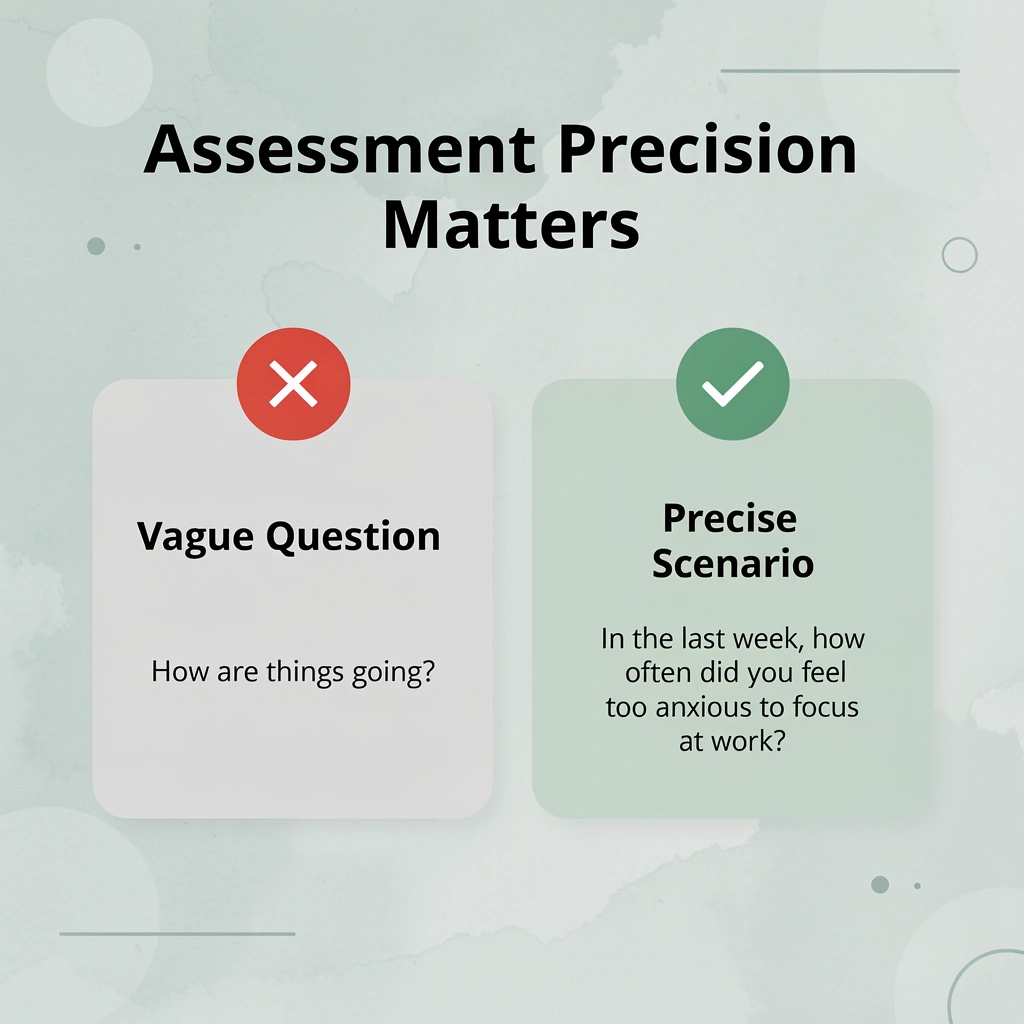
Behavioral assessments work best when they answer a specific question about a specific role. Not "is this person a good communicator?" but "can this person give difficult feedback to a peer without escalating the situation?" That precision is what separates useful assessment from expensive guesswork.
"The difference between a vague behavioral question and a targeted one is the difference between a gut feeling and a defensible hiring decision." — Behavioral Hiring Best Practice
🎯 Key Point: Always anchor your behavioral assessment to a specific, observable scenario — generic questions produce generic answers that tell you nothing actionable about the role.
⚠️ Warning: Asking broad questions like "are they a good communicator?" is one of the most common — and costly — mistakes hiring teams make. Vague inputs produce vague outputs, and that ambiguity can lead to poor hiring decisions that ripple across your entire team.
Vague Assessment Question
- Is this person a good communicator?
- Are they a team player?
- Do they handle stress well?
Precise Behavioral Question
- Can they deliver difficult feedback without escalating conflict?
- Can they collaborate under deadline pressure with minimal direction?
- Can they prioritize competing tasks when resources are limited?
💡 Pro Tip: Before designing any behavioral assessment, write down the single most critical on-the-job challenge for the role — then build every question around that scenario. This is the fastest way to move from expensive guesswork to evidence-based hiring.
Start where the role starts
The failure point is usually in the design stage, before you assess a single candidate. Teams build behavioral profiles that read like a wish list: collaborative, decisive, adaptable, accountable, resilient. Together, they describe nobody real. The more focused the profile, the more useful the data. If a customer success manager needs to de-escalate complaints and manage renewal conversations under pressure, those two behaviors should drive the entire assessment design, not a generic list of desirable characteristics.
Why do situational questions outperform self-reported answers?
Situational questions close the gap between what candidates say they do and what they actually do. Ask someone how they handled a project where priorities shifted mid-execution, and you get evidence. Ask them whether they consider themselves adaptable, and you get a sales pitch. Cognitive ability and structured situational judgment tests predict job performance with significantly greater accuracy than unstructured interviews, according to research published by the Society for Industrial and Organizational Psychology. The scenario forces candidates to think through a problem rather than describe themselves in flattering terms.
How does connecting behavioral and technical data improve hiring decisions?
Most teams review behavior data separately from technical assessments, often in different tools and by different people, with results that never connect. Hiring managers make decisions from incomplete pictures, weighing behavior signals against technical evidence without a shared frame of reference. Platforms like Cercli bring both streams into a single workflow, allowing recruiters to surface behavior and skills-based signals together without stitching reports across disconnected systems.
Compare candidates to the role, not to each other
The critical difference between a useful assessment and a misleading one is the comparison point. Ranking candidates against each other finds the best available option in your pool, while comparing each candidate against the role's actual demands finds the right fit. A candidate who scores lower on assertiveness than peers may be exactly right for a role rewarding careful thinking over quick authority. The ranking approach obscures that signal entirely.
How do you validate whether assessments predict useful outcomes?
Track quality of hire, retention at twelve months, and hiring manager satisfaction alongside assessment scores to validate whether assessments predict useful outcomes. According to a 2023 report from the Corporate Executive Board, organizations that validate assessment criteria against post-hire performance data reduce mis-hire rates by up to 36%. If a behavioral indicator consistently appears in your strongest hires, weight it accordingly. If it shows no relationship to performance, adjust or remove it. Assessments should evolve with what you learn, not remain static because they were expensive to set up.
Applying well-designed assessment frameworks consistently across different markets, cultures, and workforce environments proves challenging.
Behavioral Hiring Assessment Considerations for Employers in MENA
Using a well-designed behavior framework consistently across MENA is difficult—not because of technical reasons, but because of context. The same response pattern that signals strong leadership in one market can seem passive or overly deferential in another, because the assessment was never adjusted for the environment it is being used in.
"The same response pattern that signals strong leadership in one market can seem passive or overly deferential in another—because the assessment was never adjusted for the environment it is being used in."
🎯 Key Point: A behavioral framework is only as effective as its cultural calibration—deploying the same tool across diverse MENA markets without adjustment risks misreading top talent.
⚠️ Warning: Failing to contextualize your assessment criteria for the local environment doesn't just produce inaccurate results—it can cause your organization to systematically overlook strong candidates who express leadership behaviors differently across markets.
Market Context
- High-hierarchy environments
- Risk of Unadjusted Framework: Leadership signals may appear deferential
- Collectivist cultures
- Risk of Unadjusted Framework: Individual achievement framing may undervalue team-oriented candidates
- Cross-border MENA roles
- Risk of Unadjusted Framework: Inconsistent scoring across regions reduces assessment validity

How cultural context shapes assessment results
Communication norms differ across MENA markets. A candidate who avoids direct disagreement in a panel interview may be showing professional respect, not avoiding accountability. One who speaks carefully around hierarchy may be showing situational awareness, not a lack of confidence. The failure point is usually not the candidate, but an assessment framework that treats one communication style as the neutral default and measures everyone else against it. Behavioral criteria should reflect what the role requires: clear stakeholder communication, sound decision-making under pressure, and effective collaboration—not familiarity with a particular professional style.
How do multicultural candidate pools reveal hiring signal?
Organizations in the MENA region hire people from many different countries, educational systems, languages, and work backgrounds. A person who built their career in one market thinks about workplace situations differently than someone who has worked across several countries and industries. Structured questions about situations reveal how someone actually thinks, not how they believe they should answer. According to the Zenithr Blog on Behavioral Assessments, companies using structured behavioral assessments see up to 24% higher employee performance. This result depends on assessments being designed around behaviors that matter for the job rather than cultural familiarity.
What happens when behavioral data lives across disconnected tools?
Most HR teams manage behavior data across separate tools: assessments, interview notes, and offer management. As candidate volumes grow, this fragmentation causes signal loss between systems and leaves decision-makers working from incomplete pictures. Our global HR system brings recruitment, employee management, and payroll into a single AI-native platform, placing behavior assessment data alongside interview records and role requirements rather than in disconnected tabs. Cercli makes this integration seamless, helping your team access complete candidate and employee insights in one place.
Workforce localization and assessment integrity
Emiratisation and Saudisation policies shape workforce planning in the UAE and Saudi Arabia, but they should never change what a "strong behavioral profile" looks like. When localization goals affect assessment design, the scoring system rewards cultural similarity rather than job-relevant skills—a fairness and performance problem. Localization targets belong in workforce planning; behavioral assessments belong in capability evaluation. Keeping those functions separate protects the integrity of both. Zenithr's research on behavioral assessments reports that 75% of employers find behavioral assessments improve quality of hire, but that outcome depends on measuring what the assessment claims to measure, not serving as a proxy for something else.
What data privacy requirements apply across MENA markets?
Behavioral assessments collect personal data: responses, scores, candidate profiles, and sometimes inferred psychological traits. In the UAE, Federal Decree-Law No. 45 of 2021 establishes the federal framework for personal data protection, including processing and retention requirements. Saudi Arabia's Personal Data Protection Law applies specific obligations to automated processing, which matters when AI-assisted tools score or rank candidates. Employers must know what their assessment provider collects, where it stores data, who can access it, and how long it retains it. Checking these practices against market-specific requirements is essential due diligence.
Why can't an assessment tool replace human interpretation?
The final layer that no assessment tool can replace is human judgment. A behavioral score should start a conversation, not end one. Across MENA, where a candidate's work background or communication style may differ from what the hiring team typically encounters, the recruiter's job is to understand those differences rather than mark them as a risk. Assessment data provides evidence; judgment provides context. Both are necessary.
And once you have that judgment, the question becomes: where does it live in your hiring process?
Related Reading
- Ai Resume Screening Bias
- How Does Automated Resume Screening Work
- Sales Candidate Screening
- Candidate Screening Tools For Healthcare
- Automated Reference Checks
- Cultural Fit Assessment Tools
- Blind Resume Screening
- Pre-Hire Assessments For High Volume Hiring
- How To Reduce Bias In Hiring Process
How Cercli Helps Companies Build a More Connected Candidate Assessment Process
Behavioral assessments add helpful context to hiring decisions, but work best when used with other candidate information. Cercli's recruitment platform keeps candidate management, screening, interviews, and hiring activity connected so different sources of evidence can be considered together.
"Behavioral assessments work best when used alongside other candidate information — not as a standalone signal." — Cercli Recruitment Platform
💡 Tip: Never rely on behavioral assessments alone — the most effective hiring decisions come from combining multiple evidence sources in a single, connected platform.
🔑 Takeaway: Cercli's ATS unifies candidate management, screening, and interview data into one place, giving hiring teams a complete picture before making critical decisions.
Assessment Signal
- What It Reveals
- Personality & work style fit
- Best Used With
- Interview feedback & screening scores
Candidate Screening
- What It Reveals
- Skills & qualification match
- Best Used With
- Behavioral data & interview notes
Interview Activity
- What It Reveals
- Communication & culture fit
- Best Used With
- All other candidate evidence combined

How does Cercli keep candidate assessment connected to recruitment?
Candidate information includes resumes, screening results, interview feedback, skills assessments, and evaluation records. Cercli's AI-native ATS and candidate pipelines provide recruiters a central hub for managing this work, keeping assessment-related information connected to the candidate record rather than scattered across separate stages.
How does Cercli give recruiters a broader view of candidates?
A behavioral assessment shows how someone may approach workplace situations, but it doesn't reveal the full picture. Cercli keeps candidate information, screening activity, interviews, and recruitment progress organized within the hiring workflow, giving recruiters a broader view before deciding which candidates should progress.
How does Cercli help hiring managers review evidence in context?
Hiring managers need more than an assessment result to make sound decisions. They may want to understand how behavioral evidence compares with technical skills, interview responses, and previous experience. Cercli supports recruitment collaboration by helping recruiters and hiring managers review candidates using shared information rather than separate messages or documents.
How does Cercli support a more structured hiring process?
Behavioral assessments work alongside skills assessments, structured interviews, work samples, and other evaluation methods to build stronger evidence without letting any single assessment determine the outcome. Our global HR system supports the wider recruitment workflow, enabling organizations to manage and review these activities, create more structured hiring processes, and keep final decisions with those responsible for hiring.
How does Cercli connect recruitment with onboarding?
Information gathered during recruitment shouldn't need to be recreated at onboarding. Cercli connects recruitment with onboarding and HR processes, helping organizations move from candidate management into the employee lifecycle through its onboarding, employee records, and document management features.
How does Cercli support the workforce across MENA?
For organizations hiring across the UAE, Saudi Arabia, and wider MENA, recruitment is followed by additional workforce requirements including HR administration, payroll, contractor management, compliance, and Employer of Record arrangements. Cercli brings recruitment into a broader workforce platform that supports HR, local payroll, remote contractors, and EOR services.
What is the bigger role of behavioral assessment in hiring?
Behavioral assessments are most useful when they add context to hiring decisions rather than make them independently. The assessment provides one piece of evidence. The wider recruitment process should integrate behavioral evidence, technical capability, experience, interviews, and practical performance. Cercli keeps that wider process connected, so behavioral assessment contributes to structured hiring decisions without becoming a standalone verdict on candidate suitability.
Book a Demo to Speak with Our Team about Our Global HR System
Judgment in your hiring process lives in the system you use every day. When behavioral assessment data, interview notes, and offer decisions sit in separate tools, judgment gets lost as information moves between them, and good hiring decisions fall apart.
"When behavioral assessment data, interview notes, and offer decisions sit in separate tools, judgment gets lost and good hiring decisions fall apart." — Cercli HR Insights
⚠️ Warning: Disconnected hiring tools slow your team down and erode the quality of decisions at every stage of the funnel.

To connect candidate screening, structured behavioral evaluation, interview feedback, and post-hire data into one unified workflow across the UAE, Saudi Arabia, and the wider MENA region, book a free 30-minute demo with Cercli. Our AI-native global HR system surfaces the right candidates faster — without adding another disconnected tool to your stack.
🎯 Key Point: One connected workflow across screening → evaluation → feedback → post-hire data means no more lost context and faster, smarter hiring decisions.
✅ Best Practice: Book your free 30-minute demo today to see how Cercli's AI-native platform eliminates the gaps between your hiring tools and delivers end-to-end visibility across every role.
Disconnected Tools
- Behavioral data stored separately
- Interview notes lost between handoffs
- Post-hire data siloed
- Coverage gaps across MENA
Cercli's Unified HR System
- All data in one platform
- Structured feedback, centralized
- Connected to full candidate history
- UAE, Saudi Arabia & wider MENA supported
Related Reading
- Pre-Employment Screening Tools
- Willo Alternatives
- Eightfold Ai Competitors
- Hirevue Alternatives
- Pymetrics Alternatives
- Spark Hire Alternatives
- Manatal Vs Hirevue
- Harver Alternatives
- Hirevue Vs Smartrecruiters


