How Does Automated Resume Screening Work? A Guide for Employer
.jpg)
How Does Automated Resume Screening Work? A Guide for Employers
Hiring managers routinely spend hours sorting through hundreds of resumes, only to find that most applicants do not meet basic job requirements. AI-powered candidate screening tools have reshaped this process by using machine learning and natural language processing to scan, rank, and filter applicants in minutes. Understanding how automated resume screening works, how applicant tracking systems parse candidate data, and what role keyword matching plays can help organizations make faster, more confident hiring decisions.
These capabilities become even more valuable when integrated into a broader hiring workflow rather than used in isolation. Cercli brings smart screening technology, compliance management, and onboarding together in one place, whether a company is hiring locally or across borders, through its global HR system.
Table of Contents
- What Happens During Automated Resume Screening?
- What Automated Resume Screening Looks For
- Why Employers Use Automated Resume Screening
- Where Automated Resume Screening Can Go Wrong
- How to Use Automated Resume Screening Effectively
- Automated Resume Screening Considerations for Employers in MENA
- How Cercli Helps Companies Use Automated Resume Screening More Effectively
- Book a Demo to Speak with Our Team about Our Global HR System
Summary
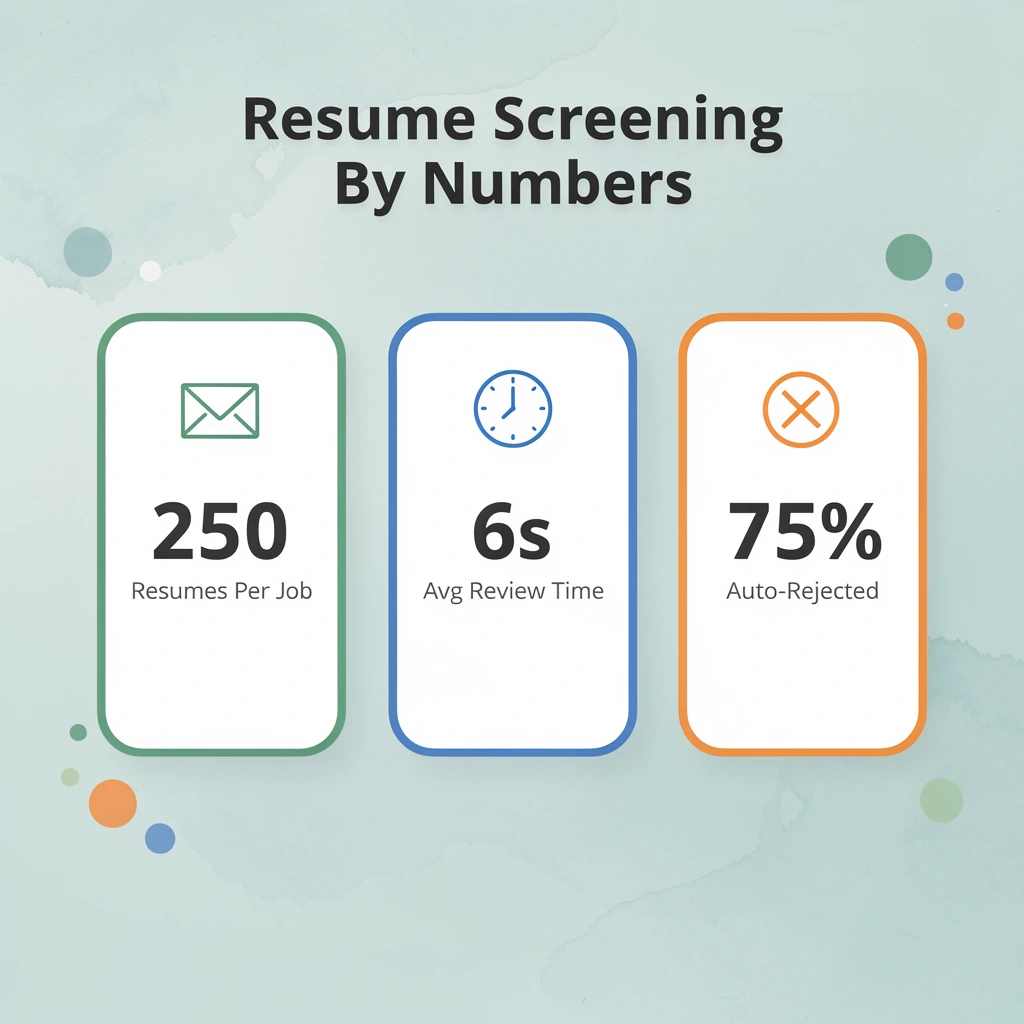
- Automated resume screening has become the default first filter in modern hiring, and the scale driving that shift is significant. Employers receive an average of 250 resumes per corporate job opening, and when that volume repeats across dozens of roles simultaneously, manual review becomes structurally impossible rather than just slow.
- Speed and quality are not the same outcome, even though they are often treated as interchangeable. Automated screening can reduce time-to-hire by up to 40%, but SHRM's 2025 Talent Trends research found that while 89% of HR professionals said AI saves time or increases efficiency, only 24% said it improved their ability to identify top candidates. Efficiency is a process gain; quality depends entirely on how well the system was configured before it ran.
- The most common failure point in automated screening is not the technology itself, but the criteria you give it. When job descriptions mix essential requirements with aspirational ones, or when keyword lists are copied from previous postings rather than built around actual role demands, the system executes that logic precisely and at scale, surfacing candidates who match terminology rather than capability while filtering out people who are qualified but differently described.
- Rigid keyword matching creates a specific and underappreciated gap. A candidate who describes building automated Python scripts for data processing may never appear in a search for "Python programming" even though the underlying skill is identical. Semantic matching systems, which evaluate meaning and context rather than exact phrasing, consistently produce better shortlists for roles that attract candidates from adjacent industries or international markets.
- Non-linear career paths are systematically disadvantaged by screening logic designed around conventional progression. Candidates with freelance portfolios, career breaks, or cross-industry consulting experience often produce CVs that read as inconsistent rather than adaptable, causing the system to score a clean but narrow career history higher than a varied but deeper one. That scoring pattern compounds quietly across every hiring cycle without producing a visible signal that something has gone wrong.
- The hiring process does not end when a candidate clears the screening stage, and the handoff from recruitment to onboarding is where a second set of inefficiencies typically begins. Recruiters spend an average of 6 seconds reviewing a single resume, which means the quality of what automated screening surfaces has an outsized effect on which candidates ever receive real consideration. Cercli's global HR system addresses this by connecting AI-assisted screening to candidate pipelines, interview management, and onboarding records in one environment, so the information captured at the screening stage travels with the candidate through every step that follows.
What Happens During Automated Resume Screening?
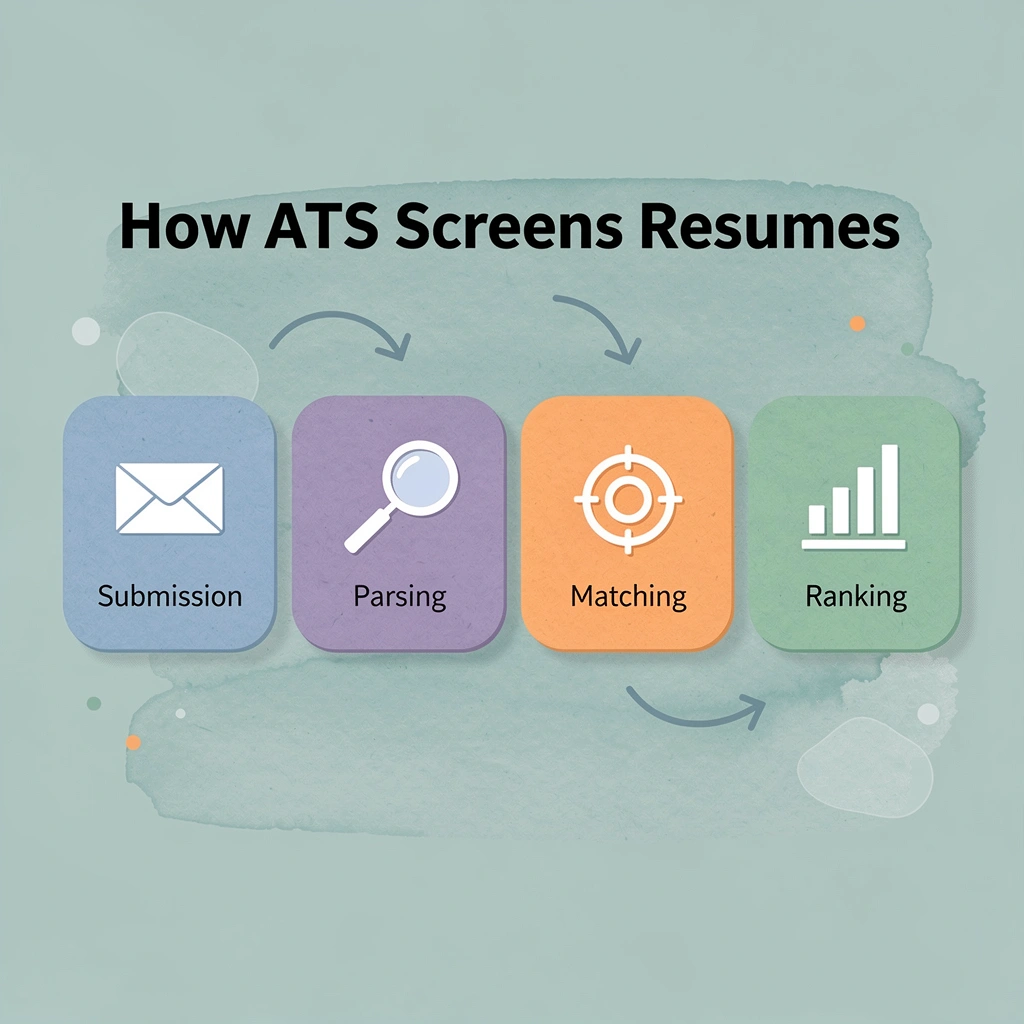
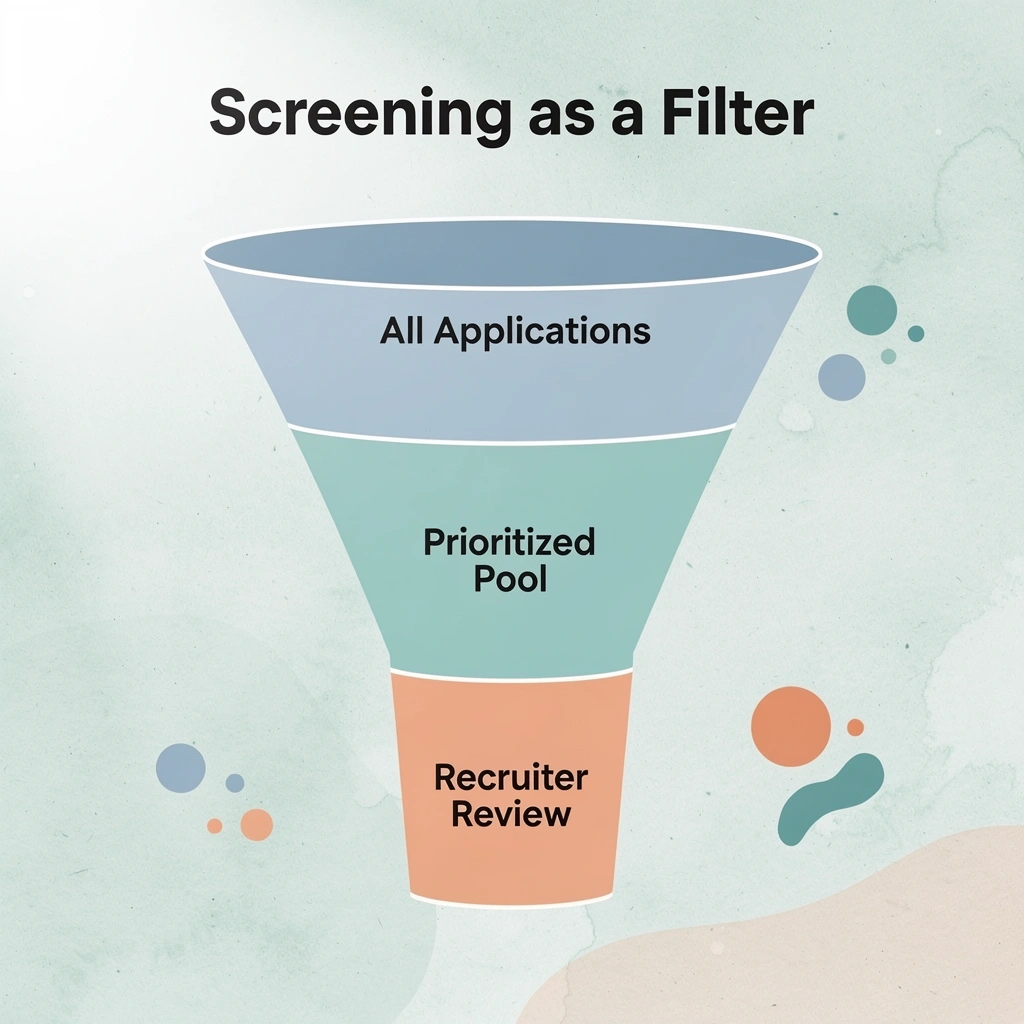
Automated resume screening software processes applications the moment they are submitted, pulling out organized information, comparing it against job requirements, and delivering recruiters a ranked or filtered list in seconds, even with hundreds of applications arriving simultaneously.
"Automated screening can evaluate hundreds of applications simultaneously, delivering ranked results to recruiters in seconds — a task that would take human reviewers hours or days."
💡 Tip: Understanding how the software processes your resume is essential to ensuring yours doesn't get filtered out before a human reviews it.
The process starts with parsing. The software reads your document and pulls out information it can identify: job titles, employers, dates, qualifications, skills, and responsibilities. A document built around tables, graphics, or embedded images can confuse the parser and cause it to miss relevant experience completely.
Resume Element
- Plain text job titles
- ✅ Yes
- Easily extracted and matched to job requirements
- Embedded images or graphics
- ❌ No
- Invisible to parsers — content gets skipped
- Table-based layouts
- ⚠️ Risky
- Can scramble the reading order of your information
- Standard section headers
- ✅ Yes
- Helps the system categorize your experience correctly
⚠️ Warning: A visually impressive resume design can be your biggest liability if it relies on graphics, columns, or tables — the parser may miss your most relevant experience entirely.
✅ Best Practice: A clearly structured, plain-text resume gives the screening system clean signals to work with — and dramatically improves your chances of making it to a human recruiter.
How does the matching stage actually work?
Once it extracts the data, the system compares it against configured role criteria. Some tools rely on exact keyword matches, flagging candidates only if their CV contains the precise phrase specified. Others use semantic matching, recognizing that "revenue growth" and "sales performance" describe related concepts even when wording differs. This gap is significant: according to the Hivemind Blog, 75% of resumes are never seen by a human recruiter because the system filtered them out, not because candidates are unqualified.
Most teams configure requirements during job setup, then trust the output. This works when roles are clearly defined, and criteria are tightly written. But vague or overly broad requirements mean the system surfaces whoever matches those criteria, not necessarily the best candidates for the actual job. Our global HR system at Cercli addresses this by keeping screening criteria, candidate profiles, and role requirements in one connected environment, so hiring teams spend less time reconciling mismatched outputs and more time evaluating genuine fits.
What does the recruiter actually receive?
After filtering and ranking, the system gives a shortlist to the recruiter. A high score indicates the candidate's profile matches the criteria well, but not necessarily that the candidate will perform well at the job, communicate clearly, or work well with the team. That decision belongs to a human. NTRVSTA's research reports that 83% of companies are expected to use AI tools for resume screening by the end of 2025, making what happens before human review more critical than ever.
The criteria you set before a single application arrives shape every result the system produces.
Related Reading
- Methods For Screening Candidates
- How To Improve The Hiring Process
- How To Reduce Time To Hire
- Reduce Recruitment Costs
- Recruitment Assessment Methods
- How To Assess Cultural Fit
- How To Improve Quality Of Hire
- Automated Reference Checks
- High Volume Recruitment Strategies
- Predictive Hiring Assessments
What Automated Resume Screening Looks For
Screening systems compare what a candidate offers against what a role requires—across skills, experience, qualifications, career history, and the language used to describe them.
"Automated screening tools evaluate candidates across multiple dimensions simultaneously—matching skills, experience, and qualifications against the exact language of the job description." — HR Technology Insight
🎯 Key Point: It's not enough to be qualified—your resume must speak the same language as the job posting for screening systems to recognize your fit.
What ATS Screens For
- Skills
- Matches your abilities to explicit role requirements
- Experience
- Validates years and relevance of your background
- Qualifications
- Confirms degrees, certifications, and credentials
- Career History
- Tracks progression and consistency of your roles
- Language & Keywords
- Aligns your phrasing with the exact job description wording
⚠️ Warning: Using synonyms or informal terms for key skills can cause automated systems to miss your application entirely—even if you're a perfect fit for the role.

Skills over titles
The most useful screening systems look past job titles to actual capability. A candidate who built data pipelines as an "operations analyst" carries the same technical skill as someone titled "data engineer." Skills-based matching catches that overlap where title-matching fails. According to a 2023 World Economic Forum report, 44% of workers' core skills are expected to shift within five years, making titles an unreliable measure of ability.
For regulated roles, specific credentials are genuine requirements. But for most positions, using a degree as an automatic filter when the role only loosely requires it narrows the candidate pool without improving results.
When experience quantity misleads
The failure point is usually this: screening criteria that reward experience quantity rather than relevance. Three years in a directly comparable role will consistently outperform ten years in a tangentially related one, yet many employers still set minimum year thresholds as if time served equals capability built.
Why do screening templates quietly break down over time?
Most teams create screening criteria once and reuse them for similar jobs. As hiring scales and roles diversify, that template can quietly exclude strong candidates and surface weaker ones instead. Our Cercli platform addresses this by embedding AI screening into a single hiring workflow, allowing criteria to improve for each role without restarting the process.
How does keyword matching fall short for qualified candidates?
Keyword matching is where rigid systems lose the most ground. A candidate describing their experience in plain, accurate language may use different terminology than the job description without being any less qualified. Semantic matching systems close this gap by recognizing related concepts rather than requiring identical phrasing. A system that matches only "Python programming" will miss a candidate who wrote "built automated scripts in Python for data processing," even though the underlying skill is identical.
Why does reading the full career arc give a more honest picture?
Career history provides important clues about a person. Job titles vary across companies, so examining someone's full career path—which industries they worked in, their responsibilities, and how they advanced—tells a more complete story than a single job title. When employers look at the whole picture instead of searching for exact matches, they get a more honest view of the applicant pool.
But knowing what the system looks for is only half the question. The bigger issue is why employers adopted this approach.
Why Employers Use Automated Resume Screening
Automated resume screening exists because the math stopped working. According to Indeed Hire's research on automated resume screening, employers receive an average of 250 resumes for each job opening. Manual review becomes impossible when this volume happens across dozens of open roles at once.
"Employers receive an average of 250 resumes for each job opening — making manual review physically impossible at scale." — Indeed Hire Research
🚨 Warning: If you assume a human is reading your resume first, you may be wrong. Automated systems filter candidates before any recruiter ever sees your application.
🔑 Takeaway: With 250 resumes per role flooding hiring teams, ATS software isn't a convenience — it's a necessity. Understanding how these systems work is critical to getting your resume seen by an actual person.
Screening Method
- Manual Review
- Resumes Reviewed: 250 per role
- Time Required: Hours to days
- Automated ATS Screening
- Resumes Reviewed: 250 per role
- Time Required: Seconds
- Recruiter Review (post-ATS)
- Resumes Reviewed: Top filtered % only
- Time Required: Minutes per candidate
What happens when screening criteria are set incorrectly?
Most teams handle this by adding a screening tool to an existing applicant tracking system, configuring it with job criteria, and letting it filter applications before anyone reviews a CV. The hidden cost emerges later: criteria set hastily, copied from previous job postings, or built around the last person in the role rather than the skills the position actually requires.
When screening criteria are not set correctly, the system runs efficiently toward the wrong outcome. Cercli addresses this by integrating AI-native screening directly within the hiring and HR workflow, so the criteria, candidate pipeline, and downstream onboarding all live in one place rather than three separate tools stitched together.
What the efficiency argument actually means
The efficiency case for automated screening is real, though often misunderstood. According to Indeed Hire, automated screening can reduce time-to-hire by up to 40%. Time saved on initial filtering lets recruiters focus on work that predicts a good hire: conversations, context, and judgment calls no algorithm can replicate. The goal was never to automate hiring, but to protect the parts that are irreducibly human.
Does efficiency actually mean better hiring quality?
SHRM's 2025 Talent Trends research reinforces this: among organizations using AI in recruiting, 89% of HR professionals said it saves time or increases efficiency. Only 24% said it improved their ability to identify top candidates. Efficiency and quality are not the same lever. Automation reliably pulls one; the other depends on how well the system is configured and who reviews its recommendations.
When is the efficiency gain actually worth celebrating?
The strongest argument for automated resume screening is focus. When routine processing is handled, recruiters can focus on shortlisted candidates who deserve it—where the real hiring decision begins. But efficiency is only worth celebrating when the filter itself is trustworthy, and that's where the story becomes more complicated than most adoption conversations acknowledge.
Related Reading
- Ai Resume Screening Bias
- Behavioral Hiring Assessments
- Sales Candidate Screening
- Candidate Screening Tools For Healthcare
- Automated Reference Checks
- Cultural Fit Assessment Tools
- Blind Resume Screening
- Pre-Hire Assessments For High Volume Hiring
- How To Reduce Bias In Hiring Process
Where Automated Resume Screening Can Go Wrong
Automated resume screening fails not because the technology is broken, but because flawed instructions produce flawed results at scale.
"Automated resume screening fails not because the technology is broken, but because flawed instructions produce flawed results when used on a large scale."
⚠️ Warning: The biggest risk of automated screening isn't a system crash — it's a system that runs perfectly on the wrong criteria, silently eliminating qualified candidates at scale.
💡 Key Insight: Garbage in, garbage out. Even the most sophisticated ATS will produce biased, inaccurate shortlists if the underlying rules and filters are poorly designed from the start.
What Goes Wrong
- Qualified candidates rejected
- Root Cause: Flawed keyword filters
- Impact: Missed top talent
- Biased shortlists
- Root Cause: Poorly defined screening criteria
- Impact: Lack of diversity
- High-volume errors
- Root Cause: Flawed logic applied at scale
- Impact: Systemic hiring failures

When the criteria become the problem
The failure point is usually upstream of the algorithm. If a job description mixes required skills with nice-to-have skills, the screening system treats every line as equally important. A candidate who can do the job but lacks a preferred certification gets ranked below someone who collected the right keywords but lacks practical depth. The EEOC has explicitly warned that automated employment tools can repeat existing biases when historical hiring data or selection criteria carry discriminatory patterns, even without any protected characteristic appearing directly in the system. This is a design problem that technology amplifies.
Why does exact keyword matching miss qualified candidates?
Exact keyword matching worsens this problem. Someone who built machine learning pipelines at a logistics company may never have used "ML engineer" on their resume because their industry used different terminology. The system doesn't find them. A recruiter reviewing resumes manually might have. Semantic matching, which examines meaning and context rather than exact wording, produces better candidate lists than keyword-based filtering, especially for roles attracting candidates from related industries or international markets.
Does adding more keywords to screening criteria actually help?
Most teams add more keywords to screening criteria, assuming broader coverage solves the problem. The opposite happens: broader keyword lists create more surface area for false positives, pulling in candidates who match terminology but not capability, while missing people whose experience is real but described differently. Cercli approaches this differently, building screening into a unified hiring workflow where criteria connect to actual role outcomes rather than isolated keyword lists, so the filter reflects what the role genuinely demands rather than what the last job description happened to say.
Where unconventional paths get penalized
People with non-linear careers, freelance portfolios, career breaks, or international experience often create CVs that don't match expected templates. Rigid screening logic interprets these as gaps or inconsistencies rather than evidence of adaptability. A professional who spent three years consulting across five industries may have developed more transferable skills than someone who stayed in one role, yet the system scores the latter higher because the progression appears cleaner. This false negative compounds across every hiring cycle.
What happens when false positives slip through?
False positives carry their own cost. A candidate who scores highly because their resume mirrors the job description may still lack the practical capability the role requires. Automated screening causes the most damage when you treat a match score as a hiring decision rather than a prioritization signal. The score tells you who resembles the criteria; it cannot tell you who will perform.
The strongest screening processes use automation as a volume filter, not a verdict on potential.
How to Use Automated Resume Screening Effectively
Automated resume screening works best as a way to organize and prioritize applications, not as a substitute for candidate assessment. Define relevant criteria, check what the system excludes, and keep recruiters involved throughout the decision-making process.
"Automated screening is a powerful organizational tool — but human judgment remains the critical final step in any effective hiring process."
1. Define Criteria
- Action: Set clear, role-specific filters
- Why It Matters: Ensures the system targets relevant candidates
2. Audit Exclusions
- Action: Review what the system is removing
- Why It Matters: Prevents qualified candidates from being missed
3. Involve Recruiters
- Action: Keep humans in the decision loop
- Why It Matters: Adds context and judgment automation cannot replicate
💡 Tip: Regularly audit your screening filters — even well-designed systems can develop blind spots that silently eliminate strong candidates over time.
⚠️ Warning: Treating automated screening as a final decision-maker — rather than a prioritization tool — is one of the most common and costly mistakes in modern recruiting.
How should you define screening criteria before the process starts?
Start with the skills and experience the role requires: specific technical abilities, relevant work history, qualifications, language requirements, or other factors directly connected to job performance. Clear criteria give the screening system a solid basis for comparison and reduce the risk of filtering out candidates based on unclear or unnecessary expectations.
Not every preference should become an automatic screening requirement. Distinguishing between must-have qualifications and nice-to-have characteristics gives recruiters flexibility to consider candidates who may not meet every preference but still have potential to succeed. This is particularly important when hiring for roles where skills are scarce or transferable experience is common.
Why screen for skills rather than matching job titles?
Job titles vary across organizations, industries, and countries. A candidate may have relevant experience under a different title or developed similar skills in a related role. Screening should examine the skills, responsibilities, and experience behind the title to identify qualified candidates that strict title matching would otherwise miss.
How can you check whether the screening system is excluding the right candidates?
Review candidates the system rejects to confirm automated screening works properly. Search for qualified people the system filtered out and determine why it missed them. If the system repeatedly excludes good candidates because of job titles, wording, career paths, or other irrelevant factors, change the screening criteria.
Resume screening can show whether a candidate seems relevant, but it cannot give a complete picture of what they can do. Interviews, skills assessments, work samples, and references provide additional evidence. Using these methods together helps employers move from checking qualifications to conducting a more complete evaluation rather than relying on guesswork from a CV alone.
How do you monitor and improve screening outcomes over time?
Track whether automated screening improves hiring quality and speed. Measure this through the number of qualified candidates identified, the percentage of screened candidates advancing to interviews, and screening duration. Monitor patterns where qualified candidates are incorrectly rejected. Over time, the quality of hired employees indicates whether the screening process effectively identifies better talent.
Screening criteria should change as roles, skills, and business needs evolve. A requirement that made sense two years ago may no longer align with organizational needs, while new skills become important as roles change. Review criteria, screening results, and hire quality regularly to ensure automated screening serves your actual hiring goals.
Where does human judgment fit in automated screening decisions?
Automated rankings should support recruiter judgment, not replace it. Recruiters and hiring managers must review candidate information, question recommendations, and consider evidence that screening systems may not fully capture. Human involvement proves most useful when it occurs early enough to challenge unsuitable filters or unexpected rankings.
For employers operating across MENA, these principles must account for different labor markets, job titles, candidate backgrounds, and data requirements.
Automated Resume Screening Considerations for Employers in MENA
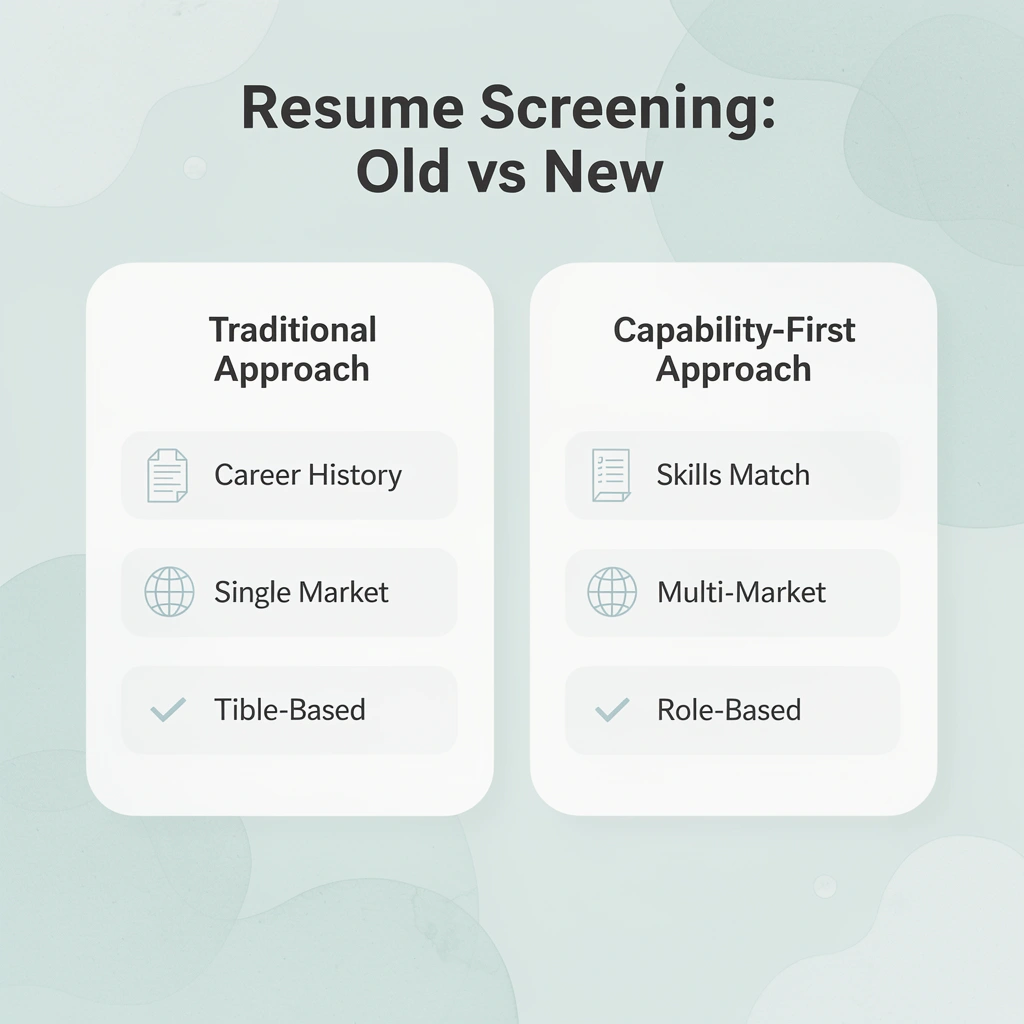
Automated resume screening can help employers manage applications across multiple markets, but the system needs to recognize that candidates in MENA will not always have comparable career histories on paper. Consistent screening should focus on the capabilities required for the role while allowing for critical differences in how those capabilities are presented.
"Effective automated screening in MENA requires systems built to recognize capability over format — because regional career histories rarely fit a single standardized mold."
⚠️ Warning: Applying a one-size-fits-all screening model across MENA markets risks filtering out highly qualified candidates simply due to regional differences in resume structure and career presentation.
💡 Tip: Configure your screening criteria to prioritize role-specific capabilities and competencies rather than rigid formatting expectations — this ensures fairer, more accurate candidate evaluation across diverse regional backgrounds.
Screening Approach
- Rigid format matching
- High — excludes regional candidates
- ❌ Not recommended
- Capability-based screening
- Low — focuses on role requirements
- ✅ Strongly recommended
- Keyword-only filtering
- Medium — misses contextual experience
- ⚠️ Use with caution
Different job titles and career structures
A role can have different titles and responsibilities across the UAE, Saudi Arabia, and the wider MENA region. Employers should avoid screening rules that rely too heavily on title matching or past career paths. Skills, responsibilities, and practical experience provide a more reliable way to identify the right candidates.
Arabic, English, and multilingual CVs
MENA recruitment involves resumes written in Arabic, English, or other languages, with candidates using different words and formats to describe similar experience. Screening systems should be tested across the resume types your organization receives. An approach that works well with one language or format should not be assumed to work equally well across multilingual candidate pools.
International and multicultural candidate profiles
Many candidates in MENA have work experience from different countries, industries, or employment systems. This makes it important to check whether automated screening can recognise similar skills across different career paths. Employers should avoid treating familiarity with one country's professional conventions as evidence of greater suitability.
Emiratisation and Saudisation
Local hiring requirements can affect how companies plan their workforce and recruit new employees, but they should not replace skills-based candidate assessment. In the UAE, private companies with 50 or more workers must increase local employees in skilled positions by 2 percentage points annually, reaching 10% by 2026. Saudi Arabia's latest Nitaqat phase, launched in 2026, aims to create jobs for more than 340,000 additional local workers in the private sector over three years. Using computers to screen candidates can support workforce planning without letting local hiring requirements replace candidate quality.
Candidate data and AI processing
Resume screening involves processing personal information, so employers must understand what candidate data is collected, how it is processed, where it is stored, and how long it is kept. Saudi Arabia's Personal Data Protection Law applies to personal data processing in the Kingdom and to certain processing of data relating to people living there by organizations outside the Kingdom. The UAE has its own federal Personal Data Protection Law, which sets requirements for processing and protecting personal data. Employers using AI screening should verify their data practices against the requirements applicable to their recruitment activities and jurisdictions.
Human review matters across diverse candidate pools
Automated screening should help recruiters prioritize applications, not prevent them from reconsidering candidates. Human review is especially important for unconventional career paths, international qualifications, non-standard job titles, or skills that are hard to represent in resume terminology. Recruiters should examine underlying candidate information and challenge automated recommendations when evidence suggests a candidate may have been overlooked. The answer is not to avoid AI altogether, but to use it within a recruitment process where candidate information, screening, and human decision-making remain connected.
How Cercli Helps Companies Use Automated Resume Screening More Effectively
The main problem most hiring teams face isn't the screening tool itself. It's that the tool works alone, disconnected from interviews, feedback, and the decisions that come after. Recruiters end up switching between an ATS, a spreadsheet, a shared inbox, and a calendar just to figure out where a candidate stands.
"The real bottleneck in hiring isn't finding candidates — it's the fragmented workflow that keeps screening, feedback, and decisions siloed from each other."
💡 Tip: If your team is toggling between 4+ tools just to track a single candidate, the problem isn't your screener — it's your lack of workflow integration.
Disconnected Tool
- ATS
- The Problem It Creates: Screening data stays isolated from interview notes
- Spreadsheet
- The Problem It Creates: Manual updates lead to outdated candidate status
- Shared Inbox
- The Problem It Creates: Feedback gets buried and lost in email threads
- Calendar
- The Problem It Creates: Scheduling happens separately from hiring decisions
🎯 Key Point: Cercli solves this by unifying automated resume screening with interviews, feedback loops, and decision workflows — so recruiters never have to guess where a candidate stands.

How does Cercli keep screening data connected across every hiring stage?
Most teams use separate tools for each hiring stage, losing important information as candidates progress. Hiring managers enter interviews without screening notes, feedback gets lost in email threads, and onboarding starts from scratch. Cercli solves this by connecting AI-assisted screening to candidate pipelines, interview management, and HR records in a single environment, ensuring information captured at screening travels with the candidate through every subsequent step.
What changes when screening stays connected
The key difference between screening as a filter and screening as a foundation is what happens to the data after. According to the RChilli Blog, recruiters spend an average of 6 seconds on each resume. When screening output feeds into a structured pipeline with interview scheduling, collaborative feedback, and progression tracking, human attention focuses on judgment rather than administration.
Why the handoff from hiring to onboarding matters
The hiring process doesn't end when someone accepts an offer. Employee records must be created, documents collected, payroll set up, and compliance requirements met. When recruitment and onboarding operate in separate systems, teams re-enter information they already have. Cercli connects these stages so candidate data flows into onboarding and HR records without manual transfer, reducing the gap between "hired" and "ready to work." For teams managing employees, contractors, and EOR arrangements across MENA, that continuity matters more than most tools recognise.
Automated resume screening works best when it shrinks the distance between a good candidate and the person who can recognise them.
Book a Demo to Speak with Our Team about Our Global HR System
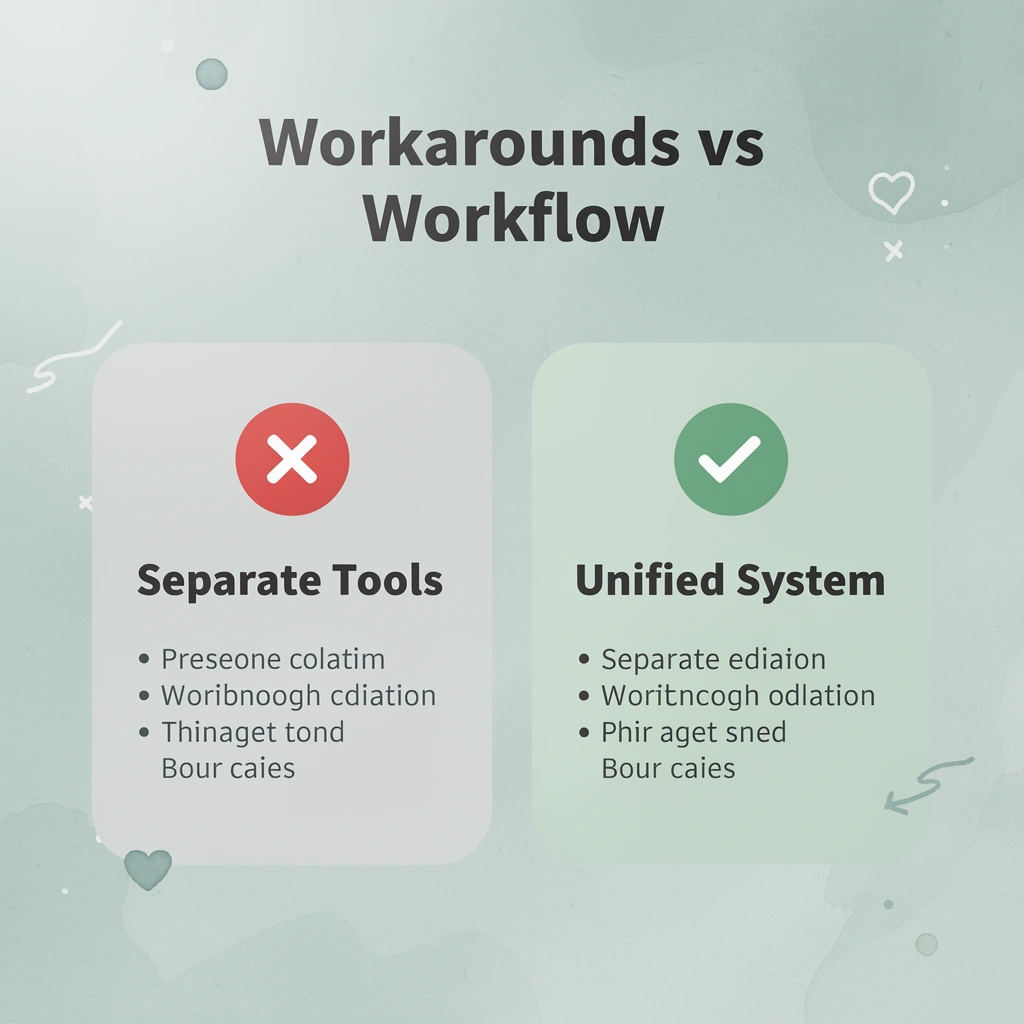
If your current hiring process treats screening, pipeline management, and onboarding as separate problems requiring separate tools, you're managing workarounds, not a workflow. The distance between a screened candidate and a productive employee should be measured in days, not in the number of platforms your team logs into.
"The distance between a screened candidate and a productive employee should be measured in days, not in the number of platforms your team logs into."
💡 Tip: If your hiring team switches between multiple platforms to manage a single candidate, that's not a process—that's a patchwork. A unified HR system eliminates the gaps where candidates fall through.
⚠️ Warning: Treating screening, onboarding, and pipeline management as isolated workflows creates costly delays, miscommunication, and a poor candidate experience, all of which directly impact your ability to hire top talent.
Book a free 30-minute demo with Cercli to see how our AI-supported screening, candidate management, and post-hire processes work together across the UAE, Saudi Arabia, and the wider MENA region. Less time on the platform, more time on the people who matter.
What You'll See in the Demo
- Faster shortlisting, less manual review
- Full visibility from application to offer
- Seamless transition from candidate to employee
- One system for your entire regional workforce
🎯 Key Point: Cercli is built specifically for MENA-based teams — meaning compliance, workflows, and HR processes are designed around the region you actually operate in, not bolted on as an afterthought.
✅ Best Practice: Use your free 30-minute demo to walk through your current hiring pain points with the Cercli team — so you can see exactly where a unified HR system saves your team the most time.
Related Reading
- Eightfold Ai Competitors
- Pre Employment Screening Tools
- Willo Alternatives
- Spark Hire Alternatives
- Hirevue Alternatives
- Pymetrics Alternatives
- Manatal Vs Hirevue
- Harver Alternatives
- Hirevue Vs Smartrecruiters


