10 Best AI-Powered Candidate Screening Tools for Businesses
10 Best AI-Powered Candidate Screening Tools for Businesses
Hiring at scale is slow and expensive, especially when recruiters spend most of their time sorting through hundreds of resumes before a single conversation. AI-powered candidate screening tools are reshaping that process by automating resume parsing, candidate ranking, and applicant tracking, freeing recruiters to focus on evaluating people rather than managing spreadsheets. Understanding which tools deliver real value and how they fit a growing business makes a measurable difference in both speed and quality of hire.
Acting on screening data is only half the challenge. Without a connected system, insights from screening tools often get lost between disconnected platforms and manual handoffs. Cercli brings hiring workflows, workforce management, and compliance together in one place, giving teams a clear view of their talent pipeline from first application to final offer through a single global HR system.
Table of Contents
- Why AI-Powered Candidate Screening Is Becoming More Important
- Signs Your Organization Needs AI-Powered Candidate Screening
- What to Look for in an AI-Powered Candidate Screening Tool
- 10 Best AI-Powered Candidate Screening Tools
- Additional Considerations for Companies Hiring Across MENA
- How Cercli Helps Companies Turn AI Screening Into a Connected Hiring Process
- Book a Demo to Speak with Our Team about Our Global HR System
Summary
- Recruiters spend up to 23 hours screening resumes for a single hire, according to HeroHunt.ai. Multiplied across multiple open roles, that volume makes manual screening structurally unsustainable rather than a simple capacity problem. Adding more recruiters to a repetitive manual process increases cost without fixing the underlying bottleneck.
- When multiple recruiters screen independently, evaluation criteria drift, producing inconsistent shortlists. One recruiter weights transferable skills heavily, another focuses on title proximity, and hiring managers receive candidate pools that reflect evaluator interpretation as much as actual candidate quality. AI-assisted screening applies predefined criteria uniformly across every application, giving each candidate the same starting point before human review begins.
- Skills-based AI matching addresses a specific failure of keyword-dependent screening, which filters out qualified candidates who describe their experience differently from the job description. According to Crosschq, companies using AI screening report a 35% improvement in quality of hire, and that improvement is most plausible when matching logic evaluates skills and career trajectory rather than surface-level title comparisons. Candidates rejected by rigid keyword filters become visible when the system maps capabilities instead.
- 75% of hiring managers already feel they spend too much time reviewing unqualified candidates, according to Hueman RPO. That figure shows the bottleneck does not stop at the screening stage. It carries through to decision-makers, compressing the time they have to properly evaluate candidates who actually fit the role.
- The efficiency gains from AI screening erode quickly when candidate data has to be manually transferred into onboarding systems, payroll platforms, or compliance records. Crosschq reports that companies using AI screening see up to a 50% reduction in cost-per-hire, but that figure assumes the screening tool is embedded in a connected workflow rather than sitting beside one. A faster shortlist fed into a slower manual process simply moves the bottleneck rather than removing it.
- Organizations hiring across MENA face compliance obligations that sit well beyond the screening stage, including Emiratisation targets requiring eligible UAE private-sector employers to increase Emirati representation by 2 percentage points annually and reach 10% by 2026, alongside Saudi Arabia's Nitaqat program and data protection laws in both markets that specifically regulate automated processing of candidate information. Cercli's global HR system addresses this by keeping candidate data, hiring workflows, onboarding, payroll, and compliance requirements in one environment, so the transition from screened candidate to employed worker doesn't require manually rebuilding existing information.
Why AI-Powered Candidate Screening Is Becoming More Important
Recruitment teams face mounting pressure: application volumes are climbing, candidate pools are more diverse, and expectations to move quickly have outpaced recruiter capacity.
"The demand for faster, smarter hiring has never been greater — application volumes are surging while recruiter bandwidth remains fixed." — Industry Insight
🎯 Key Point: The gap between hiring demand and recruiter capacity is widening, making manual screening processes increasingly unsustainable.

HeroHunt.ai reports that recruiters spend up to 23 hours screening resumes for a single hire — nearly three full working days before a single interview is even scheduled. Across multiple open roles, this becomes completely unsustainable.
⚠️ Warning: Spending 23 hours on resume screening per role isn't just a time problem — it's a competitive disadvantage that slows your entire hiring pipeline.
Screening Stage
- Resume review (per hire)
- Up to 23 hours
- Working days lost
- Nearly 3 full days
- Interviews scheduled
- 0 — before screening ends
- Impact across multiple roles
- Exponentially unsustainable
💡 Tip: AI-powered screening tools can dramatically compress this 23-hour burden, freeing recruiters to focus on high-value tasks like candidate engagement and final-stage evaluation.
Why adding more recruiters doesn't fix the bottleneck
The common response is to hire more recruiters. But the problem is not headcount; it is the process itself. A repetitive, manual screening workflow doesn't become efficient with more people; it just costs more to run the same bottleneck. The equation changes when you remove the repetition entirely.
Most teams build workarounds: spreadsheets to track applicants, shared inboxes, separate tools for posting and CV review. Each layer adds friction. When candidates progress from screening to offer, their information must be re-entered across disconnected systems. Cercli connects hiring workflows, workforce management, and compliance into one place, so screening data doesn't get lost in translation.
How does AI screening surface candidates that keyword filters miss?
Skills-based screening is where AI delivers something different. According to Magnificent Jobs, 97.8% of Fortune 500 companies use an applicant tracking system, and 79% have integrated AI capabilities. Title-based screening misses qualified candidates whose relevant experience sits under a different job title or industry. AI can analyze skills, context, and career trajectory more broadly, surfacing candidates that keyword filters would reject.
The goal was never to automate hiring decisions, but to give recruiters their attention back for relationship-building, consulting with hiring managers, and making the judgment calls that no algorithm should make alone. The real question is whether your current process shows you the right candidates to begin with.
Knowing AI screening adds value is only half the picture. The harder question is recognizing when your organization's old approach costs more than you realize.
Related Reading
- Methods For Screening Candidates
- Recruitment Assessment Methods
- Reduce Recruitment Costs
- How To Improve The Hiring Process
- How To Assess Cultural Fit
- How To Identify Top Talent
- Automated Reference Checks
- How To Reduce Time To Hire
- High Volume Recruitment Strategies
- How To Improve Quality Of Hire
- Predictive Hiring Assessments
Signs Your Organization Needs AI-Powered Candidate Screening
The tipping point rarely announces itself. It builds up quietly, in the gap between application volume and your team's capacity to process them.
"The gap between application volume and team capacity is where hiring quality silently breaks down — and where AI-powered screening delivers its greatest impact."
🚨 Warning: By the time your team feels overwhelmed, your screening process has already started to fail — top candidates are being missed, and hiring timelines are quietly stretching beyond control.
💡 Tip: Watch for the early warning signs — rising time-to-review, inconsistent shortlisting decisions, and recruiter burnout — these are critical signals that your organization is ready for AI-powered candidate screening.
Warning Sign: High application volume
- What It Means: Team capacity is overwhelmed
- AI Solution: Automated bulk screening
Warning Sign: Inconsistent shortlisting
- What It Means: Human bias creeping in
- AI Solution: Standardized AI scoring
Warning Sign: Slow time-to-hire
- What It Means: Bottlenecks in review process
- AI Solution: Real-time candidate ranking
Warning Sign: Recruiter burnout
- What It Means: Unsustainable manual workload
- AI Solution: Intelligent screening filters

When recruiter time tells the real story
The failure point is usually invisible until you measure it. According to HeroHunt.ai, recruiters spend up to 23 hours screening resumes for a single hire. Across ten open roles, this becomes a structural problem: recruiters building relationships with passive candidates get buried in application queues, with most never progressing past the first read.
Why does evaluator inconsistency affect shortlist quality?
When several recruiters screen independently, the criteria drift. One prioritizes job title proximity to the role. Another weights transferable skills more heavily. A third interprets "five years of experience" differently depending on the candidate's sector. None are wrong, but the shortlists aren't comparable. Hiring managers then receive inconsistent candidate pools and can't determine whether variance stems from candidate quality or evaluator judgment. AI-assisted screening creates a consistent first pass by applying predefined criteria uniformly across every application, ensuring every candidate starts from the same point before human review.
How does embedding criteria into the workflow remove drift at scale?
Most teams handle this by writing more detailed job descriptions and thoroughly briefing recruiters. But as hiring volume scales, individual interpretation still creeps back in. Our global HR platform embeds screening criteria directly into the hiring workflow to eliminate that drift at the source. When the hiring agent, candidate data, and team records live in one place, the criteria applied during screening remain connected to the role requirements set by the hiring manager.
When your pipeline speed signals a deeper problem
The pattern appears in fast-growing teams and large company hiring alike: application numbers rise, shortlist timelines lengthen, and hiring managers request updates instead of reviewing candidates. That delay stems from a process not built for its current workload. Hueman RPO reports that 75% of hiring managers feel they spend too much time reviewing unqualified candidates, meaning the problem extends to decision-makers themselves and reduces time spent on qualified prospects.
Qualified candidates disappearing into the noise
A strong candidate may describe project management experience without using the phrase "project management." They may hold a job title that differs across industries while performing identical work. When people screen resumes by hand under time pressure, they look at surface-level pattern matching: does this resume resemble the job description? That works for twenty applications but becomes problematic at two hundred. AI-powered applicant tracking and resume parsing tools surface relevant candidates based on skill signals, not keyword proximity, so your shortlist reflects actual fit rather than formatting choices.
How do you know when AI screening is the right move?
The question of whether your organization needs AI-powered candidate screening answers itself once you examine where recruiter time goes, how consistent your shortlists are, and how long qualified candidates wait before a hiring manager reviews them.
Which AI screening capabilities actually matter?
The complexity isn't whether to use AI screening—it's knowing which capabilities matter and which ones sound impressive on a product page.
What to Look for in an AI-Powered Candidate Screening Tool
The right AI screening tool should do three things without compromise: reduce paperwork and make things measurably easier, support consistent decision-making across every candidate, and work smoothly with your existing recruitment systems. Anything that fails those three tests is a feature, not a solution.
"The right AI screening tool must reduce paperwork, support consistent decision-making, and integrate seamlessly — anything less is a feature, not a solution."
Capability: Reduce Paperwork
- What It Means: Automates manual screening tasks
- Why It Matters: Frees recruiters for high-value work
Capability: Consistent Decision-Making
- What It Means: Applies the same criteria to every candidate
- Why It Matters: Eliminates bias and human error
Capability: System Integration
- What It Means: Connects with your existing recruitment stack
- Why It Matters: Ensures seamless workflows with zero disruption
🎯 Key Point: A tool that only solves one of these three needs is a partial fix — not a strategic upgrade to your hiring process.
⚠️ Warning: Don't be distracted by flashy features. If an AI screening tool can't integrate with your existing systems, it will create more work, not less — defeating its entire purpose.

AI resume screening and skills-based matching
AI resume screening should not work like a black box. Recruiters need to see why candidates were chosen, override recommendations when necessary, and adjust criteria between roles without contacting support. Without transparency, you are not reducing bias; you are simply relocating it.
How does skills-based matching catch candidates that keyword logic misses?
Skills-based matching fixes a specific problem with keyword-based screening: qualified candidates who describe their experience differently from the job description get filtered out before a human reviews them. A system that identifies transferable skills and maps capabilities rather than job titles catches candidates that rigid keyword logic misses. Ask any vendor whether recruiters can define the difference between essential and desirable skills, as that difference shapes everything downstream. According to Crosschq, companies using AI screening report a 35% improvement in quality of hire, particularly when matching logic goes beyond surface-level title comparisons.
What happens without structured human oversight?
The failure point is usually not the AI itself, but the absence of structured human oversight. The U.S. Equal Employment Opportunity Commission has warned that automated hiring tools can create discrimination risks without appropriate safeguards, regardless of model sophistication. Recruiters need audit trails, explainable recommendations, and the ability to challenge system outputs. A tool that cannot answer "why did you rank this candidate here?" is a liability, not an asset.
How do embedded biases in training data affect candidate recommendations?
Most recruitment teams assume vendors have built fairness into their models—an understandable but fragile assumption, since training data reflects historical hiring patterns and their embedded biases. Choose platforms that show how they evaluate candidates, let you monitor results over time, and make it easy to identify when recommendations drift from your actual criteria.
Integration, workflow automation, and what happens after screening
Screening a candidate is only the beginning. If a recruiter must manually export results, re-enter data into an ATS, and trigger follow-ups separately, handoffs can consume the efficiency gain from AI. The strongest screening tools connect directly with your ATS, update candidate stages automatically, and trigger next steps based on screening outcomes without manual intervention.
Why does your broader HR stack architecture affect screening outcomes?
This is where your broader HR stack architecture matters. Many teams run hiring in one tool, HR records in another, and payroll in a third, forcing screened candidates through multiple disconnected systems before their first day. Cercli removes that friction by connecting recruitment, team management, and payroll in one AI-native platform so candidate data moves forward without manual transfers. Crosschq reports that companies using AI screening see up to a 50% reduction in cost-per-hire, though that assumes the screening tool is embedded in a workflow rather than sitting beside one.
Once you know which capabilities matter, the harder question becomes which platforms deliver them in practice.
10 Best AI-Powered Candidate Screening Tools
The capabilities overlap, the marketing language sounds identical, and every vendor promises to cut your time-to-hire. What follows is a straightforward look at what each platform actually does well, and where its natural limits are.
"Every vendor promises to cut your time-to-hire — what separates the best tools is where they fall short." — Key Insight
🎯 Key Point: Not all AI-powered screening tools are created equal. Understanding real-world limitations is just as critical as evaluating headline features.
💡 Tip: Before committing to any platform, map each tool's core strengths against your specific hiring workflow — generic promises rarely translate to measurable results.
Evaluation Factor
- Evaluation Factor
- Why It Matters
- Determines actual fit for your hiring process
- Marketing Claims
- Why It Matters
- Often overstated — verify with demos and trials
- Natural Limits
- Why It Matters
- Reveals where the tool breaks down at scale
- Time-to-Hire Impact
- Why It Matters
- The #1 promised benefit — demand proof of results

1. Cercli
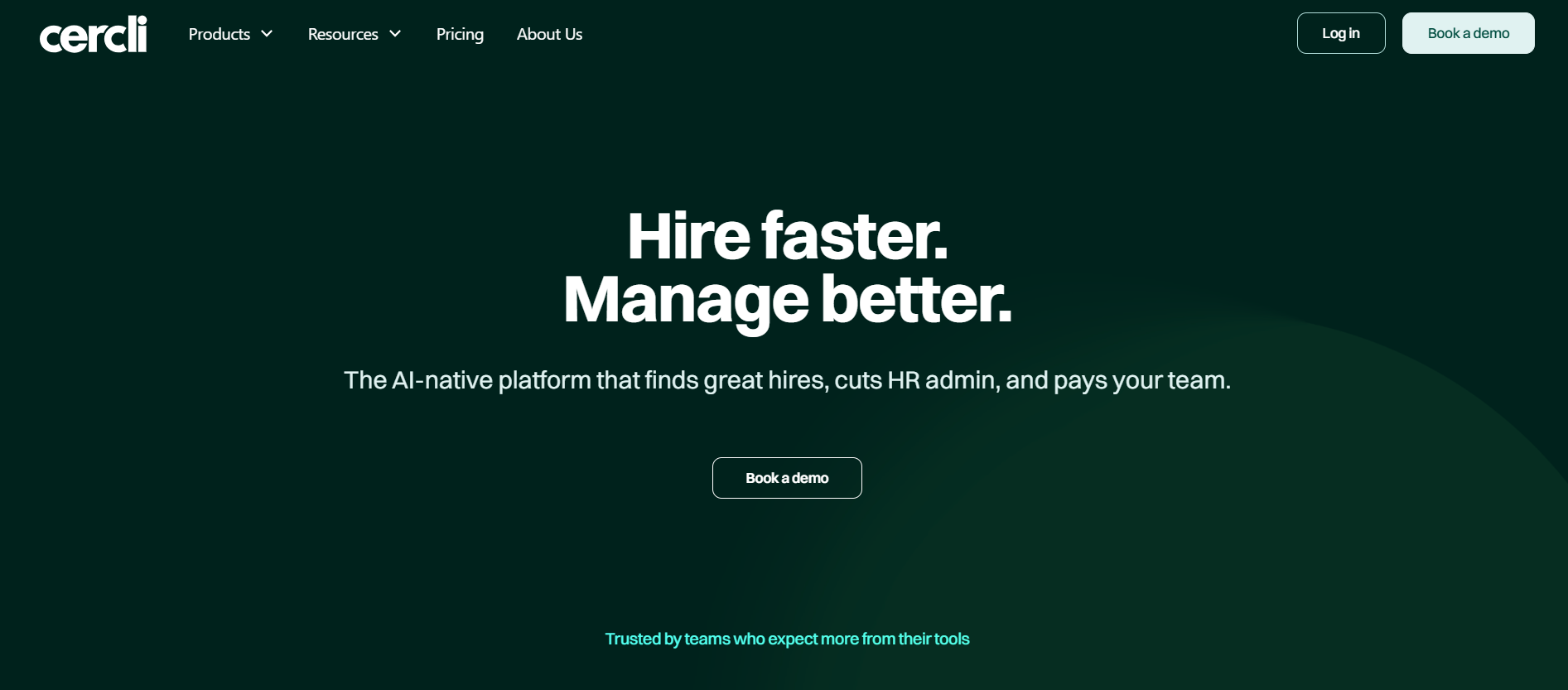
Cercli is built for organizations hiring across the UAE, Saudi Arabia, and the wider MENA region. The platform evaluates applicants against role-specific criteria, surfaces candidate strengths and potential red flags, and generates insights that help recruiters prioritize their pipeline without manually reviewing every application.
How does Cercli connect screening to the rest of the hiring process?
Most teams export candidate data from their ATS, re-enter it into an HRIS, then manage payroll and compliance in a separate system, adding days to every hire and creating data inconsistencies that cause compliance errors. Cercli connects screening directly to onboarding, HR records, payroll, contractor management, and Employer of Record services, so candidate data moves forward once.
When a candidate clears screening, the next steps in their employment lifecycle are within reach in the same platform.
2. Workable
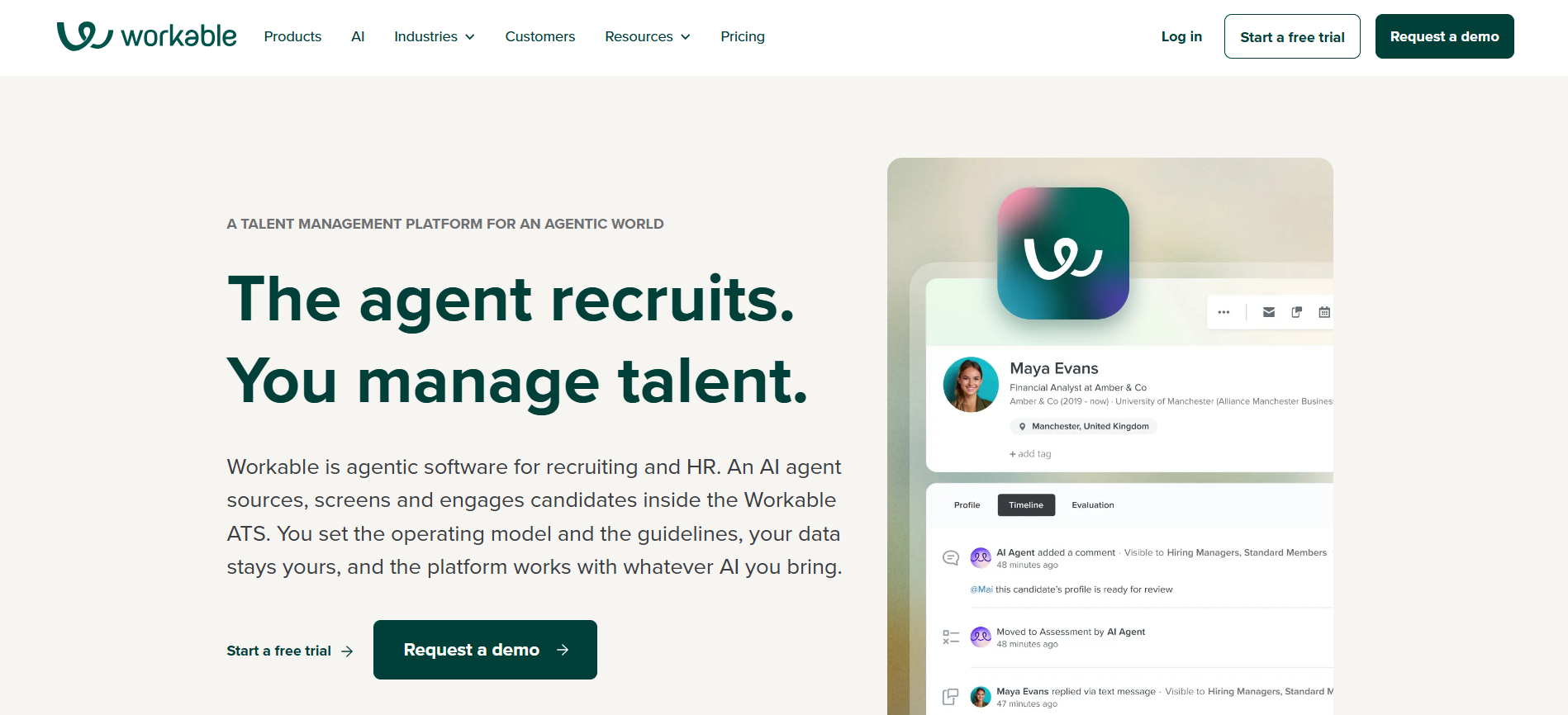
Workable suits small and medium-sized businesses seeking AI-assisted hiring without expensive enterprise systems. Its semantic analysis matches candidates to job requirements based on skills and experience rather than keyword matching alone, producing more relevant shortlists with less manual filtering.
The Workable Agent finds, screens, qualifies, and engages candidates before presenting an interview-ready shortlist, saving significant recruiter time when hiring across multiple roles simultaneously.
3. Greenhouse
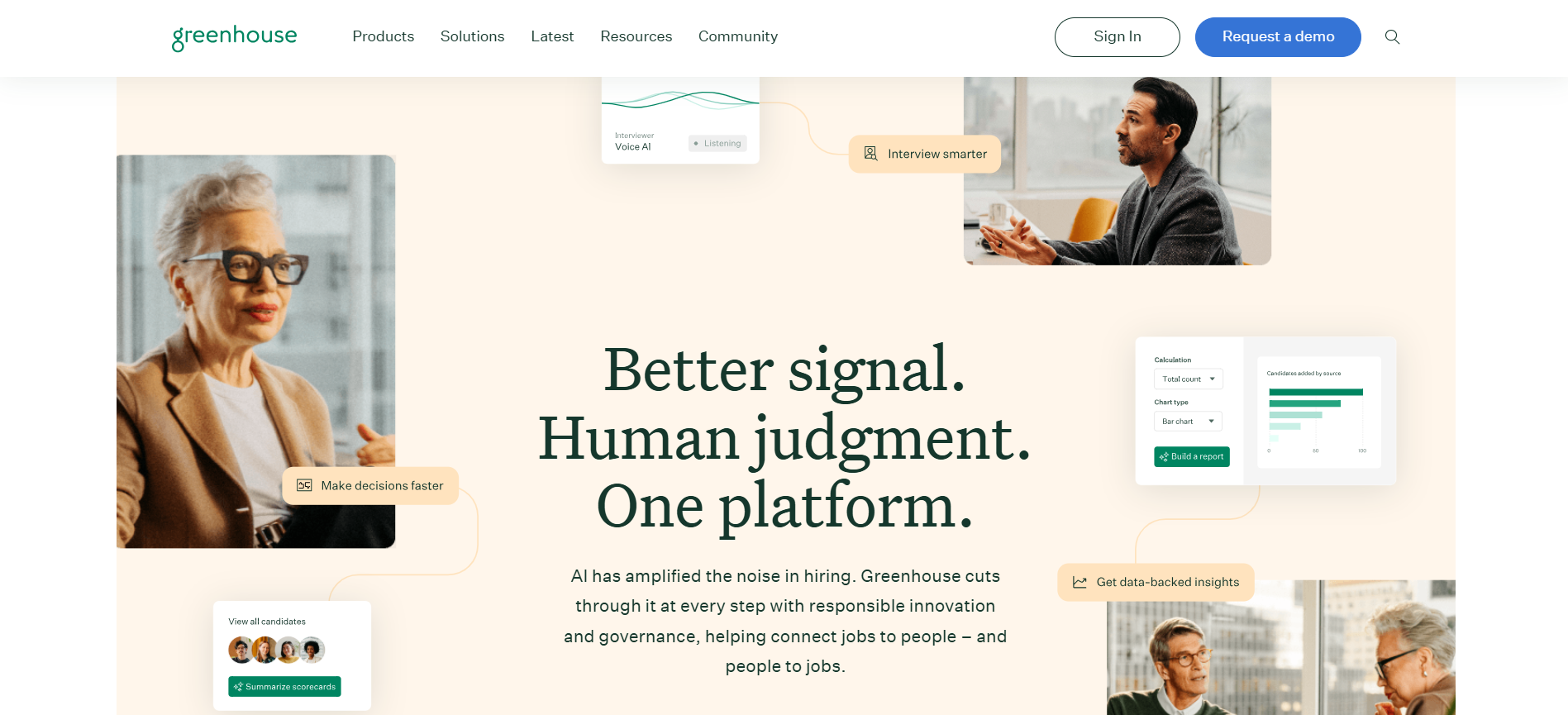
Greenhouse is built around structured hiring, a philosophy that shapes how its AI operates. Resume review, candidate insights, scorecard summaries, and talent rediscovery all sit within a framework that keeps human judgment at the center of every decision.
Greenhouse's critical difference is intentional restraint. Its AI generates hiring plans and summarises scorecards but does not replace the structured evaluation process. For enterprise teams where consistency and auditability matter as much as speed, that restraint is a feature, not a gap.
4. Ashby
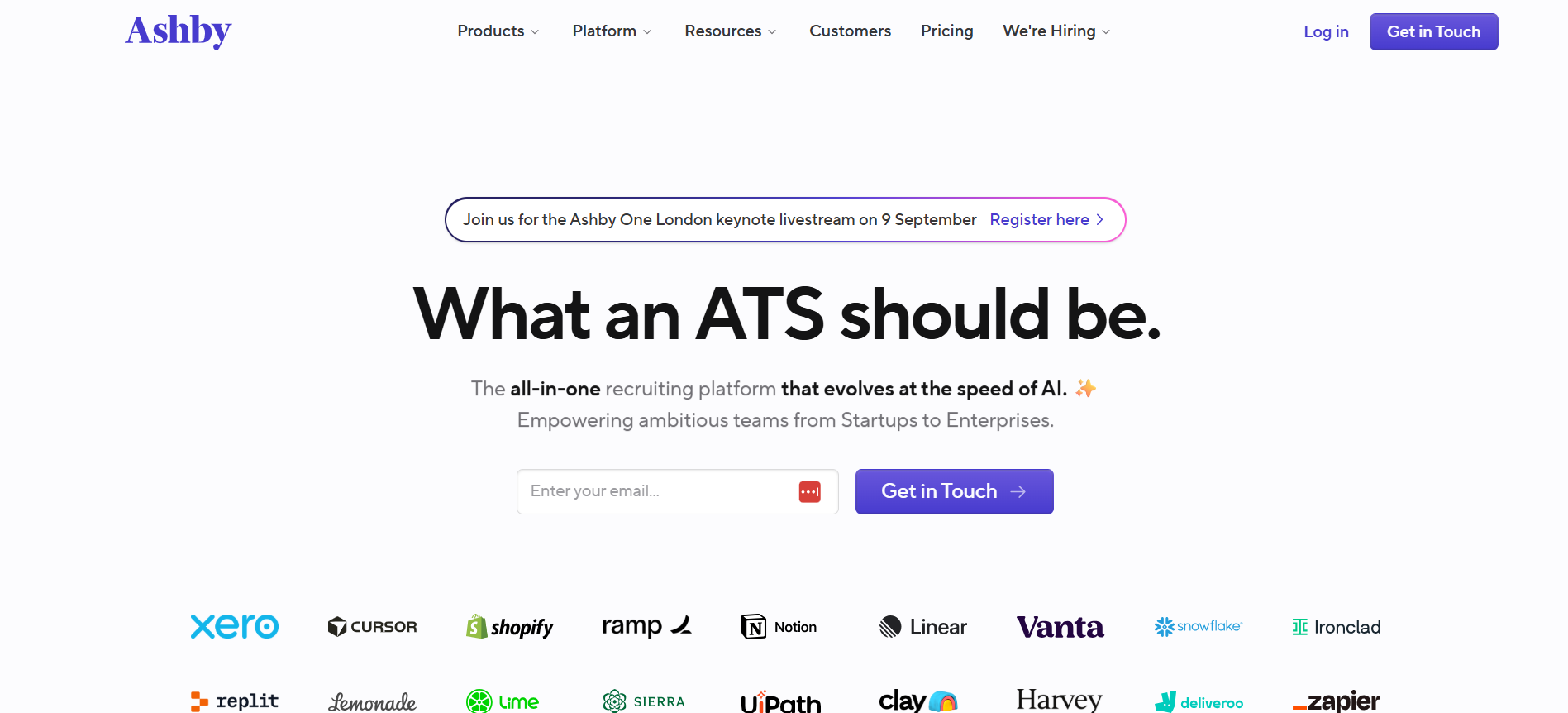
Ashby works well for recruitment teams that use data to make decisions and want clear visibility into candidate evaluation. Recruiters set up objective criteria for a job, and the AI evaluates applications against those criteria with evidence and reasons attached to each assessment. This transparency matters in hiring environments where multiple people must agree on a shortlist: rankings with explanations are far more useful than black-box scores that recruiters cannot question.
5. SmartRecruiters
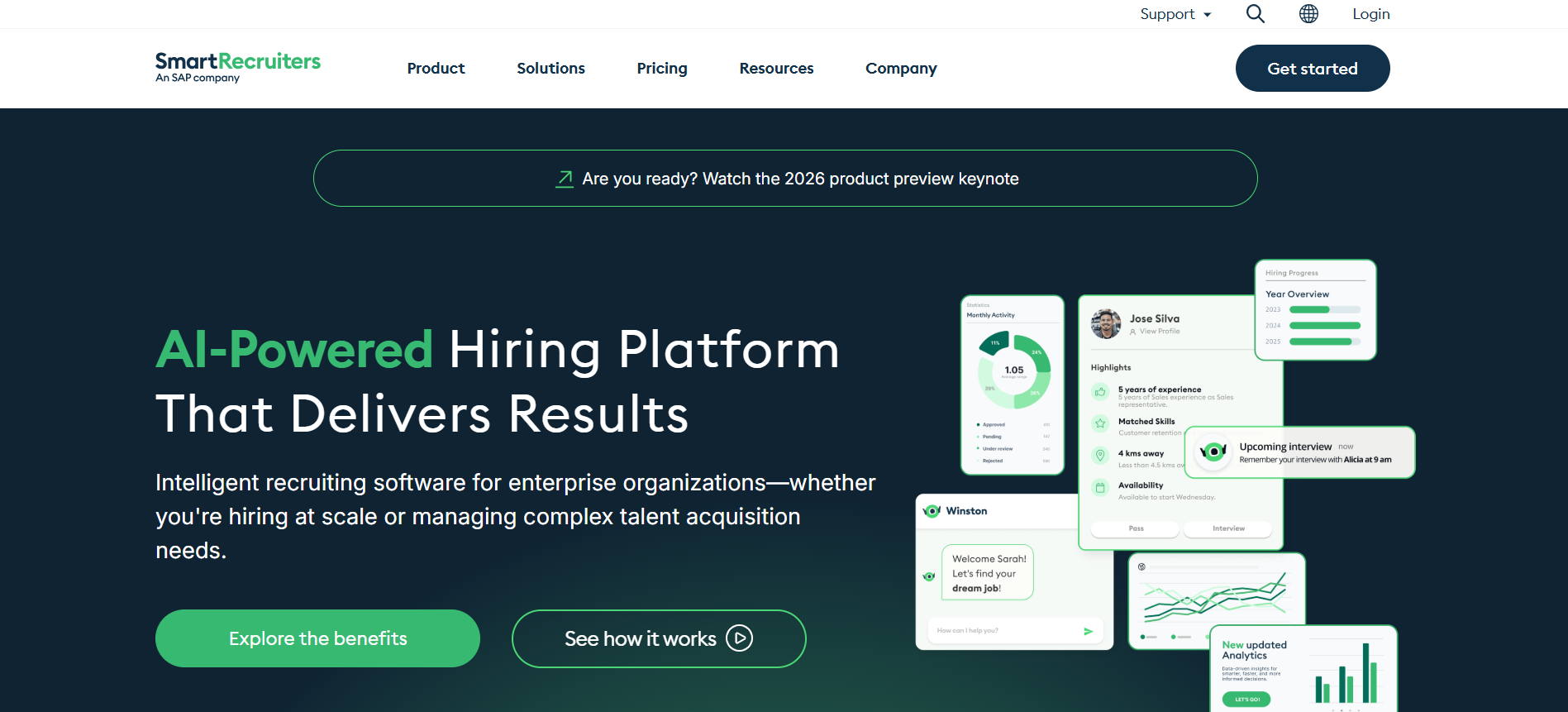
SmartRecruiters supports large-company recruitment through Winston AI. Winston Screen creates shortlists from large applicant pools, while Winston Match assesses candidate fit by evaluating skills, work history, experience level, and education rather than relying on keyword matching alone.
Evaluating candidates based on what they've done rather than surface-level language improves shortlist quality. Hyreo's analysis of AI recruiting software found that AI-powered screening tools can reduce manual screening time by up to 75%, a significant efficiency gain at enterprise hiring volumes.
6. Lever
Lever combines applicant tracking with recruitment CRM functionality, keeping active applicants moving through the ATS while nurturing candidates who aren't ready yet in the CRM instead of archiving them.
Most recruitment pipelines fail not at identifying candidates, but at losing them between screening and offer when relationships go cold. Lever's combined ATS and CRM structure addresses that specific gap.
7. Paradox
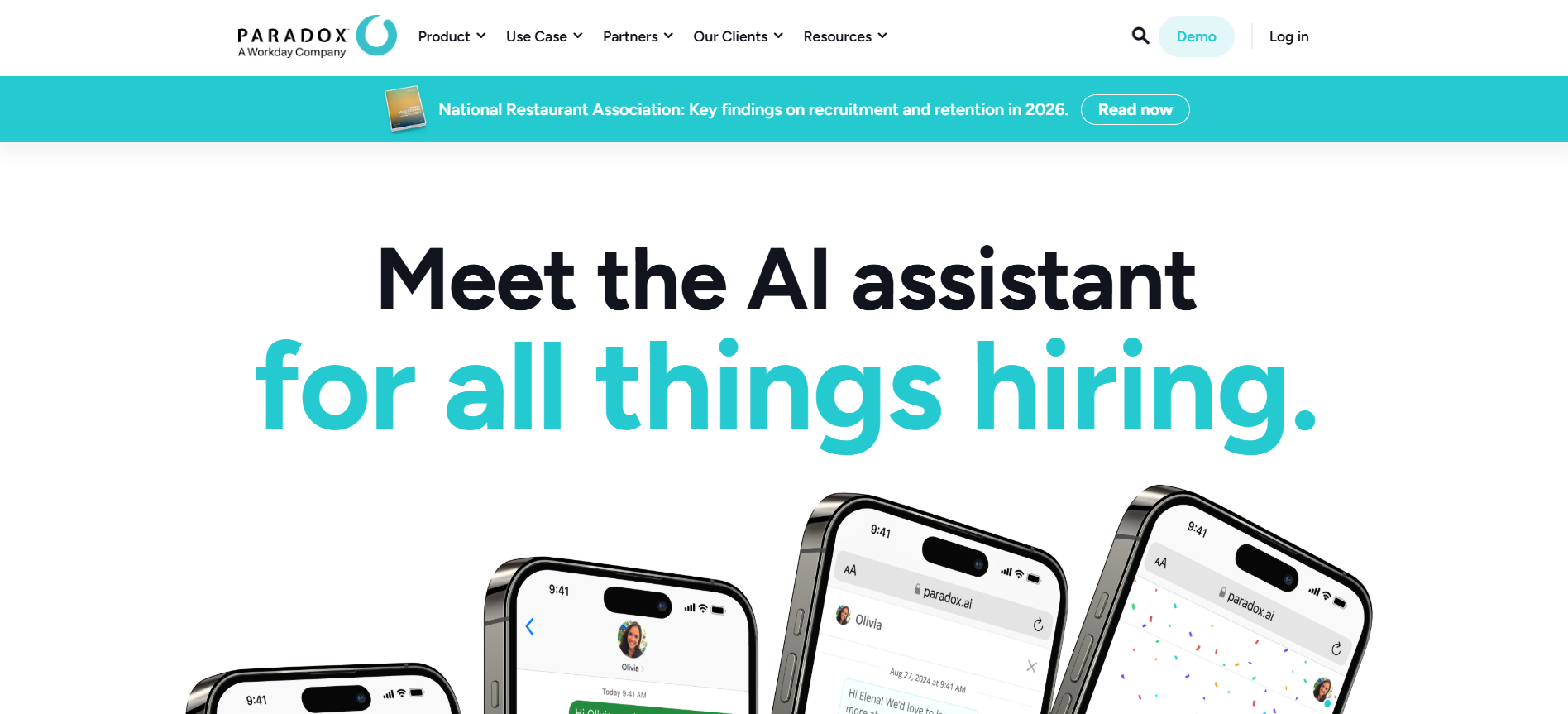
Paradox places conversational AI at the center of candidate screening. Its assistant interacts with candidates directly, screens applicants through conversation, answers questions, and schedules interviews without recruiter involvement at each step.
For high-volume employers, this approach delivers real value. United Overseas Bank used Paradox to screen more than 5,000 applications annually, reducing time-to-hire by 50%. Automating repetitive early-stage interactions frees recruiter bandwidth for decisions requiring human judgment.
8. Eightfold AI
Eightfold focuses on skills-based talent intelligence instead of traditional resume screening. Its AI evaluates candidates based on qualifications, demonstrated skills, and career trajectory potential, and explains why it recommends candidates rather than simply producing ranked lists.
The platform extends into internal mobility, workforce planning, and talent pool management, connecting external recruitment with internal talent development.
9. Phenom
Phenom combines AI candidate matching with recruitment marketing, career sites, and talent relationship management. Its Fit Score evaluates candidates across skills, experience, title, and location, and explains the reasoning behind each recommendation.
By pulling candidates from previous sourcing activity, past applicants, and internal talent pools, Phenom often finds qualified candidates before a new sourcing cycle begins. For organizations with high hiring volume and strong employer brand investment, this reduces cost-per-hire beyond screening speed alone.
10. Humanly
Humanly uses conversational AI for early-stage recruitment, focusing on reducing manual work in candidate engagement and scheduling. Unlike platforms like Ashby or Greenhouse, which center AI on application review, Humanly centers it on candidate interaction.
It works best for teams losing recruiter time to repetitive outreach and scheduling, not application volume. According to the Transformify Blog, Unilever screened over 250,000 applications using AI and reduced hiring time from four months to four weeks, showing the scale conversational and automated screening tools can unlock.
Which platform fits your situation?
The best match between a platform and an organization depends on three factors: hiring volume, role complexity, and how you handle candidate data after screening. Employers hiring many people for similar roles gain the most value from conversational AI tools like Paradox or Humanly. Specialized or structured enterprise roles favor Greenhouse, Ashby, or Eightfold. Organizations requiring screening to integrate directly with HR, payroll, and compliance operations in a single workflow operate in a different territory.
Why does what comes after screening matter?
No platform delivers its full value on its own. Efficiency gains from faster screening diminish when candidate data must be manually moved into onboarding systems, payroll platforms, or compliance records. The question isn't which tool screens best, but which platform makes everything after screening easier.
What changes when hiring across MENA specifically?
For organizations hiring across MENA, the platform decision carries additional complexity that most vendor comparisons overlook.
Additional Considerations for Companies Hiring Across MENA
The difficulty extends beyond selecting a country to include what happens after you choose a candidate and whether your hiring technology can handle it.

What changes after the shortlist
Hiring across MENA means navigating multiple overlapping compliance frameworks simultaneously. The UAE requires work permits and employment documentation before a worker starts, and requires records to be retained for at least two years after employment ends. Saudi Arabia has distinct labor and workforce requirements. A screening tool that produces a clean shortlist on Monday can leave your HR team managing disconnected manual processes by Wednesday, since the platform was never designed to carry candidate data beyond the recruitment stage.
How does workforce localization compliance create gaps in screening platforms?
The same pattern shows up across both markets when it comes to hiring local workers. The UAE's Emiratisation program requires eligible private-sector employers with 50 or more employees to increase Emirati representation in skilled roles by 2 percentage points annually, reaching 10% by 2026. Saudi Arabia's Nitaqat program links required localization levels to workforce size and economic activity. If the screening system cannot connect hiring activity to workforce composition data, employers must calculate localization compliance manually, negating much of the efficiency gain.
Where does the data handoff between screening and HR systems break down?
Most teams handle this by exporting candidate data from their screening tool and re-entering it into HR or payroll systems. As hiring scales across multiple locations, this handoff becomes problematic: data duplicates, records fall out of sync, and compliance documentation lags behind hiring decisions. Platforms like Cercli address this by keeping the hiring agent, candidate data, and workforce management in a single environment, eliminating the manual rebuild of information that already exists.
What legal obligations apply to candidate data in AI screening?
Automated screening generates substantial personal data, and organizations must understand their responsibilities before using AI recruitment tools. The UAE's Personal Data Protection Law (Federal Decree-Law No. 45 of 2021) and Saudi Arabia's Personal Data Protection Law govern how organizations collect, store, and process candidate information. Saudi Arabia's implementing regulations specifically address decisions based solely on automated processing and require clear consent in certain situations. Before engaging any AI screening vendor, organizations should ask: where is candidate data stored, how long is it retained, whether it trains AI models, and what mechanisms exist for candidates to exercise their rights under applicable law.
Why is the scale of regional hiring making data obligations more urgent?
According to the World Bank's Arab Voices research, nearly 300 million young people are expected to enter the job market across the region in the next 25 years. This hiring surge will significantly increase the volume of candidate data flowing through AI screening systems. Legal and ethical responsibilities attached to that data demand immediate attention. With the MCG Talent 2025 MENA Recruitment Market Guide reporting senior role salaries increasing by up to 35% across Saudi Arabia, the stakes of each hire and candidate record continue to rise.
Engagement structure matters before onboarding begins
Not every candidate who passes screening will become a permanent employee. Some will be hired as contractors, consultants, or through an Employer of Record arrangement, depending on the role, country, and business model. The correct engagement structure affects contracts, payroll, benefits, and compliance responsibilities differently in the UAE and Saudi Arabia. AI screening should therefore feed into a broader workflow that identifies how a successful candidate will be engaged, not merely whether they are qualified.
Related Reading
- Blind Resume Screening
- Candidate Screening Tools For Healthcare
- Ai Resume Screening Bias
- Pre-Hire Assessments For High-Volume Hiring
- Sales Candidate Screening
- Cultural Fit Assessment Tools
- How To Reduce Bias In Hiring Process
- How Does Automated Resume Screening Work
- Behavioral Hiring Assessments
How Cercli Helps Companies Turn AI Screening Into a Connected Hiring Process
Most hiring platforms fail at connecting a candidate who has made the shortlist to a fully onboarded employee. The tools that find the right person often don't help bring them on board, creating a critical gap in the hiring journey that costs companies time, money, and top talent. This problem worsens as companies grow and hiring volume scales.
"The tools that find the right person often don't help bring them on board — creating a critical gap that widens as companies scale."
🚨 Warning: A disconnected hiring stack means candidates who pass AI screening can fall through the cracks before signing an offer, costing your team the effort already invested in finding them.
✅ Best Practice: Look for platforms like Cercli that bridge the gap between AI-powered screening and end-to-end onboarding, turning a shortlisted candidate into a fully connected, productive team member without switching tools.

Hiring Stage
- AI Screening
- Disconnected Platforms: Standalone tool, no handoff
- Cercli's Connected Process: Integrated with full pipeline
- Shortlisting
- Disconnected Platforms: Manual export required
- Cercli's Connected Process: Seamlessly flows to next stage
- Offer Management
- Disconnected Platforms: Separate system needed
- Cercli's Connected Process: Built-in and automated
- Onboarding
- Disconnected Platforms: Entirely different platform
- Cercli's Connected Process: Connected from day one
🎯 Key Point: Cercli solves the most overlooked problem in modern hiring — the broken handoff between finding great candidates and actually getting them onboarded and productive.
Why does a faster shortlist not always mean a faster hire?
A recruiter exports candidate data from a screening tool, pastes it into an ATS, emails a hiring manager for feedback, waits, chases, and manually re-enters accepted candidate details into an HR system. Each handoff feels manageable individually. Across ten simultaneous hires in three different MENA markets, it becomes a structural problem.
According to Cercli's research on automated candidate screening, companies using automated screening reduce time-to-hire by up to 40%, but this assumes the screening integrates with downstream processes. A faster shortlist fed into a slower manual process merely shifts the bottleneck rather than eliminating it.
How does keeping hiring in one environment remove fragmentation?
Most teams treat each hiring stage as its own project: screening in one tool, tracking in another, onboarding in a third. As hiring volume and market reach grow, this fragmentation creates duplicated data entry, delayed offers, and compliance gaps.
The Insight Global 2025 AI in Hiring Report found that 55% of HR leaders identify integrating AI screening tools with existing HR systems as a top challenge. Platforms like Cercli address this by consolidating candidate data, recruiter workflows, hiring manager collaboration, onboarding, payroll, and compliance in a single environment, eliminating duplicate data entry as candidates move from applicant to employee.
Where screening ends and hiring actually begins
When a candidate accepts an offer, everything changes. Offer letters, documentation collection, employment contracts, payroll setup, and local compliance requirements must happen in sequence, often rapidly. When these activities occur in a different system than the one that created the shortlist, HR teams spend their first week with a new hire recreating information that recruiters already gathered. This data continuity problem shows up as an onboarding problem.
What changes when recruitment connects to the full employee lifecycle?
Connecting recruitment to the full employee lifecycle changes what AI screening is worth. The screening finds candidates faster and starts a thread that runs through every subsequent stage without breaking. Hiring managers see the same candidate profile that recruiters built. Onboarding pulls from the same record. Payroll and compliance requirements for that specific market are already attached to the hire. The recruiter's time savings from AI screening do not get absorbed by administrative recovery work downstream.
The real question is not whether AI can help you screen candidates more efficiently. The question worth sitting with is what happens to that efficiency the moment a candidate says yes.
Related Reading
- Pre-Employment Screening Tools
- Harver Alternatives
- Eightfold Ai Competitors
- Hirevue Alternatives
- Spark Hire Alternatives
- HireVue vs SmartRecruiters
- Pymetrics Alternatives
- Manatal vs HireVue
- Willo Alternatives
Book a Demo to Speak with Our Team about Our Global HR System
If your organization is screening candidates with AI but managing the rest of hiring across separate tools, efficiency gains stop at the offer letter. That gap is where time savings disappear, and compliance risk builds up. Booking a free demo with Cercli gives your team a direct look at where handoffs are breaking down and what a connected hiring process looks like in practice.
"When AI-powered screening operates in isolation from onboarding, payroll, and compliance, the efficiency gains disappear exactly where they matter most — after the offer letter." — Cercli
🎯 Key Point: A disconnected hiring stack doesn't just slow your team down; it actively creates compliance exposure across every manual handoff between tools.
💡 Tip: A free demo with Cercli takes less time than the hours your team currently spends manually transferring candidate data between platforms.
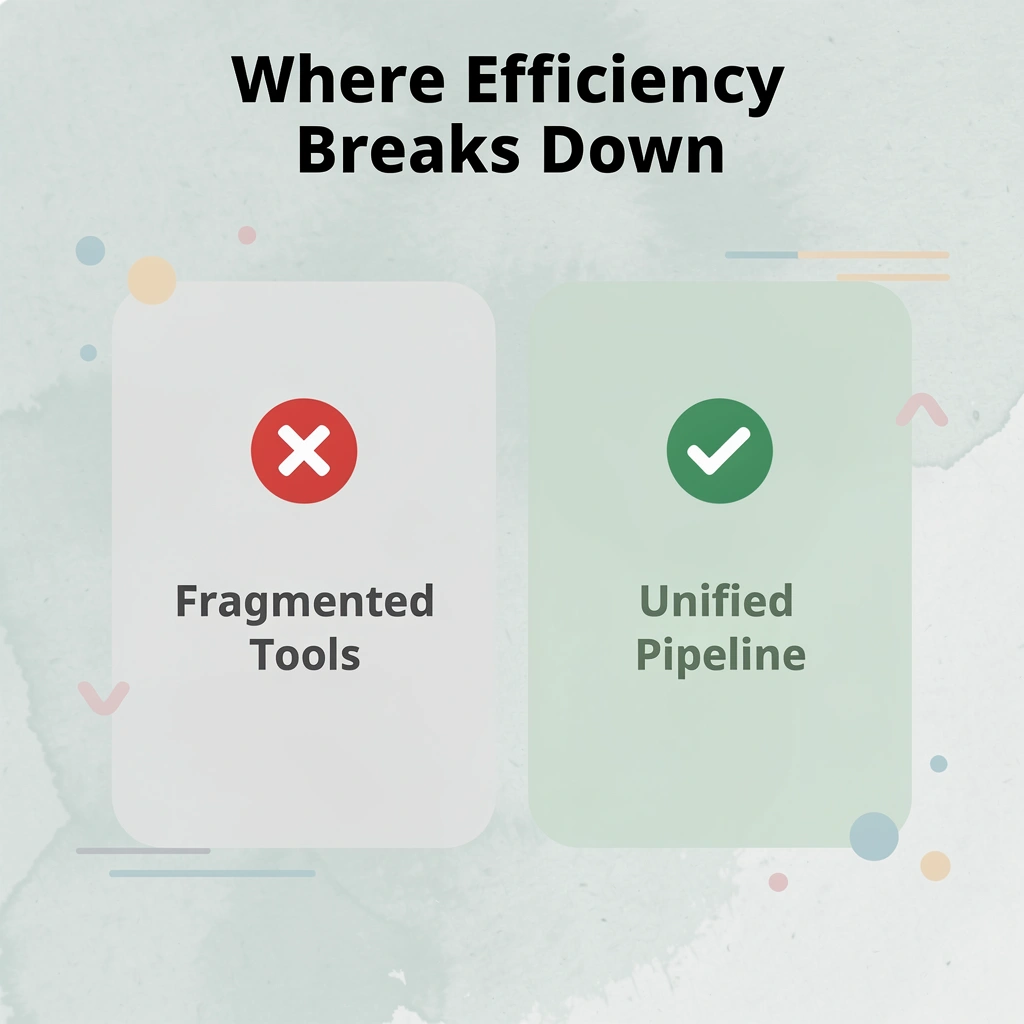
During the session, the Cercli team will walk through your recruitment workflow, identify where manual transfers between screening, onboarding, payroll, and compliance create friction, and show how AI-supported hiring can run as one continuous process across the UAE, Saudi Arabia, and wider MENA region. The goal is a clear-eyed review of whether your current setup lets you spend less time managing platforms and more time making good hiring decisions.
Hiring Stage
- Screening
- Standalone AI tool
- Integrated AI pipeline
- Onboarding
- Manual data transfer
- Automatic handoff
- Payroll
- Separate platform entry
- Unified data flow
- Compliance
- Ad hoc checks
- Built-in MENA compliance
⚠️ Warning: If your team is manually re-entering candidate data at each stage of hiring, you are not just losing time — you are introducing compliance risk at every touchpoint across UAE, Saudi Arabia, and MENA jurisdictions.


