12 Workday Alternatives for HR, Payroll & Workforce Operations

You are managing open roles, reviewing CVs, arranging interviews, and monitoring payroll and compliance deadlines. Effective candidate pipeline management is central to recruitment, maintaining progress, and reducing the risk of losing qualified candidates. If your HR software is costly or difficult to use, this article compares Workday alternatives across HR, payroll, and workforce operations. We look at applicant tracking, recruitment software, cloud HR, payroll systems, workforce management, onboarding, benefits administration, and HRIS reporting to help you select tools that improve hiring and simplify everyday tasks.
Cercli’s global HR system integrates HRIS, payroll processing, and workforce management, helping teams unify candidate pipeline management and coordinate HR, payroll, and operations efficiently.
Summary
- Candidate expectations around flexible working significantly influence offer acceptance. Around 70% of employees say they need more flexibility in their working day, making payroll and contract presentation important in recruitment decisions.
- Most managers support flexible working, with 85% saying it improves productivity. This creates pressure to align payroll and contract options with the hiring strategy.
- Use of specialist HR systems is widespread, with many organisations choosing tools that better match their needs and regional requirements rather than large enterprise suites.
- Many organisations that switch HR platforms see lower costs and better value, highlighting total cost of ownership as an important factor in decision-making.
- Large enterprise HCM systems remain widely used, especially where centralised governance and consolidated reporting are priorities, including in large multinational firms.
- Regionally focused platforms often support payroll across multiple countries and provide ongoing customer support, helping reduce administrative time for reconciliation and onboarding.
Cercli’s global HR system supports HRIS, payroll processing, and workforce management, helping companies coordinate payroll and candidate-to-pay processes across multiple countries, with customer support available 24/7.
Why Companies Look Beyond Workday
Companies look beyond Workday when business needs shift from broad enterprise record-keeping to faster operations that better reflect regional requirements and local hiring conditions. To support timely offers and onboarding, organisations increasingly require systems that reduce friction across:
- Candidate flow
- Local payroll requirements
- Access to clear legal guidance
For teams operating across multiple regions, especially in markets such as the UAE, these operational details directly affect hiring speed and compliance confidence.
What Breaks Down As Operational Demands Grow?
As organisations add countries, legal entities, or high-volume hiring, core HCM functions may continue to operate while practical workflows begin to slow.
Approvals are delayed when:
- Integrations break down
- Offer letters require country-specific adjustments
- Reconciliation between HR and finance becomes a recurring manual task
This repetitive work consumes time and focus, often resulting in longer time-to-hire and onboarding delays during payroll setup. Teams seeking to reduce these delays often review alternatives that provide clearer links between hiring, payroll, and finance processes.
How Do Regional Payroll And Compliance Requirements Change The Calculus?
Where teams must comply with frameworks such as WPS in the UAE, DEWS, GOSI, or Mudad, a generic global system often requires significant coordination. Local banking rules, government reporting interfaces, and statutory filing requirements introduce country-specific processes that need regular maintenance.
Mitigating Operational Risk: Why Regional Compliance is No Longer Optional
The consequence is not only additional steps but increased risk, including:
- Missed filings
- Manual overrides
- Audits that demand senior management involvement
For organisations hiring in the UAE, this often drives interest in platforms designed to reflect regional payroll and compliance realities from the outset. At this stage, some teams begin exploring whether a more regionally aligned HR and payroll system could reduce ongoing administrative effort. Cercli supports this approach by bringing HRIS, payroll processing, and workforce management into a single operating framework, helping teams manage regional payroll and offer-to-pay coordination more consistently as they scale.
Why Does Candidate Pipeline Management Push Teams To Look Elsewhere?
Hiring today requires balancing candidate experience with regulatory and operational requirements. Research shows that expectations of flexibility influence acceptance of offers, which in turn affects how payroll terms and contracts are presented during the hiring process. Managers also report productivity benefits from flexible working, increasing pressure:
- To ensure that policies
- Payroll structures
- Candidate communication remains aligned
Standardising the ‘Offer-to-Pay’ Lifecycle: Reducing Friction and Regulatory Risk
When candidate flow, local pay rules, and offer-to-pay timelines are managed across disconnected tools, hiring slows and operational risk increases. This is why teams assess alternatives that aim to:
- Improve data consistency across HR and finance
- Shorten implementation timelines
- Reduce manual reconciliation as headcount grows
For organisations evaluating this shift, Cercli provides a structured way to:
- Connect candidate management
- Payroll
- Compliance across multiple countries
It helps teams move from offer to first pay cycle with fewer handovers and clearer oversight. Not all alternatives deliver faster hiring without increasing compliance risk, which makes careful evaluation essential.
12 Common Workday Alternatives
1. Cercli
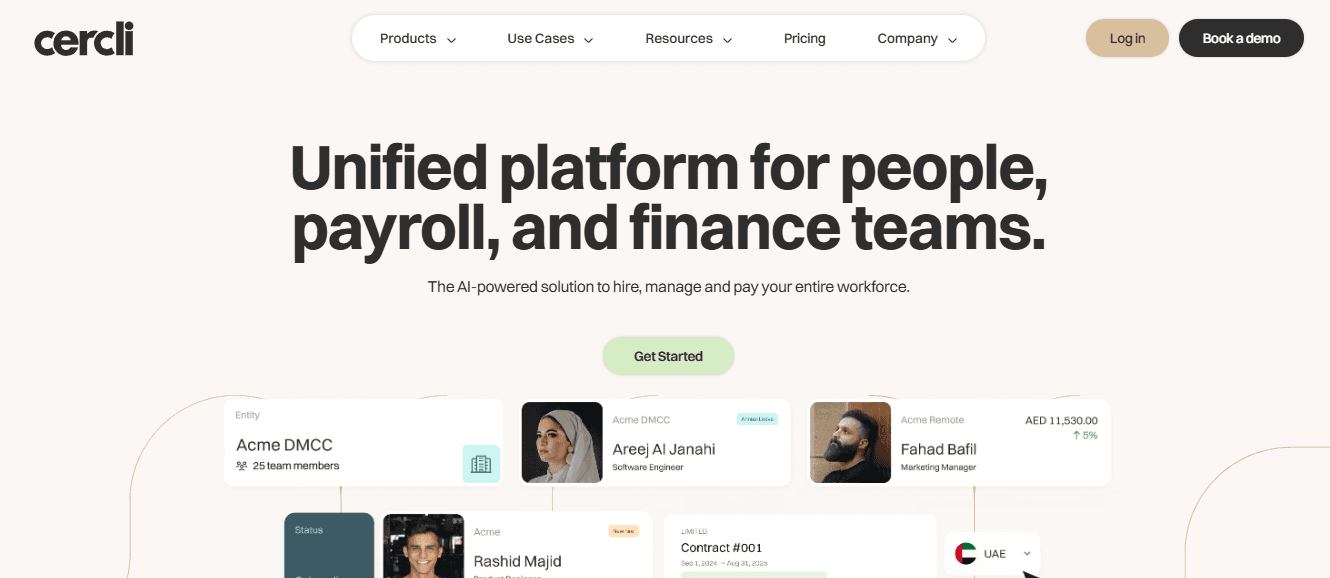
Cercli supports companies scaling across the Middle East, providing compliant payroll for the UAE, Saudi Arabia, and the wider MENA region, along with an applicant tracking system and contractor management tools. By connecting job creation, candidate screening, onboarding, and payroll setup through a unified process, teams gain clearer visibility across the hiring and payroll cycles, supporting smoother offer progression and reducing compliance risk.
Best For
MENA-based scale-ups that require multi-entity, multi-currency payroll and hiring processes designed for regional complexity. Watch how Cercli supports regional hiring and payroll at scale.
2. ZenHR
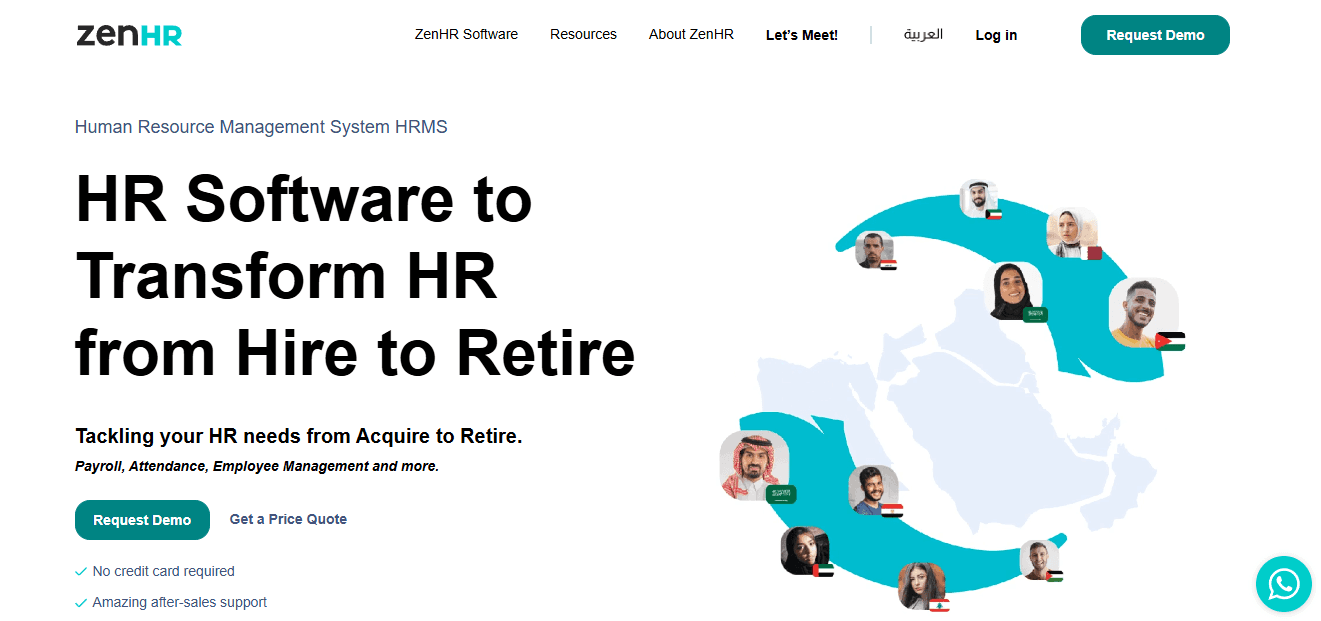
ZenHR focuses on GCC localisation with bilingual support and standard HR workflows, including:
- Leave
- Attendance
- Document self-service in Arabic and English
Its strength lies in consistent alignment with GCC labour regulations, helping organisations manage payroll and policy requirements across the region.
Best For
Organisations prioritising regulatory alignment within the GCC and HR systems that fit established local teams.
3. Bayzat
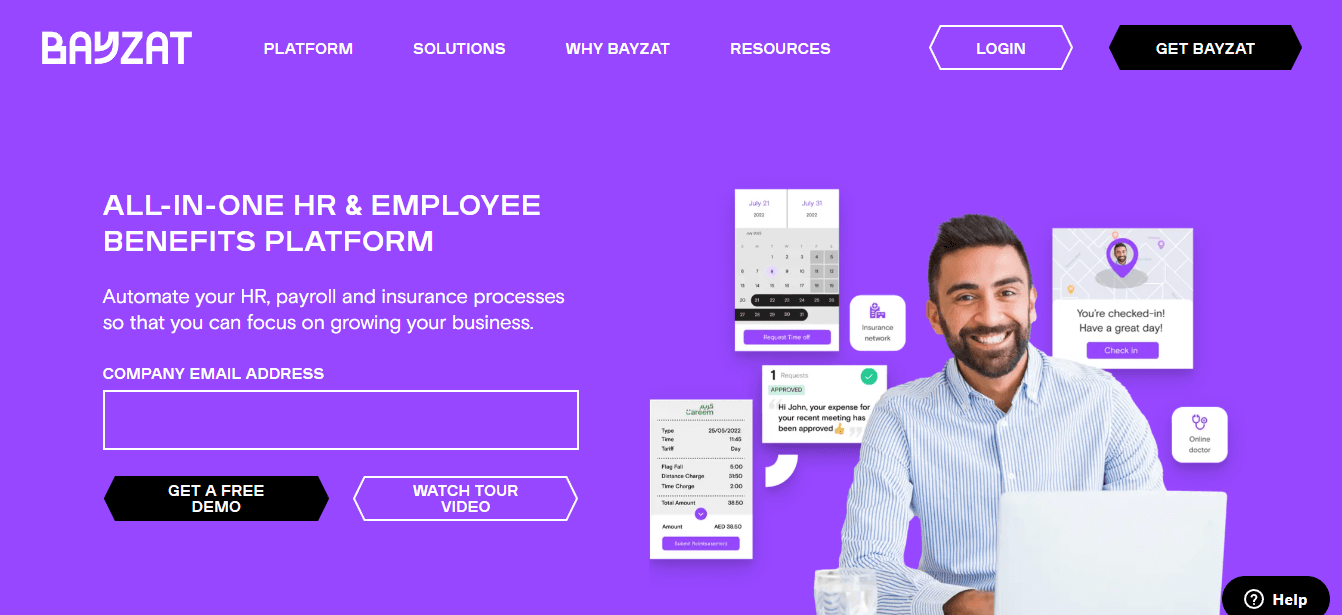
Bayzat centres on UAE payroll and benefits, integrating health insurance into HR operations. This makes it easier to link payroll deductions to benefits administration and to present total reward information during the hiring process.
Best For
UAE small and medium-sized enterprises that want payroll and benefits managed together, particularly where medical coverage influences candidate decisions.
4. Zimyo
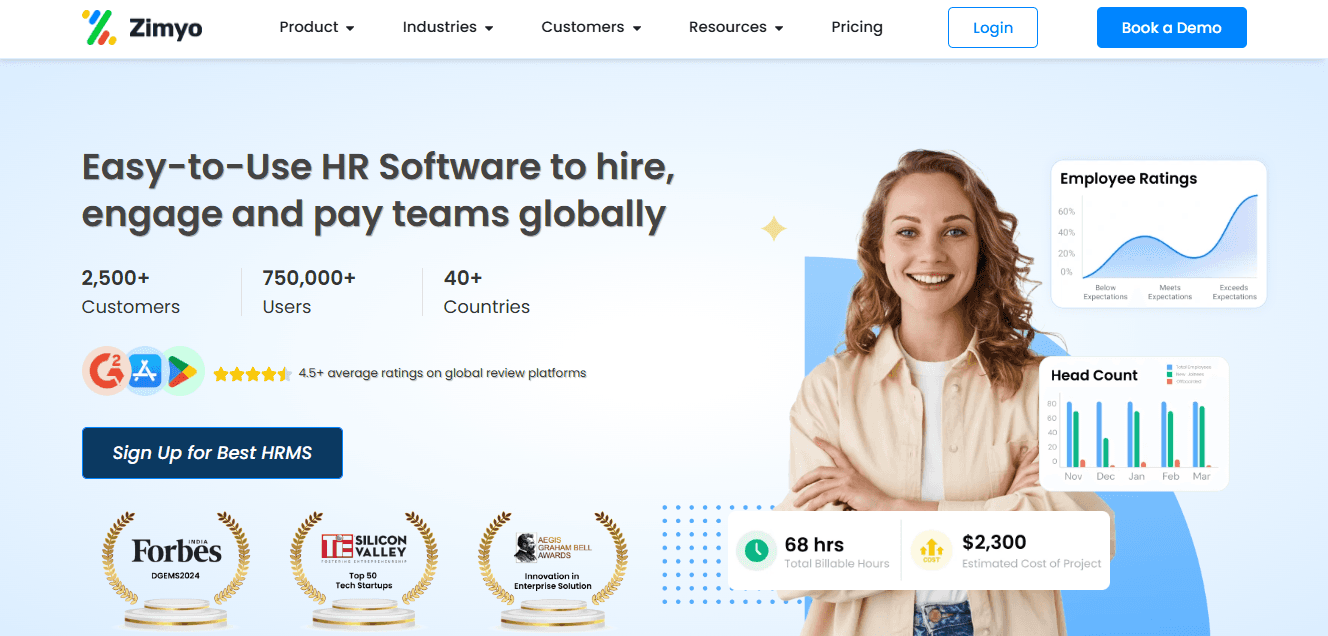
Zimyo offers multilingual support and configurable workflows that enable teams to align HR processes with internal rules, rather than requiring them to adapt to predefined system structures. This approach suits specialised workflows but may require longer configuration periods.
Best For
Organisations that prefer customised HR processes over standardised templates.
5. Workplus HCM
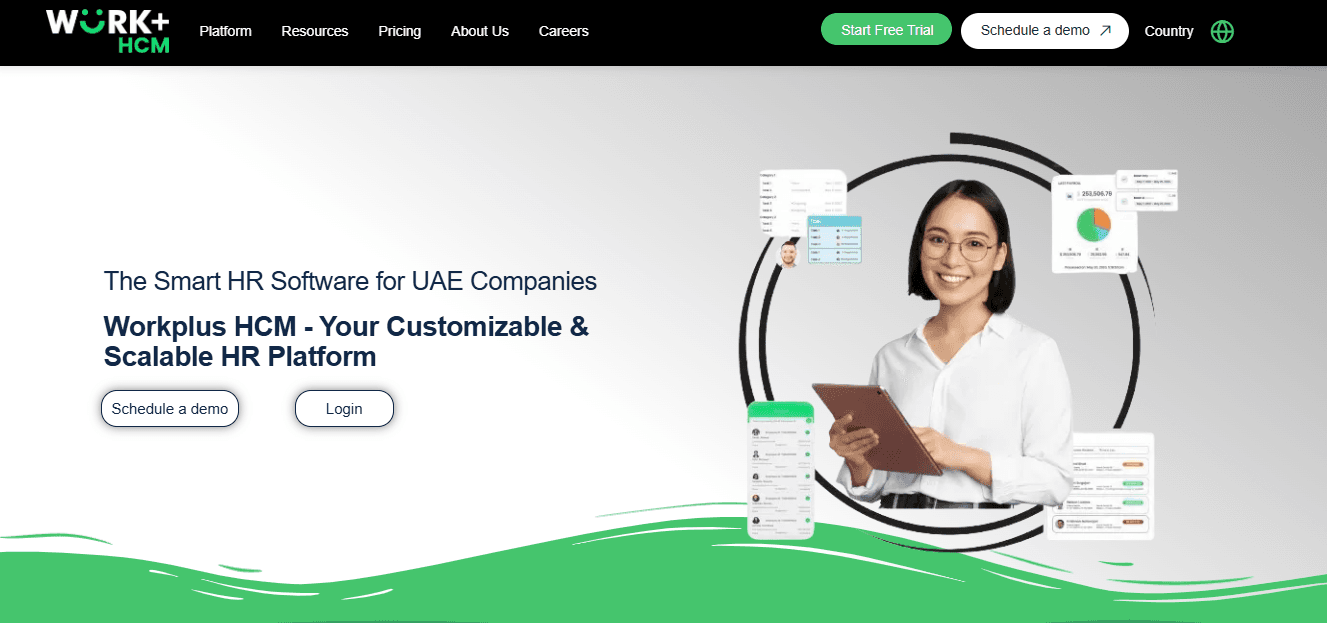
Workplus HCM is positioned for enterprise use, focusing on automation aligned with GCC payroll and statutory compliance. It supports standardised processes across multiple locations for organisations able to accommodate longer enterprise implementation timelines.
Best For
Large organisations seeking consistent HR and payroll processes across multiple GCC operations.
6. GulfHR
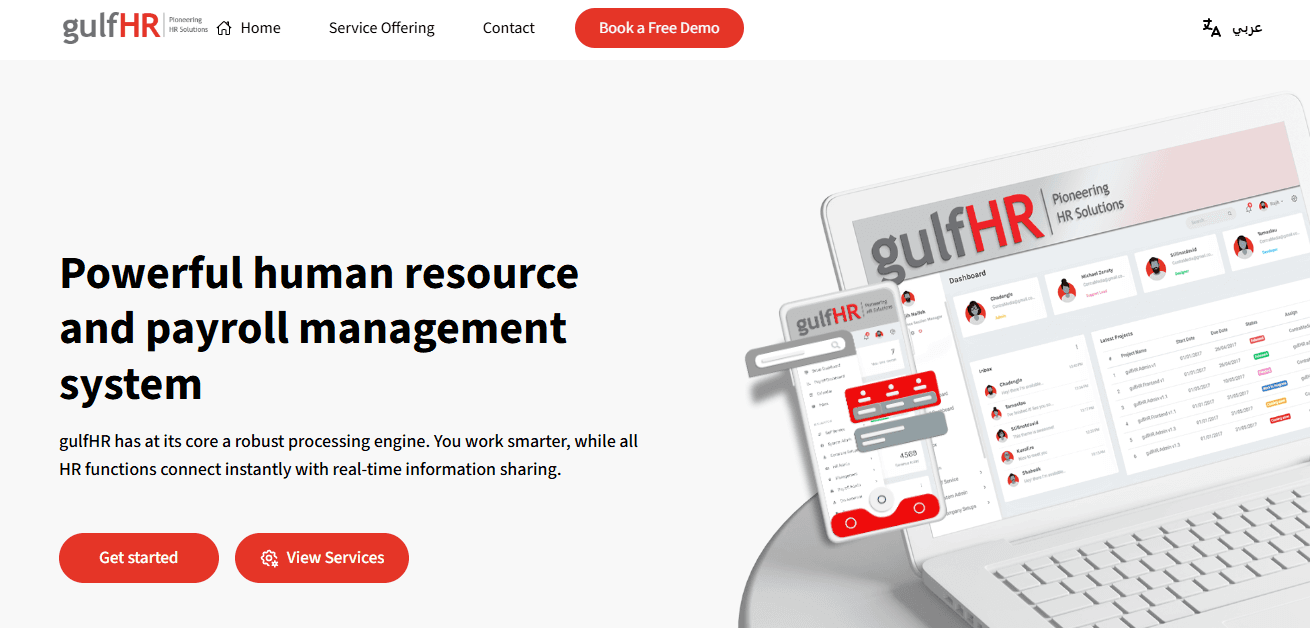
GulfHR serves mid-market GCC organisations with Arabic-language support and modules for region-specific tasks, including:
- Visa tracking
- Shift rostering
- Payroll calculations
It reflects common HR administration needs in the region without unnecessary additional features.
Best For
Mid-sized companies requiring region-aware HR functionality with Arabic support.
Unified Governance: Moving Beyond Point Solutions to Minimise Risk
Many organisations continue to use multiple point solutions because they feel familiar and manageable, particularly when payroll rules are strict. As stakeholder oversight increases and pay cycles become auditable, this approach can mask growing manual work and reconciliation gaps, often leading to onboarding delays and compliance exposure.
Platforms such as Cercli bring these processes together within a consolidated operating model, combining:
- Regional payroll
- Automated compliance checks
- Integrated hiring workflows
This helps teams reduce manual reconciliation, strengthen audit visibility, and manage regional growth with clearer oversight. See how Cercli helps simplify regional HR and payroll operations.
7. Menaitech
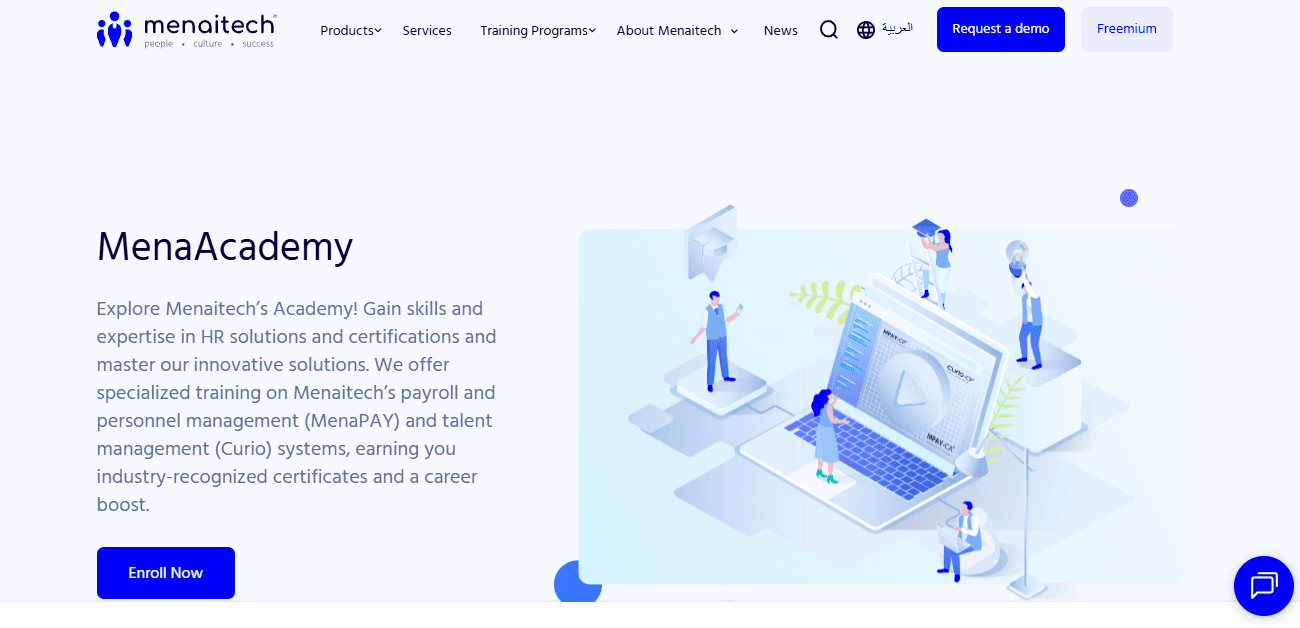
Menaitech provides modular HR, payroll, and learning tools tailored to the UAE and wider MENA region. Its structure supports organisations that want training and performance management to link directly to payroll and HR records.
Best For
Organisations with structured learning and performance frameworks.
8. Yomly
Yomly supports enterprise multi-country payroll with consolidated reporting and mobile access, making it suitable for organisations with distributed teams and centralised reporting needs.
Best For
Large organisations that require consolidated payroll reporting across multiple countries.
9. GreytHR

GreytHR focuses on SMEs, offering straightforward HR, attendance, and payroll functionality. It prioritises simplicity and affordability over deep regional payroll specialisation.
Best For
Small teams seeking basic HR tools alongside external or local payroll providers.
10. Decibel 360
Decibel 360 is aligned with UAE operations, offering localisation suited to Dubai government processes, including leave policies and statutory requirements. This reduces administrative friction for organisations operating primarily within the UAE.
Best For
Teams operating mainly in Dubai that require close alignment with local government frameworks.
11. Ramco HCM
Ramco HCM emphasises payroll accuracy and workforce analytics, particularly in industries with complex shift scheduling, such as:
- Logistics
- Manufacturing
- Aviation
Best For
Organisations where payroll accuracy and operational analytics are critical.
12. BambooHR
BambooHR provides lightweight HR functionality focused on onboarding, leave, and employee records, but does not include native regional payroll. It is commonly paired with local payroll providers.
Best For
Small teams that want simple HR systems and outsource payroll locally.
Analysing Value: Balancing Total Cost of Ownership with Regional Agility
These choices matter as organisations scale and assess long-term cost impact. Many companies increasingly favour systems aligned with their operational and regional needs over broad enterprise suites, particularly when total cost of ownership and implementation effort influence decision-making.
Specialist Tooling: Why Suitability for Purpose Drives Operational Excellence
Choosing between these platforms is similar to selecting tools for a workshop. General-purpose tools work, but specialist tools often improve efficiency and outcome quality when tasks become more complex.
Evaluating Technical Rigour: From Data Representation to Government Integration
- How multi-entity and multi-currency payroll data is represented
- Whether hiring workflows support required screening and approval structures
- Integration with local banks and government interfaces, and update frequency
- Migration support and realistic timelines for payroll and data transfer
This perspective often reframes how organisations evaluate platforms for regional growth. The next section examines the role of large enterprise suites in greater detail.
Related Reading
- Candidate Pipeline Management
- How Applicant Tracking Systems Work
- Applicant Tracking System Benefits
- How to Improve Candidate Experience
- HRIS vs ATS
- How to Choose an Applicant Tracking System
- Applicant Tracking System Pricing
- How to Track Open Positions
- Saas Applicant Tracking System
What Workday Actually Does And Where It Fits Best
Workday is designed to manage enterprise-scale governance, payroll, and finance records across multiple legal entities while providing HR leaders with a single source of truth for reporting and auditability. It fits best where uniform controls, complex role hierarchies, and tight integration with finance matter more than fast iteration. For teams hiring at scale across countries, it enforces standards and visibility that smaller tools struggle to match. For organisations weighing regional platforms alongside large enterprise systems, it is often useful to compare how Cercli approaches regional payroll and compliance against global HR suites.
How Does Workday Support Large Recruitment Programmes?
Workday maps complex job families and requisition templates into a single data model, so headcount budgeting, approvals, and offer templates follow the same rules as payroll and finance reporting. That common model reduces reconciliation work among recruitment, HR, and finance, and makes enterprise reporting consistent even when hiring occurs across dozens of departments and countries. This structure benefits organisations that prioritise governance consistency over hiring speed. Where speed-to-hire or regional payroll configuration is a constraint, teams may want to assess whether Cercli better supports local payroll alignment alongside recruitment workflows.
What Practical Trade-Offs Affect The Speed Of The Candidate Pipeline?
When teams need to tweak job-level screening rules or add new country-specific offer language, changes often require formal configuration cycles and governance review, which lengthens time-to-offer. The pattern is consistent: systems built for control favour slow, safe change. That design reduces risk, but it also means recruitment teams trade speed and flexibility for standardisation.
Streamlining Governance: Bridging the Gap Between Offer and Onboarding
Most teams manage approvals through email and spreadsheets because they are familiar and require no new tools. As stakeholder numbers increase and hiring velocity rises:
- Approvals fragment
- Offer customisation stalls
- Candidates drop out at the final stage
Platforms like Cercli offer an alternative by:
- Keeping job creation
- Screening
- Onboarding
- Payroll setup is visible within a single workflow
This approach can compress reconciliation and offer-to-pay tasks from days to hours while maintaining audit trails and regional compliance checks. Watch how Cercli helps HR and finance teams reduce manual reconciliation across regions without adding operational overhead.
Why Do Large Organisations Pick Workday For Governance And Reporting?
Workday’s position in major industry assessments reflects its focus on control and scale, as shown by its recognition as a Leader in the 2025 Gartner® Magic Quadrant™ for Cloud HCM Suites for 1,000+ Employee Enterprises. This signals a strong fit, given that regulatory controls and consolidated financial reporting are critical. That emphasis explains why many large organisations rely on Workday for unified HR and finance workflows, helping them manage audit, security, and compliance risks at scale. For organisations operating in regulated environments such as the UAE, governance strength remains a key decision factor alongside payroll accuracy.
How Should Teams Choose Between Workday And A Regional Option?
If your priority is enterprise governance, consolidated financial integration, and standard processes across multiple countries, Workday is often the pragmatic choice.
If your immediate constraints are:
- Speed-to-hire
- Region-specific payroll rules
- Reducing local operational risk
This is a focused regional platform that can deliver faster time-to-value.
Think of it this way: Workday resembles an aircraft carrier that delivers consistent capability at scale but requires significant coordination. Regional platforms are quicker to deploy and can respond to local requirements without extended configuration cycles. See how Cercli supports regional payroll and workforce operations for organisations hiring across the UAE and wider MENA region.
What Decision Checklist Will Save You Hours Of Debate?
Match priorities to outcomes:
- Governance and consolidated reporting: choose Workday
- Faster onboarding and local payroll alignment: consider a regional system
Require clear evidence that the platform can translate offer terms directly into:
- Payroll setup
- Provide realistic migration timelines
- Offer live support during the first payroll cycles
Then hiring and pay remain aligned.
Bridging the Operational Gap: A Strategic Alternative for Regional Growth
That conclusion often feels final until teams encounter the operational gap that continues to slow hiring and payroll execution. For organisations reviewing alternatives to Workday, Cercli is worth including in a balanced evaluation focused on regional:
- Compliance
- Clarity
- Execution
Related Reading
- Types of ATS Systems
- ATS Features
- Applicant Tracking System Integration
- Recruiters Use AI-based applicant Tracking Systems tools
- Recruitment Management System UAE
- Best Applicant Tracking System UK
- Best ATS for Small Recruitment Agencies
- Healthcare Applicant Tracking Systems
- Best Candidate Assessment Tools
- Applicant Tracking System Functional Requirements
Where Workday Alternatives Provide Different Value
Workday alternatives are most valuable when the daily mechanics of hiring, payroll, and compliance are the bottleneck, rather than the enterprise system itself. They prioritise faster candidate throughput, fewer manual handoffs, and payroll compliant with local regulations, which accelerates the conversion of offers into paid starts. Explore how Cercli enables faster, compliant payroll and hiring across the UAE and MENA.
How Does That Change The Candidate Experience?
Capturing structured role and candidate data at the point of screening reduces the need for multiple manual transfers later, directly improving offer conversion.
Practical gains include:
- Fewer re-entries into payroll
- Accurate benefit codes
- Shorter processing times for:
- Local banks
- Government agencies
This reduces errors and delays caused by multiple manual handoffs. See how Cercli keeps candidate and payroll data aligned in a single workflow to speed offer-to-pay timelines.
What Does Day-To-Day Reliability Look Like For Hr And Finance?
Integration reliability is ongoing, not a one-time checklist item. Teams need connectors that update promptly when government portals or banks change formats, and clear error handling when issues arise, so payroll closes on time.
This ensures:
- Shorter windows for fixes
- Predictable rollback behaviour
- Audit trails mapping actions to approvals
In practice, this reduces time spent reconciling exceptions and allows finance to finalise ledgers faster. Learn how Cercli maintains reliable, region-aware payroll and compliance for HR and finance teams.
What Are The Real Trade-Offs Between Control And Speed?
Workday delivers measurable operational efficiency at scale, as noted by the Factorial Blog, which explains its widespread adoption by large organisations. At the same time, more than 100,000 companies use alternatives to Workday, indicating that many buyers prioritise operational fit and local compliance over uniform global processes.
Eliminating Operational Friction: Transitioning from Fragmented Tools to Unified Governance
Most teams maintain separate tools because they are familiar and work well when the headcount and country count are small.
As complexity grows, handoffs create hidden costs:
- Approval threads fracture
- Local payroll exceptions accumulate
- Audit queries become time-consuming
Platforms like Cercli reduce this friction by:
- Centralising job creation
- Candidate screening
- Onboarding
- Compliant payroll in a single workflow
- With guided migration and 24/7 support
This compresses reconciliation from days to hours while preserving auditability across the UAE and regional operations.
How Should You Think About Contractors And Multi-Entity Reporting?
Contractor and employee pay rules should be managed within a unified system to reduce duplication in:
- Tax treatment
- Expense recognition
- Month-end reconciliation
A single operational model, where contractor invoices and employee payroll feed the same reporting pipeline, reduces journal entries and lowers the risk of misclassification during audits, including UAE and regional compliance requirements.
Which Operational Metrics Actually Tell You Whether An Alternative Is Delivering Value?
Track the time from:
- Offer acceptance to payroll activation
- The percentage of pay runs needing manual correction
- The count of statutory exceptions per cycle, including:
- UAE statutory requirements
Faster activation improves new-hire retention in the first 30 days, fewer manual fixes reduce monthly operating hours, and fewer exceptions lower audit risk. Set targets based on current pain points, then measure outcomes after cutover. Evaluate whether Cercli can streamline these operational metrics for your organisation.
Optimising the Trade-off: Quantifying Governance and Operational Velocity
Choosing between governance and operational velocity is measurable, not guesswork. Cercli can help teams balance this trade-off effectively by aligning hiring, payroll, and compliance across UAE and MENA operations. Find out how Cercli supports HR, payroll, and operational efficiency while maintaining compliance across multiple countries.
How to Choose the Right Workday Alternative for Your Team

Select the alternative that addresses the operational bottleneck consuming the most time, risk, or causing candidate drop-off over the next 12 to 36 months.
Validate your choice with:
- Live tests
- Measurable SLAs
- A clear rollback plan
Prioritise systems that demonstrate reduced manual reconciliation and faster offer-to-pay cycles in realistic scenarios rather than theoretical demos. Watch how Cercli streamlines offer-to-pay processes and regional payroll for UAE-based teams.
What Should You Test In A Live Demo?
Test real failure scenarios rather than following scripted demos. Use a sandbox and introduce realistic challenges, such as:
- Late statutory changes
- Corrupted bank files
- Offers with country-specific benefits
Measure two factors each time: time-to-repair and the visibility provided to payroll and finance teams while the issue is open. These operational realities determine whether a platform will reduce monthly reconciliation burdens or simply shift work into exception lists. Learn how Cercli’s sandbox environment and UAE-compliant workflows provide full operational visibility.
How Do You Compare The Total Cost Of Ownership Against Time-To-Value?
Build a 12-month scenario that includes licence fees, migration costs, custom connector expenses, training, and the labour cost of manual exceptions. Compare this to potential savings if manual fixes are halved and finance closes the month earlier. Ask vendors to populate your template with expected estimates and assumptions. This converts vague promises into evidence for procurement and finance teams. See how Cercli provides clear, measurable operational outcomes for regional HR and payroll teams.
Who Needs To Sign Off, And What Evidence Will Satisfy Them?
Stakeholders include:
- HR
- Payroll operations
- Finance
- IT security
- Country managers
Give each a short acceptance test:
- Payroll ops: Successful sandbox pay run with sample hires
- Finance: Automatic reconciliation of GL postings
- IT: Proof of data residency and SOC2 or equivalent
- Legal: Exportable audit trails for statutory audits
Insist these tests are signed off on before entering the contract milestone that triggers migration. Explore how Cercli supports multi-country compliance and live test validation for UAE and MENA operations.
Operational Resilience: Managing the Transition and Remediating Risk
That approach works until integrations fail in production and blame bounces between vendors. It becomes costly when approvals are fragmented, and fixes take days rather than hours. Platforms such as Cercli provide assisted migration, 24/7 support, and a guaranteed go-live window tied to a measurable remediation cadence, ensuring trial behaviour aligns with production performance. Learn how Cercli guarantees smooth migration and reliable go-live for multi-country payroll.
What Non-Functional Qualities Actually Determine Success?
Assess the update cadence for:
- Local payroll rules
- API maturity
- Error-reporting granularity
- Guaranteed response times
Request examples of recent emergency fixes to UAE statutory interfaces and how quickly they were resolved. Confirm the platform offers:
- A sandbox with production-like connectors
- Exportable data in open formats
- Support is measured by the number of resolved tickets within agreed timelines.
How Much Does Vendor Scale And Market Position Matter?
Scale influences ecosystem depth and third-party integrations, but is not the only factor. Large vendors like Workday serve millions of users globally and over 50% of Fortune 500 companies, which is why procurement teams often default to incumbents when governance and consolidation are priorities over rapid regional compliance. Compare how Cercli combines regional scale with operational efficiency to support HR teams across the UAE and MENA.
What About The Human Side, The Fatigue And Friction You Actually Feel?
Small finance teams and scaling startups often experience daily strain from:
- Manual payroll oversight
- Long nights before pay runs
- Repeated approvals each cycle
Choose a platform that demonstrably reduces this operational load in a pilot, using the reduction in manual steps as evidence for approval. See how Cercli reduces manual steps and operational fatigue across the UAE and MENA teams.
Service Readiness: Anticipating the “Last Mile” of Regional Compliance
Selecting a vendor is like sizing infrastructure for expected operational demand: choose systems aligned to realistic workloads, not the largest available. Even with the right system, one operational challenge often remains unresolved at this stage.
Related Reading
- Bamboohr Alternatives
- Top Recruiting Tools
- Top Applicant Tracking Systems
- Workday Alternatives
- Greenhouse vs Lever
- Bamboohr vs Rippling
- BambooHR vs Workday
- BambooHR vs Paylocity
- Greenhouse Competitors
Book a Demo to See How Cercli Brings Hiring and Workforce Operations Together
Most teams keep hiring and payroll in separate tools because it appears to be lower risk, but that habit can create friction in longer offer cycles and recurring manual reconciliations, reducing efficiency and alignment between HR and finance. If you are comparing Workday alternatives, schedule a focused demo to test a complete hire-to-pay cycle through Cercli end-to-end, time the offer-to-pay path, and observe how screening, support, and payroll operate in practice before you commit.


